
Posts by admin
Job Searching and Mental Health: How to Take Care of Your Wellbeing
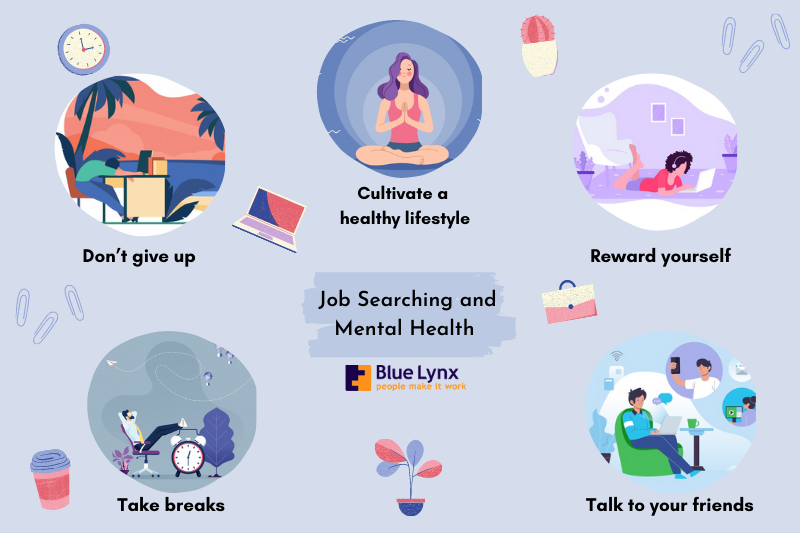
Oftentimes, the job search process turns into a soul-sucking cycle of applying and not hearing back from anyone. You keep filling applications, sending out your CV and cover letters and going from speaking from one recruiter to another without much luck. It can be tough. You feel discouraged and kept on hold. In times like these, your mental health needs a bit of extra care. Here are our tips.
Cultivate a healthy lifestyle
Job or no job, you need a daily routine that sets you up for success, not a failure. A healthy diet and enough sleep each night guarantee you a fresh start of your job-seeking efforts every day. If you add regular exercise to that, you would feel great and have all the energy that finding a job may need.
Talk to your friends
You should really reach out to your friends and networks when you first start looking for a job. Most companies would much rather interview someone who has been recommended by an employee. When you mention to your friends and connections that you are on the look, your chances are higher. They might be more experienced at job seeking and give you tips on where to look. It is still an extra bit of help that you need.
Don’t give up
Maybe it’s been months since you have started looking for the dream job. Yet, all you’ve heard so far are no’s and “We wish you luck in your job search”. As much as it may hurt our egos, rejection is part of life. Just like failure is part of success. Sometimes being rejected from one position turns out to be a blessing in disguise. Instead of growing bitter and writing 1-star reviews on social media, you could spend your time in scouting for new opportunities. Much more productive.
Take breaks
You can easily split your day into two halves and even further into sections. Every two hours take a 15-minute break even if you don’t feel like it. Stand up, walk around, get a glass of water. Just take your mind off the current application and restart your brain.
Reward yourself often
Job seekers that have fallen into despair might resort to doubling down their efforts to find employment and beat themselves up. That’s where you start feeling the burnout. Once you feel like you’ve reached a peaking point of staring at job descriptions. Whenever you hit that “Send” button on an email or online application, do something that you really love. Read an interesting article, watch a short video, listen to a song you really like. Do something that feels rewarding.
We’re Here For You
We know that job candidates don’t always have it easy. That’s why we regularly publish articles with useful tips and tricks. Whether you want to learn how to write a cover letter or you need interview tips, check out our blog.
Read MoreHow Lockdown Brought Our Team Together
Most European countries introduced lockdown as an anti-virus spread measure in March. For many people that meant that everything moved online. And for many companies, the challenges to keep up the team spirits steepened.
The Blue Lynx team members remained divided between two European cities (The Hague and Varna). We knew we had to find a way to maintain our camaraderie and motivation. Here’s how we managed to remain close and productive even during the lockdown.
-
Regular online meet-up every Friday
Back in April, one of our recruiting specialists, Filipe, came up with a lovely idea. A Friday Vrijmibo via Microsoft Teams. Vrijdagmiddag borrel is a typical Dutch happy hour (borrel) on Friday by the end of the Business hours. We couldn’t attend one in person because of the coronavirus measures, but there was nothing stopping us from chatting and keeping up with each other. We just moved it online.
-
Knowledge sharing sessions
We used to have these before COVID-19 became a thing and we had to keep business as usual from our homes. A knowledge sharing session is a monthly after-hours event. The idea is to invite someone who would give us a lecture on an interesting topic.
Throughout our knowledge sharing sessions, we:
• learned basic meditation and relaxation techniques
• nosedived into work-related topics such as education in the Netherlands and Dutch taxation
• discovered more about IT recruitment and the terminology around it, thanks to Earnie, our Recruitment Team Lead
• mastered the art of sitting down with the help of a professional chiropractor
• tipped our toes into bachata dancing
• twisted our tongues with Spanish and Bulgarian 101 lessons. -
Work From Home pictures
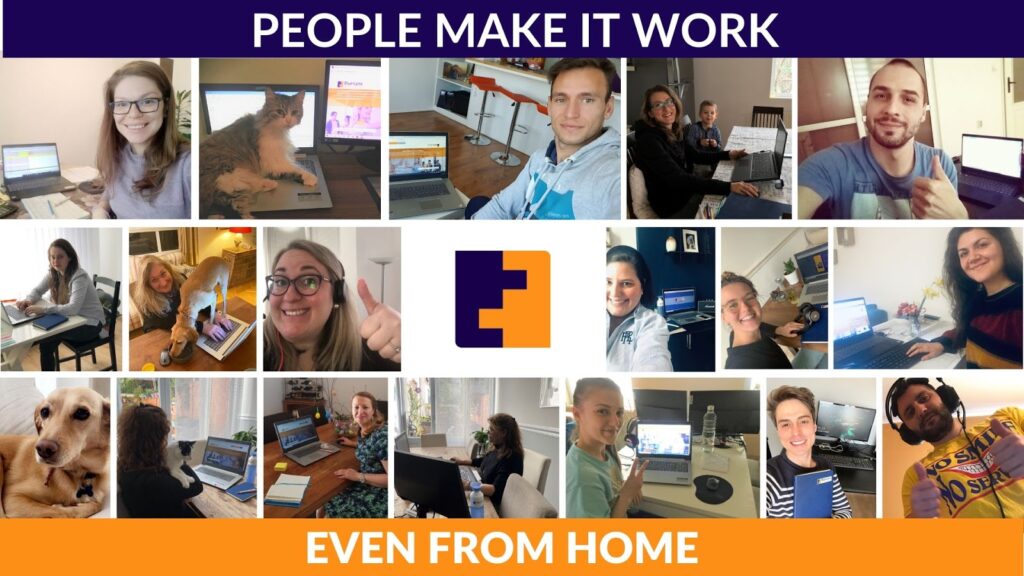
Moving to a complete work-from-home lifestyle was a bit of a lonesome experience for some of us. That’s why we decided to make everyone feel together through a photo collage. Our home office station may have looked different. Nonetheless, we all kept a smile while also keeping business as usual.
-
Connected in every single way
No matter what, we always remained a call away from each other. Problem-solving is much quicker even if it’s something small. Our IT wizards took care of installing a new VoIP system. Beyond that, we made sure that we encouraged our team members talking to each other.
-
Regular Team Lunches
It was common to have lunch with a few of the colleagues every day. Just like a family who sits for dinner together. Also, once per month or on occasions like a birthday celebration the whole team gathered for lunch.
During the lockdown, we arranged online fortnight group lunches where we discussed recipes and healthy meal options.
-
The Quarantine Challenge
At last, we set a challenge to our colleagues. We asked them to use lockdown life to their advantage. We prompted them to pick up a new skill and then report their progress. This way other team members could hold themselves accountable and celebrate each other’s success.

Keeping Teams Together
Why are we telling you all this? It’s not because we like to brag. These ideas can be implemented in your own company and team. All it takes is taking action and a welcoming attitude towards new ways of communication.
COVID-19 may have been unprecedented. But remote teams are not. Physical distance does not mean social distance. Next time you sent your employees to work from home, these ideas will help you keep them together.
As Maya, our SEO specialist summarised it:
How to Solve Common Technical Issues From Home
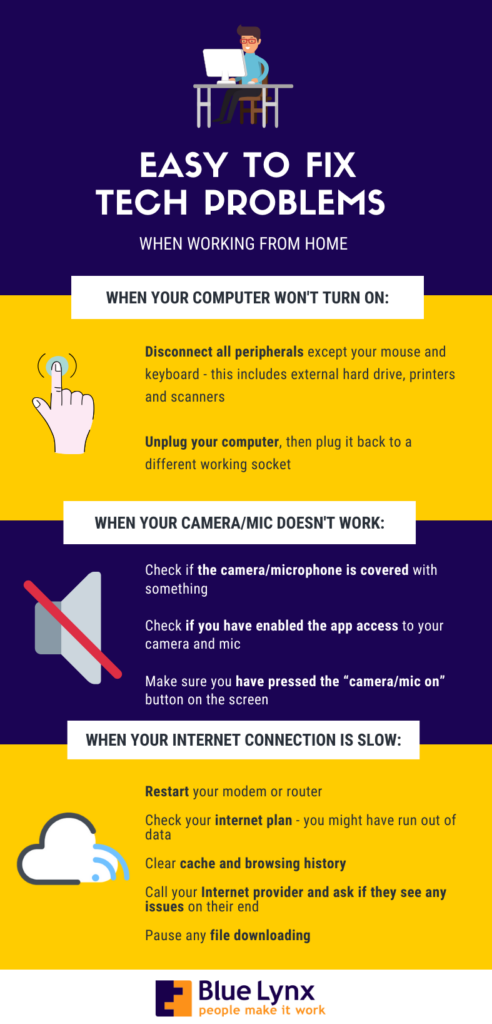
Working from home has numerous proven benefits. No commute time, increased productivity and the freedom to work from the comfort of your sofa. But one thing that you don’t get at home is the IT support that you do at the office. It’s no fun when technical issues start popping up and you don’t know what to do. Luckily, some of them are easy to fix. Here are 3 computer problems you can fix from home.
1. Computer won’t turn on
You are pressing the power button and nothing happens. The screen doesn’t light up, you don’t hear the fans – your laptop or PC is simply not responding. As obvious as it may sound, it’s usually the connection to a power supply. If you tried that and it didn’t work, you can also:
- Disconnect all peripherals except your mouse and keyboard – this includes external hard drive, printers and scanners
- Unplug your computer, then plug it back to a different working socket
2. Camera/audio not working (video call)
Too often during video calls, it is either the camera or the sound that fails. Nowadays, there is plenty of choices when it comes to video chat software: Skype, Zoom, Microsoft Teams – you name it. No matter which one you are using, when the video/audio isn’t working, try these:
- Check if the camera/microphone is covered with something
- Check if you have enabled the app access to your camera and mic
- Make sure you have pressed the “camera/mic on” button on the screen
If none of these work, you may want to restart your system. If you are using an external camera and microphone, check if there are physically connected.
3. Internet lagging and dropping
This could be a lot of things. Of course, people first assume that it’s their internet provider’s fault. If you’ve already confirmed that you have a strong Wi-Fi connection and the performance is still low, try these:
- Restart your modem or router
- Check your internet plan – you might have run out of data
- Clear cache and browsing history
- Call your Internet provider and ask if they see any issues on their end
- Pause any file downloading
See It All Summarised in the Infographic Below
How to Write a Great Cover Letter for Your Job Application

It’s common for Dutch employers to ask for a cover letter as part of the job application process. When that’s the case, it’s important to make it as good as your CV. But, even if it’s not a job application requirement, you might want to include a cover letter anyway. It never hurts to show your motivation to a potential employer.
Are you stressing out about how to write a good cover letter? Not sure what to include or how to format it? No need to worry. The Blue Lynx team of international recruiters knows what a good cover letter looks like. After reading this article, you will do too.
So, let’s dive in! Learn about cover letter structure, good and bad practices and how to write yours well. Oh, and there is a cover letter example towards the end so keep reading.
Short on time? Skip to the most important bits of this article:
- Standard Structure of a Cover Letter (+ a free downloadable cover letter template)
- 3 Golden Rules for Cover Letters
- Good and Bad Cover Letter Writing Practices
- A Cover Letter Example and Analysis
We could give you the usual tips and tricks here, but we’ll let you in on a little secret instead. You don’t have to be an immaculate writer to craft a great cover letter. You just need to know to structure your thoughts and present your skills and achievements in the best light possible.
Now, we didn’t say it was easy but we believe anyone could do it. Writing a cover letter could take up a few days so we recommend you bookmark this article for future reference.
What Is a Cover Letter?
A cover letter is a one-page document that you send to a prospective employer when applying for a job. The purpose of a cover letter is to relate your unique experience and achievements to the job you are applying for while showcasing your motivation to work for the company. Of course, in the digital world that we live in, you don’t have to actually mail a physical letter. It usually goes hand-in-hand with your CV as part of an online job application.
Letter of Motivation vs Cover Letter: What Is the Difference
After spending some time in the job searching process, you might start seeing it with different names.
A letter of motivation, covering letter, motivation letter. So many titles. But is it the same thing?
The Dutch word for it ‘motivatiebrief’ [pronounced mo-tee-va’-tee-eh brief] can mean any of those. You can encounter them in the context of both a job and university application. Here we will focus on the motivatiebrief for job vacancies.
The Standard Structure of the Cover Letter
Let’s start with the nitty-gritty of cover letter writing. First things first – the layout. It’s a good practice to have the same design for both your CV and cover letter. This includes fonts, colours and formatting.
In terms of structure, a standard cover letter should include:
- Personal information and contact details
- A formal salutation (Dear Hiring Manager or the person’s name)
- Introduction paragraph (clearly stating the job you are applying for and the company)
- Main body with 2-3 paragraphs
- Closing paragraph
- Formal letter signature
Cover Letter Writing: The Before, During & After
If you like having a plan before sitting down to write the cover letter, we suggest you use the steps outlined below.
1) Before You Start Writing
Study the job description – you need to know exactly what the company is looking for. Look for information about the day-to-day tasks in this role and the profile of the successful candidate.
Make a list – You have done your research. You know exactly who and what the company needs. Now take a minute to look at all the requirements or skills the job mentions and list down the ones you match. Once you have all those down, write your cover letter follow the formula: Skill -> Example -> Achievement
Every time you mention you have a certain skill or experience, give an example of it and tie it up with a personal achievement in that area. Your cover letter will end up sounding way more convincing.
Research the company – go on their website and find out what exactly they do, who they are serving, what their values are. Use your finding in the cover letter. It will leave a great impression.
2) While Writing the Cover Letter
Make an outline of what you will include – follow the layout we gave you above. Each paragraph should be about 3-4 sentences long.
Choose an easy-to-read professional font – looks matter. Keep your cover letter in the same colour grade and design as your CV if possible. Use consistent fonts that are easy on the eye of the reader.
Keep sentences short – have you heard of the writing technique “KISS”? It stands for Keep It Simple, Stupid. Most people try to sound smart in their writing and get lost in long, tedious sentences. You don’t want to do that.
3) When You Finish Writing
Check for grammar, spelling and punctuation – use a tool that will automatically check those for you like Grammarly.
Read it out loud – this really helps you spot inconsistencies and a lack of good flow.
Ask a friend to proofread it – it’s always good to have an unbiased person look at your cover letter and give you some feedback.
If you need some serious inspiration or don’t how to write your cover letter, we have a quick and easy-to-use solution: a free cover letter template. Click the link below to download it.
Download Our Free Cover Letter Template
Now that we have the basic structure down, let’s move to the content. Whether you use our cover letter template or come up with your own, it’s what you say in it that matters. Cover letters are brief and concise. One page is the go-to length here.
3 Golden Rules for Writing a Good Cover Letter:
- Make it personal – ditch the usual phrases
- Your cover letter should be a natural extension of your CV, not a re-write
- Showcase your knowledge of the company
If you manage to follow these 3 rules, your cover letter will undoubtedly make a good impression. Now let’s look at some more practices.
Writing the Cover Letter: The Good Practices & Things You Should Avoid

The Good
In addition to the 3 golden rules from above, you will also want to do the following:
Focus on key skills
Work experience is important. But what’s more important is that you can extract the hard and soft skills you have gained through it. This should be the focus of the cover letter’s main body. Think about the type of skills this job requires. Find examples in your work experience that support your statement.
Show real motivation
If the employer requests that you write a letter of motivation, then you need to demonstrate your passion. Show that you know the company’s values and that you are truly motivated by its mission. This is not just a way to stroke your potential employer’s ego. It shows you know what the company stands for.
Share relocation details
If you don’t reside in the Netherlands or in the city where the job is based, it’s good to mention your relocation plans.
The Bad
These are the don’ts of writing a cover letter that job seekers should keep in mind. These are pitfalls one can easily miss.
Cover letter sounding way too vague
Some people struggle with writing, in general. For them especially, it’s easy to start using cliché and vague expressions. Think sentences like “I admire your company’s great reputation in the industry.” This could be copied and pasted across all your cover letters. Be more specific and use actual examples of what’s so great about the company.
Re-writing your CV
One thing a cover letter is not is your CV. It may seem obvious but many people don’t get that. Instead of listing all your work experience, write about what it has taught you. Then, relate all that to the position you are applying for.
Typos and bad formatting
Just like with your CV, the devil is in the details. Typos and grammar error leave a bad impression. You want to demonstrate a good eye for details. Ask a a friend or a family member to proofread your cover letter before sending it out.
The Ugly
There are some bigger fails when it comes to writing a cover letter. Do your best to avoid those:
Putting the wrong company name
We’ve seen those and we cringe every time. Such mistakes usually happen when you are using the same cover letter template for every job application. To avoid this, tailor the text to each employer individually.
The cover letter is too long
Needless to say, hiring managers’ time is limited. They won’t spend ages on your cover letter so everything you put inside must be well-thought and engaging. You don’t want to bore the people reading about your experience. You want to say just enough so that they want to invite you to an interview and get to know you further.
Lying
No matter what you do, don’t lie on your cover (in your CV, as well). You won’t be doing yourself any favour, even if you get hired.
Here’s a Cover Letter Example That We Can Learn From
Source: Reddit. Click the photo to open it larger in a new tab.
Here’s also a transcription:
“To Whom It May Concern:
I am a driven and keen individual looking to work within the field of ____. However, the world is currently giving me a gigantic middle finger in terms of employment prospects; so I’m hoping to offer my services to the place I’ve probably spent one third of my time in since moving to _____. Despite having attended university, I assure you I’m possessed of a wide range of useful skills;
- I have worked as a nursery hand at ___ am an avid gardener, along with a scientific understanding of soil and plant ecology, and a familiarity with a wide range of plant species.
- I have my own vehicle, and am available at any time for any length.
- Between myself and my father, I have an almost encyclopaedic understanding of the store layout.
- Being raised by an Engineer and industrial arts teacher, I have a moderate understanding of common building materials and basic requirements, including the difference between gyprock and wood screws, and the joy of PVA. I’ve completed numerous DIY projects of varying scales, from garden construction to household fixes and shelving, and can offer basic advice.
- I’m a creative thinker, and am good at visualising solutions to unique problems, which could be useful both in-store and to customers.
- I have a natural space bubble of around 2 metres, so will not struggle with maintaining social distance.
- I have undergone military training and over a decade in retail, and as such respond appropriately and calmly to hostile treatment. I can even bayonet them if need be, and my grouping isn’t had either.
- I maintain a combat-ready level of fitness, and am more than capable of strenuous physical activity that pallet-jacking and shelf-stocking may involve.
- I have developed excellent interpersonal skills during my various stabs at careers, and understand the need for tailored and sensible approach in successful professional interactions. As an avid baker, I’m also great for team morale.
- I’m 30, friendless and childless, so am statistically unlikely to call in sick due to hangovers.
While I will jump ship the moment I receive an offer applicable to my chosen career path, you shouldn’t worry about that being too soon, as I’ve job-hunting since October, and that was before this ship floated sideways. I will work hard and be an asset.”
In this cover letter example, we can clearly see some of the dos and don’ts we discussed above. So, let’s analyse it! Just for the record, we are not going to focus on punctuation, spelling and grammar. You can easily check those with writing software like Grammarly. Instead, let’s talk about what this person did right and what they could have done better. We’ve summed it up in the table below.
| Good cover letter practices | What to improve/avoid |
| Making it very personal, tell a story | The use of foul language |
| Backing hard and soft skills by referencing relevant experience | Not showing enough motivation to work in this particular company |
| Using honesty and a sense of humour | Being too honest (“I would jump ship for a better offer”) |
| Showing a good understanding of specific requirements | Showing that you are super desperate to get the job (“I’ve been job hunting for months”) |
Your Turn to Write a Fantastic Cover Letter
Follow all these tips and you should have the perfect cover letter in your hand (or in a computer folder). Now what? As good as they might be, a CV and a cover letter can’t get you the job. You still have the interview process. If you are feeling a bit nervous, check out our job interview tips for some inspiration.
Other articles you might find useful:
Make a winning CV
How to tell is your CV good enough
Interview Tips
Interview Tips and Etiquette For Dutch Natives and Expats Alike

Do you know what’s nerve-wracking? Job interviews. Now add being in another country or not having it in your native language, it gets even worse. So you’ve put into practice all the tips you learned from our CV writing article. Now the company wants to meet you. Great! But, what should you know about interviewing in the Netherlands? Keep reading to find out.
What We’ll Cover in This Article
- Typical Job Interview Process
- How to Behave During the Interview
- Asking About Salary
- Job Interview Outfit
- Online Interview Essentials
- Tricky Interview Questions
The Job Interview Process in the Netherlands
Dutch people 101: They usually are blatantly honest and go straight to the point.
Unless… we are talking about their interview culture. Job applications get reviewed relatively slowly here. Usually, they go in several rounds. In the initial interview, the company is just getting to know you. Expect standard interview questions. In some cases, you can get a phone interview as well. If you get to the second round, it means that the employer is considering you for the role. This is when you should make a serious effort to get to know the company and show you have what they are looking for.
How to Behave During an Interview
What to say, what not to say, how to say it
Even though you know your skills and personality will be tested, it’s important to appear confident. You will be openly judged by someone whether you are a good fit. It’s absolutely normal to feel nervous. What to remember:
- Avoid speaking too quickly
- Avoid interrupting the interviewer
- Always ask if you don’t understand the question – use phrases like “If I understood right, you are asking me X/Y/Z” to make sure
- Make eye contact while you are speaking
- Perfect your body language
- Avoid using filler words like “um” and “like”
- Avoid smoking and drinking (unless it’s water, of course)
- Put your phone on silent, you wouldn’t want to be distracted by it in the middle of your interview.
Should You Ask About Salary In an Interview?
The short answer is: no.
-
Your recruiter should have already told you the employer’s budget for this position
-
Salary negotiations show your strongest motivation is money. That’s not favourable with employers.
-
Some employers would actually end the interview right then and there.
-
You undermine your recruiter’s integrity with the employers. As well as your prospects with the company
-
Think like the employer. You will be leaving the wrong impression if you try to negotiate a higher salary at such an early stage.
Job Interview Outfit: What to Wear
The Dutch are all about moderation.
Surely, you want to look your most professional self at the interview. But, it’s important to not overdo it too. It also depends on the type of job, of course. As a general rule, keep away from extremes and apply common sense. Ripped jeans and casual T-shirts are not recommended. Smart-casual (also known as, business casual) wear should be okay.
Online Interview Essentials
With COVID-19 turning our lives around, online interviews became the norm. Even virtual onboarding. And why shouldn’t they? It’s easier for everyone and safer, especially now. Some basic things you should consider. Make sure you:
- Have a good Internet connection
- Test your audio and video beforehand
- Find a quiet and clean space, free of distractions
- Juxtapose yourself against a neutral background
Sit up straight, smile and listen in an active manner. Just as you would do in a non-virtual interview.
Tricky Job Interview Questions: How to Dodge the Bullet?

As mentioned above, the interviewer will start with some basic personal questions. If you are not Dutch, you will probably get a variation of the questions “What brings you to the Netherlands?” But, there will be trickier ones that require some serious preparation.
- Why did you leave your last job?
- What did you dislike in your last job?
- What are your long-term plans?
- How do you deal with conflict?
- Why should we choose you?
See more about each below.
-
What did you dislike in your last job?
You might be tempted to focus on a negative aspect of your last job. If that’s your strategy, consider changing your approach. If you speak ill of your previous employer, what guarantee does the new employer have that you won’t do the same for them? So when you lay down your reasons for leaving your last job, start with what you enjoyed about it and then be honest about what you didn’t. Avoid using adjectives with negative connotations. Let’s see an example.
What not to say: The job was boring.
How to put it during the interview: Over time, I started feeling too comfortable and not challenged enough in my job. My growth was stagnating and I started thinking about a change. I told my line manager about it but the company structure and processes didn’t allow any changes. Even so, I learned a lot from this experience and I’m eager to build on it.
You are ending on a positive note, you show that you tried to work this out and it demonstrates your ambition.
-
What are your long-term plans?
People change all the time. If you have only a vague idea of where you see yourself in the distant future, give a general answer. The bottom line is, it’s okay not to know and the interviewer won’t judge you.
If you still want to answer in a more concrete manner, you can talk about developing your skills in a certain area or growing your network.
-
How do you deal with conflict?
Conflict in the workplace is just as likely as in any other area of your life. The interviewer wants to know how you approach heated situations. Make sure you use examples from the past and how you dissolved an argument. Mention actions you took to avoid it too. Avoid using words with a negative connotation and getting emotional. Remember, the underlying message of each answer should be “hire me”. That’s why when talking about conflict, you need to show your emotional intelligence and a flexible attitude.
-
Why should we choose you?
Have you heard about the elevator pitch? Your answer to this question should be just that. Only that you are not selling a company, but yourself.
Highlight all your key skills, experience, industry knowledge in one summary. With a question like this, the interviewer will be looking at two things.
- How much you understand about the role
- What your personal view on yourself is
You can structure your answer like this: This role needs someone who is [characteristic] as the nature of this job requires [how well you understand the job] and I am your person because [past experience that shows you have what it takes].
If you don’t have any past experience, you can always use your ability to learn fast and your dedication instead.
Still Feeling a Bit Insecure About Your Interview?
It’s absolutely normal. When you find a job through Blue Lynx, our recruiters will help with the interview preparation. They have experience in giving out great advice to candidates. Blue Lynx recruiters spend time getting to know what each of our business clients wants. You will be in safe hands.
Are You an Expat?
Welcome to the Netherlands! One of the best countries to work in. The working culture here is based on balance. Dutch are friendly but very direct. This is sometimes considered rude by other nations. They have a good sense of measure and moderation. The best thing about the Netherlands? People celebrate their differences and are open to foreigners. Did we mention almost everyone speaks English? You will definitely find your place here.
Other articles you might find useful:
How to write a Thank You email after the interview
Write a winning cover letter
How to tell if your CV good enough
Employee Benefits – Extra Cost for Employers or Extra Motivation for Workers?
Ever since Google became famous for extreme employee benefits, companies from around the globe are going above and beyond to step up their perks. From games and in-house gyms to unlimited vacations, employers and HR managers are trying hard to come up with the best benefits program. But what do employees really want?
Going Overboard
It seems like big companies in Silicon Valley have started a trend that has been going on for almost 2 decades now. In a competition of who can offer the greatest employee incentives, they’ve been going to extremes. Some of their quirky workplace perks include handcrafted three-course gourmet meals, massages, acupuncture, places to nap, health insurance for pets, unlimited vacations, and surfing during the workday. While, on the other hand, many average businesses don’t offer benefits packages.

Cover the Basics
While most workers wouldn’t say no to a free lunch, according to the 2014 Mercer survey, over-the-top perks aren’t the reason people show up to work. Employees provided with the basic essentials – fair pay, work-life balance, being heard and feeling respected – have high job satisfaction and will stick around, regardless of other benefits or lack of them.
Joe Lineberry, a senior vice president at a human resources consulting firm says: “Give employees the benefits they value, and they’ll be more satisfied, miss fewer workdays, be less likely to quit, have a higher commitment to meeting the company’s goals and be more productive.”
Cost Doesn’t Equal Value
How much an employee would value the benefit often doesn’t correlate with the cost a company would spend on it. According to Glassdoor’s 2015 Employment Confidence Survey, the type of benefits employees value most, include:
- health insurance
- vacation/paid time off
- performance bonus
- flexible schedule/remote work availability
Job benefits that don’t directly impact an individual’s lifestyle and finances were the least covered in the survey, such as in-office freebies like food and coffee. Company-sponsored gatherings like team-bonding activities were low on the list as well.
To paraphrase the famous saying: Give a man lunch, and you feed him for a day. Give a man a bonus check for achieving goals so he can provide for his family, and you keep him for a lifetime.

Demographics Play a Part
A study done by Fractl reveals gender differences regarding certain incentives. Parents and women, in particular, would appreciate more paid parental leave, better work-life balance, childcare services, life insurance, retirement plan. The young workforce, males, in particular, values free gym memberships, entertainment rooms, team-bonding events, and free food.
Ask and It Shall Be Given
Companies fill job offers with long lists of benefits in the hope to impress top talents and appeal to a larger pool of job seekers. One certain way to find out what benefits workers really want is to simply ask them. As mentioned above, employees like their voice to be heard. Poll an anonymous survey and implement some of their ideas. That way, you know you’re spending your money on things your employees really value. Respecting their opinion will keep the morale high and employee turnover low.
It’s Not About the Money. Well, It Is…
At the end of the day, people are working a job for the money. No benefits package can compensate for a lack of wages. A smart thing to do is to diversify benefit offerings according to individual needs and based on how long the employee has been with the company. This will keep everyone happy and may lower your perks budget. If you are not sure how to come up with the best incentives package for your employees, the HR experts at Blue Lynx are here to help.
Read MoreA Start to Remember: Onboarding During Corona
From New York to London, Amsterdam, Buenos Aires and in a big part of the world, most people are working from home as a result of the global lockdown measures in the context of the coronavirus pandemic. Currently, we are preparing for some lockdown measures to be eased. Still, starting a new job is now particularly exciting. How does new employee onboarding work in this new reality? Let’s find out!
Working From Home
In 2019, 39% of all workers in the Netherlands worked from home, according to CBS. In 2020, things have drastically changed due to the coronavirus outbreak. For the time being, as many people as possible are working from home to slow down the spread of the virus. Exceptions are areas where physical contact or physical presence is required: care, catering, food, logistics, etc.

Working from home is the new normal
Since attending meetings and doing everything your business needs from a home office has become the new normal, many companies had to adapt. But, it is a whole different story when you are just joining a new company. Perhaps you accepted the offer before the coronavirus situation and expected a traditional onboarding experience. Or maybe, you were hired during the lockdown and you are uncertain about your stepping into the job. So, if this is no longer on the table, you will probably be faced with a virtual onboarding. The good news is, most employers should be able to offer that.
Welcome On Board
New employees are looking forward to all steps of an onboard program, even in this context: presentations, 1-on-1 appointments, training, peer buddy and digital coffee appointment. In addition, good onboarding is seen as an indispensable part of a good integration in the organisation.

Onboarding done online is still a vital part of the employee’s journey at the company
A large proportion of our clients offer to new employees a welcome package at their doorstep. This includes a laptop, telephone and other facilities for convenient working from home. During online presentations, new employees can learn everything about the organisation, task content and what is expected of them.
Onboarding With Blue Lynx By Your Side
Here at Blue Lynx, we do business as usual. This said, our contractors and Blue Lynx employees limit physical contact as much as possible.
If you are a candidate looking for a new job during this period…
You can start with the jobs on our website. Apply just as you would do in normal circumstances by first registering on our website. When you find a job opening that sounds right for your skills and knowledge, click that ‘Apply’ button. Interviews continue as usual and companies are still hiring. The only difference is that it is all done over the phone or a video call.
If you are a client looking for help with new employee onboarding and hiring…
Get in touch with Blue Lynx. We are ready to provide support to quickly meet the demand for personnel and we continue to source and qualify candidates for our existing clients.
We are here for you.
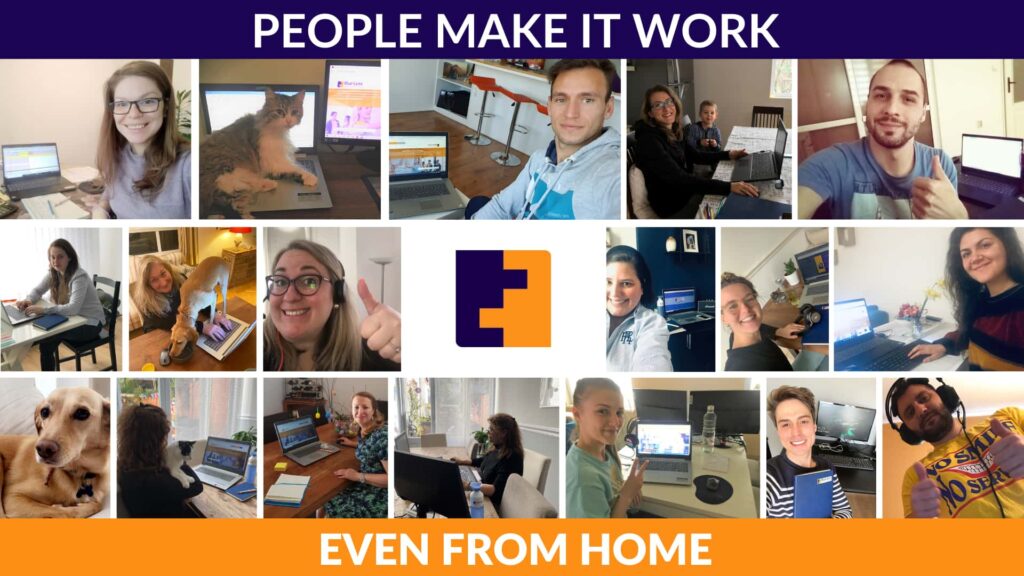
This is us, the Blue Lynx team (and some of our four-legged friends), getting it all done from the safety of our homes
Want a dose of daily good news amidst a crisis that has changed our lives? We collect positive stories from around the world to make your day a little better. We update our ‘Good news’ page regularly, so check it out today!
Read MorePeople Management in Times of Crisis: How a Good HR Strategy Can Save Your Business

When Coronavirus will be over, nobody can tell. But facts are facts. It’s here now and we can’t ignore its effects on every aspect of our lives. That’s not to discourage you from taking action. Quite the opposite. In order to keep your business going in a shambles, you need to be making a good decision for your staff. Starting now.
What does a good HR strategy look like in a crisis situation like the COVID-19 pandemic? Some coronavirus tips for managers are to follow below.
The Elephant in the Room
The first response to a crisis of any kind for many businesses is to cut down on staff. That’s what we saw and will keep seeing with COVID-19 as well. Hiring freezes and ubiquitous lay-offs were triggered across a variety of industries. When we are talking about survival, businesses will always put themselves first. That’s the elephant in the room nobody feels comfortable talking about but it’s the truth. A critical situation of this scale faces employers with tough decisions almost instantly.
Do they like it? Most likely not. Is it necessary? It might be. Is it avoidable? It depends on the situation you are in. How should you do it? How should you proceed with laying off staff due to COVID-19?
The answer is honesty and a human approach. Saying goodbye to a loyal employee because of the global coronavirus pandemic isn’t easy. Is there an alternative to layoffs? Certainly. You just need to identify all the opportunities for employee retention. These might look like:
- Re-purposing employees
- Furloughing
- Applying for financial aid from the government
- Performing cost estimates of keeping staff for a few more months vs the cost of finding and hiring new employees at a later stage
- Providing job support for those you are laying off (like Airbnb will be doing)
Uncertainty Breeds Chaos
But chaos is a ladder
Any time is a good time for a Game of Thrones reference. Albeit a fictional character, Petyr Baelish was on to something very real by saying this:
“Chaos is a ladder. Many who try to climb it fail and never get to try again. The fall breaks them. And some are given a chance to climb, but they refuse.”
Many businesses will be massively hit by the COVID-19 recession and some already are. At the same time, another great few will be benefiting from the current situation. Which one of those two categories is your business being funnelled into? It might seem like coronavirus is a disaster for your livelihood at first. But maybe you and your employees are more versatile than you thought. Maybe it’s a matter of changing perspectives and identifying opportunities.
What do we mean? Here are some examples:
- Vodka and gin distilleries making hand sanitiser
- A manufacturing plant in Pennsylvania producing tons of polypropylene – the raw material needed to make protective medical equipment
- The giant LEGO reworking its machines to produce thousands of protective plastic masks a day
- Tesla retooling its facilities and building ventilators with car parts
Those are all instances of human creativity and flexibility aimed at helping the world at a tough moment by answering its demand. That’s where good people management will come as key. Involve your employees. Be honest about where your business stands in the midst of this chaos. Ask them to actively keep suggesting alternatives.
What’s more, history shows that recessions give birth to successful ventures. Companies like Uber, Airbnb, Slack, and Pinterest (to name a few) have all been started in the period of the Great Recession (2008-2010).
Business Continuity Plans
Adapt, adjust and keep swimming
May we quote a fish? Thank you.
“Just keep swimming”, Dory’s iconic motto and the leitmotif of Finding Nemo. This quote strongly resonates with what Winston Churchill once said: “If you are going through hell, keep going.”
Churchill said that in no less of a trying time, right in the middle of the Second World War. It was a grave challenge for the economy and lives of people around Europe. He also said that “attitude is a little thing that makes a big difference.” This makes our next point: how to keep your business and keep going until it gets better.
Put in Place an HR Strategy
It all starts with people and it always has. In life and in business alike. That’s why Human Resources is where you should start too. Take a good look at the talent you have in your organisation. Get a very crisp understanding of the strengths and weaknesses of each of your team members. Some areas to plan for will include:
- Health and safety procedures in the workplace for coronavirus prevention
- A policy on confirmed coronavirus case within the organisation
- Perform an internal financial audit of your organisation and allocate resources to your HR team
- Implement a work from home setup and technology
- Improving remote workforce communication
- Adjusting processes to the new way of working
- Employee engagement initiatives – online catch-ups, knowledge sharing sessions, company borrels, lunches and regular check-ins, video conferencing
- The forming of a crisis management team
Be the Leader Your Employees Need
When an organisation is shaking under the pressure of uncertain and serious circumstances, people are looking for a real leader. Someone who can build a company culture around resilience. If you don’t feel you are there yet, don’t worry. This is something that can be taught, contrary to the belief that a leader is born. Good people management demands not simply being on top of a hierarchy but taking the lead when it is most crucial. You should be ever-present and engaged, not a wallflower. Take being a leader as if you are going on-stage every day. When you are out there performing and all eyes are on you, no personal matters should play a role.
Never Forget You Are Dealing With People
There are some basic needs that you need to have met when we are talking about communicating with and managing people. Support your workforce and create a safety net. Most importantly, listen to them. The levels of fear and anxiety among your employees need to be carefully monitored and controlled. People are going to be people. You can’t blame them for being scared especially when it comes to their health and livelihood. You can only guide their mindset and don’t let panic take over.
Scrap the ‘Them-And-Us’ Mentality
In this moment and in time of any crisis, a global sense of togetherness unites better than anything. Often, we keep looking for the things that separate us. That’s how extreme nationalism, football hooliganism between supporters and religious fanaticism exist. These are all based on the preconception “we are better than them”. It’s what you can’t allow existing within your company culture at times like these. Managers/owners, it’s up to you to bring your people together and try to bridge the gap between all the levels within your organisation.
No One-Size-Fits-All Strategy
Every business and its needs are unique. The effects of coronavirus might be something we are all facing, but adopting a cookie-cutter approach is far from correct. As it’s always been, a crisis shines a light on character and resilience. For some, the COVID-19 pandemic will be a chance to demonstrate both. The decisions you make as a leader of your company will steer the wheel to either success or failure.
If your business in the Netherlands is currently struggling, get some help. The human resources consultants at Blue Lynx prepare strategic HR frameworks for businesses in need of urgent crisis management.
Read More
Hire Them Now, They Can Start Later

Why You Shouldn’t Let Coronavirus Hinder Your Recruitment Efforts
The Coronavirus pandemic is taking its toll on human lives in one way or another. Unfortunately, its negative effects have been felt to a high degree in the Netherlands as well. It is sad to see the economy take this hit: restaurants, bars and other public spaces are shutting down in an attempt to fight the spread of the disease.
However, for companies that were just in the midst of recruiting new personnel when the crisis hit, the situation doesn’t have to be as gloomy. Here is why.
Online interviews and meetings with candidates
Social distancing has been deemed by many as the most effective preventive measure against the Coronavirus. At first glance, this might seem like hitting the breaks of the hiring process. But, you can always interview over Skype and arrange an online meeting with candidates and even employees. The job may not be digital-based but your recruitment process can easily be.
No cure, no pay conditions
Coronavirus or not, the nature of recruiting has always come with some risk. In order to minimize it, Blue Lynx operates on a contingency fee basis. We only get paid when the candidate, who we have successfully sourced, screened and recruited for you, starts working in the organisation. Simple as that – we don’t ask for any payments until our recruiters do their job.
People will still need a job once this is all over
Probably, they will need it even more badly. As a business owner or a recruiter, you are probably afraid that in this current situation, you can’t afford to hire new people. You may have even already gone through all the stages with a potential candidate. Now the virus has put a wrench in your plans and you can’t go further. You can always turn to a recruitment agency to help you negotiate a delayed start with the employee. If they want the job and you want them, postponing the start of the contract should not be a problem for any of the sides.
You may have less work now but that might not be the case in the near future
Nobody knows how long the Coronavirus situation is going to last in the Netherlands and the rest of the world. Your business may be currently experiencing financial difficulties, However, people are the first resources that you will need in order to get back on your feet. There is no reason to stop your search for the professionals your companies will need in the future.
Many people are quarantined. This means free time on their hands
It might be hard to see the bright side of events like a virus outbreak. But here at Blue Lynx, we always seem to look for (and find) the silver lining. Right now, many potential candidates from all over Europe are stuck in their home. While they are waiting for the “storm” to pass, they have a lot of time on their hands. Some of them might and will use it to explore the job market.
If you freeze all your recruitment processes and take a step back, candidates won’t be able to find you. Then, when the crisis is over and you still need that professional for your team, you will be back to square one.
It’s important to stay calm in the uncertainty of the situation and make the most of it. This is especially true for recruiters and companies all over the Netherlands and the rest of the EU. If you need advice or professional recruitment solutions, contact us at +31 (0)70 311 7822 or via email. We have legal advisors and a great understanding of the ABU CAO (Collective Labour Agreement) so we will help you with any of your recruitment needs.
Read MoreBlue Lynx at the LinkedIn Talent Awards 2019
Thank you, LinkedIn!
Blue Lynx is proud to be a finalist for the LinkedIn Talent Awards 2019. Competing in the category Top Innovative Staff Agency (in the category for under 50 employees). The entire Blue Lynx team is proud and excited. Thank you for nominating us for the prestigious award.
We are an in-house, dedicated team focussing on talent sourcing using LinkedIn as one of our main tools. Through LinkedIn, Blue Lynx is able to attract and recruit young graduates to C-level professionals. There we find specialists within the disciplines – HR, Sales, IT, Marketing, Customer Service, Finance and other office-based functions in the Netherlands and abroad.
We are grateful for the professional collaboration, brainstorming sessions, custom journey training and the increased brand recognition that LinkedIn has been providing us. In a nutshell, Blue Lynx feels more like a LinkedIn partner than a client. Thank you, LinkedIn and we look forward to the Talent Awards on the 28th of November.
A special thank you to Nienke van Huizen and Alenna Husicic from LinkedIn.
Update: Blue Lynx is part of the Top 3 Innovative Staffing Agencies
We had a great evening at the Dutch 2019 LinkedIn Talent Awards. It makes us proud and thankful to have been nominated as one of three finalists in the Top Innovative Staffing Agency category for companies under 50 staff in the Netherlands.
We were chosen due to our groundbreaking and fruitful methods of branding, sourcing and job vacancy advertising on LinkedIn and due to our LinkedIn data, not just because we are an awesome company. We understand how to partner with LinkedIn in order to achieve great results.
A big shout out to the entire Blue Lynx Team who work so diligently to attain excellent results using LinkedIn. Also a big thank you to LinkedIn for your encouragement and guidance which have helped us get so far in such a short period of time.
Last but not least, a big bone is on its way to our wonderful company dog Grace aka ‘Barketing’ Manager who has won the hearts of so many at LinkedIn.
A special thank you to Nienke van Huizen and Alenna Husicic from LinkedIn.
Here’s our certificate:
Read More