Posts by admin
How to Follow up With a Thank You Email After Your Job Interview
A Step-by-step Guide with a Free Email Template
Interviewing for a job doesn’t quite end with the interview itself. You get another shot to make a lasting impression but few people take advantage of it. Yes, sending a thank you email after the interview is what we are talking about. Don’t know how to craft the best thank you email? That’s about to change.
Because in this article, you will find:
- Why it’s a good practice to send a Thank You email after an interview
- How to write a great thank you email
- An easily customisable thank you email template
- Some FAQs on Thank You emails
Saying ‘Thank you’ sounds easy. Until you have to sit down and convey your gratefulness in writing. Most people struggle to do it in a way that feels authentic and heartfelt. Have you ever sent a Thank-you note? How easy was it to write it? If you are a natural, perhaps you won’t be reading this. But even if you are, this article will give you some fresh ideas.
First, let’s establish why saying Thank you the right way, matters.
Why Is It Necessary to Write a Thank You Email After an Interview?
So you’ve just made it home from the interview (or hit that red button on your screen in case it was online). Now you are asking yourself: “Can I do more to show that I want the job? Should I write a Thank You email? What is it good for?”
You might find this surprising but some hiring managers swear by Thank You emails. They consider them as more than a small gesture and good manners. For them, it’s the basis of their decision to hire you or not. The truth is, in some corporate cultures, you won’t make the cut unless you send that email.
Do you really want that job? Do you go the extra mile to show initiative and follow up before you know their final decision? By writing and sending a Thank You note you help the person hiring you to form a great impression of you as an individual and a professional.
Following up with an email is a way to demonstrate your soft skills. Chances are you will need to write many Thank You emails as part of your correspondence on your new job. By showing your prospective employer that you know how to do it, you give them another great reason to hire you.
How to Write a Post-Interview Thank You Email
Now that we established the why, let’s quickly get to the how. Here’s a structured step-by-step approach you can use for your all Thank You emails.
Step 1: Write a good subject line.
The perfect subject line (apart from a simple “Thank you”) could be any of the following:
- Re: “Thank you for your time today”
- Re: “Thank you for the great interview”
- Re: “Thank you for getting to know me”
- Re: “Thank you for the opportunity”
- Re: “My interview for [position title] today
Any of these would work. Don’t overthink it. It should be straight to the point.
Step 2: Impress with the body text, a.k.a the most important part
Here’s the part where you let your personality shine. Apart from actually saying thank you, add a bit of You in it. Touch on a topic you discussed or something personal the interviewer shared. Maybe you had some great ideas for one of the questions that you forgot to mention. You can casually sneak those in. Tell them one more time why you think you would be a great fit for the company.
Most importantly, keep it short, sweet and simple. Don’t turn this email into another cover letter but do include something that makes you stand out. Don’t be afraid to mention something personal that might have come up during the interview. For example, the interview’s daughter and you share an interest in marathon running. You can quickly touch on it at the end of your thank-you note. It will show you were paying attention to the details.
Step 3: Finish it right with the closing lines
This part is very simple. State that you are looking forward to hearing the company’s decision. Add that you do, no matter what they decide. In case you didn’t get the job, this simple line of text might prompt them to give you some feedback. And that’s always better than nothing.
When it’s done, check your draft for grammar and punctuation using Grammarly or similar software. If you didn’t already get inspired to write it yourself, just scroll down for an email example that we wrote that you can customise to your needs.
The Thank You Email Template You’ve Been Waiting For
At this point, you’ve probably drafted your own email but if you need some inspiration, we’ve got you covered with a template. No need to thank us 😉
Dear [Name of the Interviewer/Hiring Manager/HR/Recruiter],
I thought I’d drop a line to say thank you for your time today.
Interviews are always a nerve-racking thing but thanks to the great atmosphere you created, it felt like talking to an old friend.
Thank you for giving me the opportunity to meet with you and discuss the role of [position you interviewed for]. It was great digging in topics like [mention some of the topics you discussed, especially the ones related to your field].
On that note, I thought it was great that you asked me about [a question that related to how you would excel in this job]. I am sure my skills will help the company [what the job requires: expand the company’s markets, develop a new app for the company, etc].
Additional paragraph for extra dazzle:
During our interview, you mentioned [plans for growing the company/specific market, improving their service/product etc] and this got me thinking. This sounds so exciting and since I had some ideas that might be helpful, like [give some actionable tips and ideas].
After our conversation today, I have no doubts that I will fit right in [Company name]. I feel like I know so much about the company already and I would be honoured to join your team.
I look forward to hearing from you no matter what you decide.
Thank you again,
[Your name]
Thank You Emails FAQ
Should I write one if the job interview didn’t go well?
Yes, by all means, yes! You have no idea if the interview experience that you had was the same for the other side, a.k.a the people hiring you. Even if you are certain that the interview didn’t go as well as it should and there is *no way* you will hear from this company again, write the email. Here’s why:
- You will send an important message: “I know I blew it but I am still grateful for the opportunity”. You might be the first person they think of for another job in the future.
- It shows that you care and that’s what most companies are looking for
What if I don’t have the email of the interviewer?
Many people nowadays apply for jobs through a recruitment agency. You might be one of them. Maybe you don’t have the contact of the interviewers but you do have the email of someone in the recruitment agency. Send it to them. Recruiters act as advocates for their candidates. They are your connection to the company in this kind of situations and they will be representing your interest.
Are Thank You emails after interviews a thing in the Netherlands?
Generally, yes. That’s a good question. Perhaps thanking with an email after the interview isn’t the culture everywhere and it’s probably not expected in many countries. However, regardless of where you are from and where you are trying to land a job, a little gratefulness never hurt anybody. So don’t worry whether it is the etiquette, a well-written post-interview Thank You email wins extra points for you any time.
When should I write and send the Thank You email?
Start writing as soon as possible. That way you will remember as much detail from the interview that you can reference in the email. Besides, you will probably still be under some adrenaline and it will sound genuine and sincere. Send the same day or the day after. Don’t wait too long.
Who should I send the email to?
If you have the contact of the interviewer, send it straight to them. If it was more than one person, send individual emails or a joint one addressing it to all the people involved by name.
30% Tax Ruling in the Netherlands: What You Need to Know in 2024
Are you an expat coming to work in the Netherlands? Did you just receive a job offer from a Dutch employer which made you consider moving? If so, the Dutch 30% tax ruling might apply to you. Of course, the perk of not paying tax on 30% of your salary comes with multiple conditions that you need to meet. Read this page to get a better grasp on all you need to know about it.
The 30% Tax Ruling, Explained
The Dutch 30% ruling is a tax exemption that applies to people recruited by Dutch employers from outside of the Netherlands. Whether you are a highly-skilled migrant coming from a non-EU country or an EU national, you need to meet a number of conditions to get it. Simply put, this ruling allows you to claim up to 30% of your salary tax-free.
Why Is That Important?
The Netherlands is a country well known for the high taxes employees pay on their income. For years, Dutch employers have used the 30% facility to incentivise international workers to relocate in the Netherlands. However, in recent years, there have been changes to the ruling. Employees coming from abroad to work in the Netherlands who have applied for the tax exemption after January 1, 2019, will be eligible to receive it for a period of 5 years.
Who Is Eligible
Now that you know what it is, let’s see what conditions you need to meet as a foreign employee in order to apply for it and successfully claim your 30% tax exemption.
According to the Dutch Tax Authority website, you meet check off all of these boxes:
- You’ve moved here from outside the Netherlands to work for a Dutch employer
- You’ve been temporarily transferred to the Netherlands by your employer (also, known as secondment)
- You’ve lived at least 150 km away from the Dutch border in the last 16 months out of the 2 years preceding your first working day
- You have specific expertise, which is hard or impossible to find on the Dutch labour market
- The 70% part of your taxable salary exceeds €38,347.
- You’ve obtained a valid decision from the Dutch Tax Authorities (this is the confirmation you get after you have submitted your application, but more on that below)
How to Apply for the 30% Tax Ruling
Both you and your employer need to submit an application to the Dutch Tax Authorities (Belastingdienst). You can find the application form and instructions on how to complete it here.
Important: You should have it in writing that both parties agree to the 30% ruling.
If the company employing you does not have a legal entity in the Netherlands, they will be working with a third party that is a registered sponsor. Blue Lynx, for example, is a registered sponsor with the IND and can apply for the 30% ruling on behalf of your employer. We also offer contracting services on behalf of non-Dutch or non-IND registered employers – you can direct your employer to us for more information.
Once you complete the form, you will need to print it out and mail it to the Dutch Tax Authorities.
What Else to Consider
- The application process may take up to a few months.
- The tax-free part of your salary may not reach the full 30%.
- The 30% facility must be covered in the employment contract/agreement.
If you want to get a rough estimation of what you will be earning, try this Dutch Tax Calculator.
What if I Am a Foreign Student Who Has Completed a Master’s Degree in the Netherlands?
In order to qualify for the 30% tax ruling as a Master’s Degree student, you need to:
- Be under 30 years of age
- Have obtained your Master’s degree from a Dutch university or an equivalent degree in a country other than the Netherlands
- The non-taxable 70% of your wage exceeds € 29.149.
What if I am Conducting Scientific Research?
If you are relocating to the Netherlands to conduct scientific research for a Dutch institution, you are eligible to apply for the 30% tax return. How much you will be earning does not matter in this case, there is no taxable income threshold to reach and exceed.
What if You Are Dutch but Lived Your Whole Life Outside of the Netherlands?
As of January 1st 2012, if you have lived out of the country for 25 years, you are eligible for the 30% tax ruling, even if you are a Dutch national.
What if You Open Your Own Company or Go Freelance?
By definition, this financial incentive for highly skilled migrants only applies to them if they are employed by a company. However, there are some ways around it. If you register your company as a Besloten Vennootschap (B.V.), i.e. a private limited company and list yourself as an employee on its payroll, you may apply for the 30% tax ruling. However, the Dutch Tax Authorities may still not issue a ‘valid decision’ for your case.
Get Professional Advice
If you need some help manoeuvring your way around tax returns or need additional accounting advice, we recommend you turn to the tax specialists at Smit en de Wolf. Have Blue Lynx in mind if you need a business consultation in regards to the 30% facility. Schedule a consultation with us by emailing us at thehague@bluelynx.com.
Read MoreBrexit and the Netherlands: Are Dutch Jobs Still Available to UK Citizens?

Disclaimer: This article has information purposes only. It should not be used as legal advice. Always refer to the governmental website for the most recent information on Brexit.
Date of publishing: February 16, 2021
Brexit is no more knocking on our doors. It’s already in. Now the EU and the UK should be ready to follow a set of new rules and transition into their new relationship. What does that mean for UK citizens currently living and working in the Netherlands? What about the Brits who are yet to relocate here? Many of the changes following Brexit are still unclear, but there are things we know for certain.
For the past few years, Brexit has been a political hot potato. Nobody knows exactly how it is going to change Europe (and the world) as we know it. Brits living in the Netherlands are torn with questions like “Do I need a work permit after Brexit?”, “How do I apply for a Dutch residency once the UK becomes a non-EU country?” and “Can I still get a job in the Netherlands after Brexit?”.
That’s why we decided to condense the most important bits of information on this page. Bookmark it for future reference if you want to access it at a later stage.
But first, let’s start with some trustworthy sources that can regularly update you on the subject of Brexit.
- The Dutch Government website
- The UK Government website
- The Immigration and Naturalisation Service website – particularly, the section on life after Brexit
- This Q&A by the European Commission on the rights of EU and UK citizens
The UK’s relationship with the rest of Europe is a broad topic. That’s why the primary focus of this article will be working in the Netherlands after the transition.
Brexit: Where are we now?
As of 1st January 2021, the UK has finally completed the transition period out of the European Union. The Kingdom waved Europe goodbye through “Brexit with a deal”. What’s the deal? Something called ‘The Withdrawal Agreement’ (WA). Simply put, UK citizens are now considered non-EU nationals. Under the WA, all UK nationals living or working in an EU country must obtain the necessary permit to continue to do so.
Good News, UK folks, You Can Still Work in the Netherlands
Brits Who Were Here Before 31st December 2020
If you were living in the Netherlands before the transition period ended (31st Dec 2020), your status won’t be affected by Brexit. Your situation will not have to change. However, as we mentioned, you will need to obtain a legitimate document for your residency. Your deadline to do so is 30 June 2021.
During the transition period, the Immigration and Naturalisation Office should have invited you to apply for a residence permit. That’s if you were already legally residing in the Netherlands before the Brexit roll-out. Once you get your residence permit, you can continue to live and work here just like before.
Brits Arriving On or After 1st January 2021
If you are arriving after the transitions period, you are not covered by the WA. British nationals are no longer holding an EU passport. They are now under the category of third-country nationals, to whom apply a different set of rules for residency and work in the Netherlands.
What does that mean?
If a UK citizen comes to work in the Netherlands, they may be employed as knowledge migrant, coming from outside of the EU, EEA or Switzerland.
In other words, to work in the Netherlands, your employer needs to apply for a work permit on your behalf. To do that, the Dutch company employing you must be a registered sponsor by the IND.
Don’t panic. Hiring a British national becomes a little bit more complicated than it was, but it’s not impossible.
By the way, if a Dutch employer really likes you and wants to hire you and they are not a registered sponsor, they can use Blue Lynx as one. Mention us to your potential employer.
Important: If your employment is going to last more than 90 days, your employer has to apply for a permit that combines residence and work.
You can also come as self-employed or set up a start-up in the Netherlands after Brexit. You will need a valid residency document for either of these.
Frontier workers
UK frontier workers, or cross-border commuters, are citizens that work in the Netherlands but don’t live here. By law, these are nationals who go back to the UK at least once a week.
To continue working as a UK-based frontier worker in the Netherlands, you must apply for a cross-border commuter document.
The NL government website still has no information about the regulations affecting UK frontier workers after 1st January 2021. Keep checking authority websites for the most up-to-date information on frontier working.
Permanent vs Temporary Residency
Under the WA, UK passport-holders can apply for either one of two main types of residency in the Netherlands.
-
Permanent Residency
UK citizens, who have lived in the Netherlands for more than 5 years before 1st January 2021, may apply for a permanent residency permit.
-
Temporary Residency
UK citizens, who have lived in the Netherlands for less than 5 years before 1st January 2021, need to apply for a temporary residency permit until 30th June 2021.
Will Brexit Affect Working Contracts?
Work contracts, like many other aspects of life for British nationals, will possibly be affected by Brexit.
New immigration laws and GDPR regulations are among the strongest factors that will impact the employment of British citizens. The end of free movement between the EU and the UK doesn’t mean Dutch employers will avoid hiring Brits. But, the barrier will inevitably be higher than to EU citizens as moving here will be less straightforward. Additionally, the UK is no longer required to abide by EU laws when it comes to working contracts. This is important for Dutch citizens thinking about relocating to the UK for work.
One thing is clear, things will be different but we don’t know how radical the changes will feel once the dust settles. Yet, we hope both sides, the UK and the EU will keep their relations free of discrimination.
Read MoreHow to Tell If Your CV Is Good Enough [Checklist + Free Template]

You’ve heard all these stories about recruiters or managers tossing CVs in the bin before even getting a look at them. It could be scary knowing that whether you get that job or not depends on a piece of paper. One, supposed to make a great first impression on your behalf.
After the many layoffs due to COVID-19, many will be looking for a job. Whether you are one of them or not, your CV matters. If you keep sending applications and don’t hear from anyone, you are probably wondering “Is my CV any good? Does it represent my skills in the best way possible?”
When you apply for a job at Blue Lynx, you have to attach your CV as a Word doc. Once you go through the registration process, your CV ends up in the hands of our Administrators. If they had a penny for every time they get asked “Is my CV good enough”, they’d be filthy rich.
So, today, we will answer this and other frequently asked questions. This way you’ll know whether your CV is good to go or it needs improvement.
But, before we dive into answering those, you first need to have a CV, right? If you still haven’t created yours, now is the time.
CV Building Platforms You Can Try
In case you want to try an alternative to the Microsoft office CV template, here our picks. Some of them are free, some require a subscription fee.
Enhancv (English)
They have great-looking stylish templates and features. You get a 7-day free trial and the chance to upgrade to a paid plan later on. It’s very easy to use and their website is full of helpful tips and advice on finding a job in a variety of industries.
CVster (Dutch)
The free account lets you create a CV from scratch and share it online. The paid versions expand on these options and give you access to more tools and templates.
Canva is a great drag-and-drop design tool, which lets you create beautiful CVs. It’s free to create an account and once you do so, you can choose what you wish to design. They have a large number of resume templates that you can customise. Whether you want a more corporate or creative look, Canva has it all.
In Reality, It Doesn’t Need to Look Very Fancy
Whether you want to add colour, text accents, icons, etc. it’s entirely up to you. Unless you are applying for a job in the creative industries, your CV won’t be judged so much on the design. Consider it as a way to express yourself, your personality, how neat and orderly you are or how creative and extravagant.
If you want something quick and easy that covers the basics, download our CV template for free and simply fill it up with your details.
Common CV Questions We Get
Why is CV so important?
Your CV (or resume, if you are American) is sometimes the only chance you get to make an impression on your potential employer. It is a tool to get yourself an appointment for an interview. Simply applying with your CV will not get you the job. However, it is a powerful tool when used right. That’s why it is important to be tailored for the position you are applying for.
What should my CV include?
First and foremost, your name and contact details, your most recent work experience and other relevant employment information. If you are applying for a designer, you will want to showcase your sense of good aesthetics by creating a good-looking CV. For accountants, however, the visuals won’t matter as much.
Some people include references in it too, hobbies and supporting skills, and volunteering experience. You can do that if it is appropriate for the job. Including those will give the employer a much more wholesome impression of your personality.
What format should my CV be in?
Generally, it depends on the requirements of the employer or recruiting agency. The most common formats are PDF and Word Documents. Just make sure you know which format is wanted, it shows attention to detail – employers like that.
Should my CV be one page only?
It’s often argued that a CV is a long-format document with all your experience in one place and a resume is a concise one-pager you tailor for a specific job. CV is mostly used in Europe and resume in the USA but these two terms are fluid and in many cases, used interchangeably.
We go through hundreds of CVs every week and we’ve seen it all. From a single page to 11-pages long documents. Not that it all depends on the length, but generally it’s recommended to keep it as short and concise as possible.
We all have limited time. Think about the hiring manager that will be going through your CV. You want to make your strengths seen at first glance.
Your CV is not a portfolio.
If you have many publications and projects you would like to showcase, the best thing to do is to create an online portfolio and send it as a link. You will save recruitment agents and employers a lot of time in trying to find their way around your CV for the most important bits. You can expand on them in your cover letter.
A piece of advice we give to applicants for sales positions. You don’t try to get the job with your CV, just like you don’t try to close a deal with a cold call.
How do I make my skills stand out?
Hopefully, you have a lot of achievements that you can talk about in the interview. But, they need to find their place in your CV as well. Author Lazslo Bock suggests the following layout:
Accomplishment -> A measurable result -> How You Did It
Let’s see this in practice.
“I increased sales revenue [accomplishment] by 2% [measured against a percentage] by perfecting my cold call script” [how you did it]
For some disciplines, measuring your work can be tricky or seem impossible. You can still find a way to measure your impact in numbers. Let’s say you are a creative content writer. You write blogs for companies. You can measure your success by the number of leads, clicks, traffic your blogs bring to the website, etc.
One more thing. It’s always harder to reflect on your accomplishments and think about them once some time has passed. We recommend you keep a list of your achievements every month. Track the progress of the projects you are working on and your personal contribution to them. It will make CV writing much easier.
How about references?
In the Netherlands, collecting employer references is a common practice. With that in mind, you don’t need to have them attached to your CV. You may include a piece of text in the CV saying “References available upon request”.
So, How Do You Tell If Your CV Is Good Enough?
Keyboard, a blue button with the text “send CV”.
Next time you find yourself asking that question, here’s a checklist.
☐ Your CV has all the important information (personal and contact info, work experience and education)
☐ It has a good structure and each bit is clearly separated from the rest
☐ It does not include any information that might be seen as a weakness (for example: low grades on your university or school exams)
☐ It is not too long – one or two pages should be enough
☐ It has your accomplishment backed up by measurable results
☐ A friend/colleague/a family member has read it and given you feedback
☐ No grammar and punctuation mistakes (this is an important one)
☐ It is in the right format
If you tick all these boxes, then you have nothing to worry about. We wish you all the best of luck in your job search. 
Other articles you might find useful:
How to make a winning CV
Examples of how to write a Cover Letter
Interview Tips
Blue Lynx Is NEN 4400-1 Certified
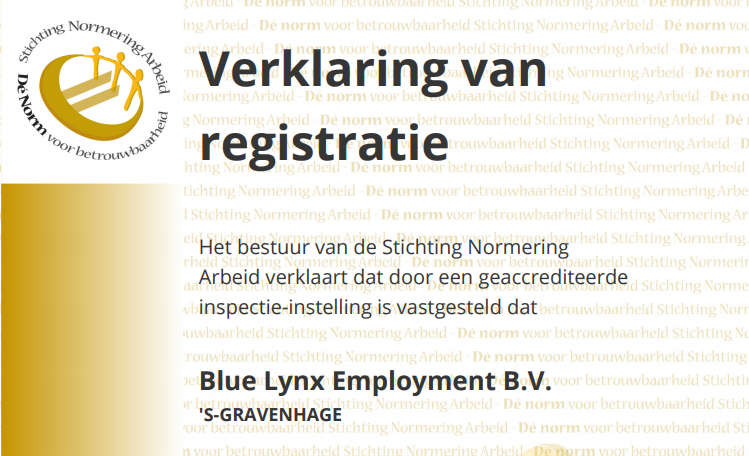
Blue Lynx is a NEN4400-1 certified company.
- your privacy
- taxation
- the administration of employee records
- identity documents.
For more information, please contact finance@bluelynx.com.
Read MoreHealth Insurance in the Netherlands [Expat Edition]
Disclaimer: Blue Lynx is not an official health insurance representative and cannot be held liable for any misinformation.
When you move to the Netherlands, getting on a health insurance plan is one of the first things you need to do. Whether you have just arrived or you’ve lived in the country for a few months, health insurance is a topic that needs careful consideration by everyone living and working in the Netherlands. In this article, we’ll cover:
- Is having health insurance mandatory for expats
- What if you don’t purchase Dutch insurance
- How does the Dutch health care system work
- What is own risk (eigen risico)
- What is the cost of health insurance in the Netherlands
- Employment and health insurance contributions
- Changing health insurance providers
- Pre-existing conditions and health insurance
- Coronavirus care under the basic insurance plan
- Unemployment and low-income
- Transferring insurance from your own country
- The European Health Insurance Card
- Dental care
- Tips on how to choose an insurance plan
Is having health insurance mandatory for expats?
Health insurance is mandatory for everyone who is moving in the Netherlands with the intention to live, work or study here for a period of 4 months or longer.
When you arrive, your first job is to register at your Gemeente (or municipality). When you register at the local municipality, you will receive your very own and unique BSN number (this is the equivalent of the Social Security Number in the US and other countries). You need it in order to apply for a health insurance plan.
That’s when you should start arranging your insurance.
If you are coming from outside the EU, EEA or Switzerland, you have 4 months to get your residence permit and take out health insurance. EU citizens with an EHIC (European Health Insurance Card) still need to purchase healthcare insurance. The EHIC gives you the right to access healthcare treatment only for emergency situations when you are temporarily in the Netherlands. But more on that down below.
In certain situations, you can opt-out from purchasing health insurance. There is the Conscientious Objectors Scheme developed by CAK which allows you to apply for an exemption from the health insurance premium if it contradicts your religious beliefs.
When do you not need to be insured in the Netherlands?
You don’t need to purchase Dutch health insurance if you are a foreign student coming to the Netherlands without the intention to work or be on a paid internship, you are coming to live here but you will be working for a foreign employer, or you are a foreign national working at your country’s embassy or consulate. Wondering if you need to purchase insurance during your stay in the Netherlands? See this article to learn who is and who isn’t obliged to take out basic insurance.
If you have 4 months, can you wait until the very last day?
Definitely not recommended. The clock starts ticking from the moment you arrive here in the Netherlands. In fact, the government will issue a warning and a fine if they find out you are not properly (or at all) covered by health insurance after the 4 months following your arrival.
There will be many things to arrange in those first months. Health care should be one of your top priorities. Even if you take out medical insurance in the third month, you will still have to pay for the previous months.
How does the Dutch health care system work?
The Dutch healthcare system is regulated by the government, while it is carried out by private companies. Each of these companies will offer you different packages and prices but they are bound by law to provide you with basic health insurance. It is your choice whether or not you will pay for extra coverage on top of your basic plan.
As you learned already, the government requires adults of 18 and older to be covered by a basic plan at the very least. Children get free healthcare in the Netherlands until they turn 18.
As an expat, when you register at the Gemeente and choose a health insurance provider and plan, you will start paying a monthly amount of money that corresponds with your package. This amount is called a ‘premium’. The basic/standard health insurance plan costs about €100. Besides this fee, you also pay ‘own risk’.
What is “own risk”?
Own risk, or eigen risico, is an amount of money that each person pays on top of their monthly ‘premium’ fee. It is also called a ‘deductible’. For the last 5 years (2016-2020), it has been set to a minimum of €385. This is the amount you need to pay for medical bills and treatments before your insurance kicks in.
Here is how it all works:
The €100 a month (your premium fee) covers all basic health needs, such as a physiotherapist and visits to your GP. The 100 euro a month can be added on when adding extra care packages such as additional dental care or psychologists treatments. You can also lower the €100 monthly premium when you expect not to get sick. In this case, you can enlarge your own risk and thus pay less monthly. The own risk consists of the first healthcare costs you make in a year. Legally, the minimum own risk is €385. If you enlarge your own risk to be any chosen number up until €875, you will pay less money monthly. But, you will have to cover the first €875 you use of healthcare (outside of the basic package – healthcare in the basic package is always free).
Note: Once you use your own risk it is often possible to pay it in instalments, instead of the whole sum at once.
Once you have used up all of your own risk, the rest of your healthcare (if covered by your provider) will be free. This includes most healthcare, except for very specialised treatments for rare diseases and such. Please check with your healthcare provider what is and is not covered. The own risk resets every year.
To recap: You can choose to set your own risk to be anything between €385 and €885.
If you choose to have a higher own risk, you will pay a lower monthly premium.
The ‘own risk’ is subject to change every year. Once per year, the government updates what type of medical care is covered by your premium fee and what lies under ‘own risk’. Also, some medical insurance providers may share with you some information about your eigen risico for the next year.
The cost of health insurance in the Netherlands
Generally, it is up to you what type of health insurance package you will choose. The basic package (which has all general care that you might need) is the cheapest option but you may always opt for a more expensive one that covers more of your needs.
The best way to choose the most suitable option is to compare health insurance packages from different providers. You can use online tools like Independer and Zorgwijzer. Keep in mind – you can switch between providers only once a year before December 31st.
Natura policy vs. Restitution policy
Some healthcare providers have deals with only select clinics and doctors. In this case, you are not allowed to choose your own medical practitioner.
A natura policy means you can choose between contracted medical practitioners. When you choose to go to a non-contracted practitioner, you will pay for a part of the treatment yourself.
A restitution policy means you will get the full treatment refunded. You also have more choice when it comes to medical practitioners. This makes the restitution policy is more expensive than a natura policy.
Will your employer contribute to your medical costs?
Yes. Under the Employer’s Levy Healthcare Insurance Act, your Dutch employer must contribute to the cost of health insurance for their employees. Employers are obliged to pay a percentage (6.95% in 2020) of your gross salary. This is part of the national social insurance contributions that are in place for every Dutch citizen. In addition to that, some employers are on a corporate insurance scheme which might work out cheaper to purchase. However, if you discontinue employment, you also need to change insurers.
How often can you change your health insurance provider?
You may switch between health insurance companies once a year, on January 1st. To do so, you need to cancel your current plan before December 31st. You have one month, or until February 1st to take out new insurance.
In certain cases, you are allowed to change your insurance company before the end of the calendar year. For example, if you are switching jobs or if you are the main insurance holder and need to cancel one of the people who are insured through your policy.
What if you have pre-existing health conditions?
By law, health insurers are obliged to offer you the basic health plan regardless of your pre-existing condition. What’s more, they are not allowed to charge a higher cost because of it.
Is a Coronavirus test covered from the basic plan?
Yes, the standard health insurance covers PCR tests. However, make sure you have sufficient symptoms and have consulted your GP first. You can also get reimbursed for some post-virus recovery costs.
What if you are unemployed?
Let’s say you relocate to the Netherlands because your partner found a job here but you don’t have one yet. Do you still need to pay for insurance? Yes. But you can apply for some governmental help.
If your income is low and you are not co-insured (meaning your partner’s policy isn’t covering you both), you can apply for the Healthcare allowance (zorgtoeslag). To determine its amount, your income, as well as the one of your partner, will be calculated and based on that, you will be eligible to an allowance, which will cover part of your insurance costs. If you are in a tax partnership, your overall household income (yours and your partner’s) must be lower than €39,979 per year to qualify for the allowance.
In 2021, the zorgtoeslag can cover up €107 (or € 207 if you are with a tax partner) of your monthly medical insurance premium. Please check this section of the tax authority website regularly for up-to-date information each year.
If you have any children under the age of 18, they are automatically covered by your insurance but you need to register them under your policy.
Can you transfer the health insurance from your country?
If you are on a temporary residence permit and your foreign health insurance specifies that it covers you in the Netherlands, then you will be reimbursed for your health expenses here.
Yet, if you are coming to live and work here for an indefinite amount of time, you need to purchase Dutch health insurance.
What are the specifics for EU citizens (EHIC card)?
If you are an EU citizen, you are eligible to get a European Health Insurance Card in your own country prior to arriving in the Netherlands. The EHIC covers medical expenses in the countries that are part of the European Economic Area (EEA), Switzerland and Australia. However, it doesn’t replace Dutch health insurance. It’s used when you are just temporarily visiting and you are not working in the Netherlands.
Are Dental Costs Covered by Dutch Health Insurance?
Not always. Dental care is not covered in the basic health insurance package. This means that if you want your dental care costs covered, you need additional insurance. Your policy should explicitly specify that dental care is included. Make sure that you carry your medical insurance card when you visit the dentist.
How to Choose a Dutch Health Insurance: Our Top 3 Tips
You might be expecting us to tell you which Dutch health insurance plan is the best but we can’t give you a specific answer because everyone’s needs are different.
But what we can do is give you some tips on how to choose an insurance plan. You will want to compare and of course, align your choice with your budget and income.
1) Don’t focus only on the price
Price is the deciding factor for many people as even the cheapest insurance policies are not that cheap. However, one of our top pieces of advice we give to expats who are about to buy insurance for the first time is: Put customer satisfaction first.
Check the ratings of the insurers you have shortlisted, ask around for recommendations. Cheap health insurance plans often come with a lot of rules and conditions that are less customer-friendly and more complicated.
2) Look for easy
The last thing you need when you have a large medical bill and a health issue is an insurance company that makes it difficult to file your claims and get reimbursed.
Choose a health insurance provider that offers a user-friendly online platform for communication and general requests such as reimbursements, filing your documents, and etc.
3) Add extra on top of your basic plan
Some insurers allow you to add extra options to your plan on top of the mandatory basic health care plan. They come at a surcharge on top of the monthly fee. Check if your health care insurance company has additional packages that suit your needs. This way you might avoid paying too much for insurance but still have everything you need, covered by a more personalised plan.
Read MoreHow to Know if They’re a Good Company Culture Fit

For us at Blue Lynx, recruitment done well is more than just finding a person who fits the job description. It takes more than that. It’s finding someone who will fit into your organisational culture well too.
Why is it important? One of the top reasons for high turnover is employee’s lack of compatibility with the organisation’s values and way of doing things. Recent statistics will also tell you that employees take company culture into major consideration. For many people company culture is somewhat of an abstract concept. That doesn’t have to be.
In the next lines, you will learn:
- The definition of company culture
- How to best determine whether your prospective candidates will fit yours.
Spoiler alert: it’s not just choosing the one who is fun to be around.
What Is Company Culture?
It is the collection of values, behaviours, beliefs and attitudes that your employees share. It is what shapes the unique social environment in your organisation. You can see it under many names – organizational culture, corporate ethos, business culture. They all mean the same.
Some companies have a very well-defined culture. Others have unspoken rules and guidelines of what is acceptable and what’s not. If you are not too sure about what the culture at your company is, ask yourself this: What common traits do people in my organisation share or I would like them to?
If your company was a person, how would you describe it? In order to hire a good match, you need to have a crystal clear vision of your own company culture.
Here are some company culture FAQs:
- Are there strict rules that everyone should follow regarding dress code, behaviour and communication? Or, do you value individualism and a relaxed working environment, instead?
- Is working extra hours encouraged or work-life balance is a priority at your organisation?
- Do you believe in micromanagement or do you want employees to be independent decision-makers?
- How do you deliver and expect feedback to be delivered by employees?
- Is there a concrete company structure or there is a flat hierarchy?
- What communication and management styles are encouraged in the company at all levels?
When you are done defining and describing your organisational ethos, make sure to communicate it well on all channels possible. Start with your website (the Mission, Vision and Values sections, for example) and weave it into the job description. Don’t forget to incorporate it into the internal communication with your employees. Everyone must be on the same page.
Why Hire for Culture Fit?
Hiring managers often fall for choosing candidates based on a likeable personality. If you will be spending 8 hours a day, 5 days a week with this person, it might as well be some who is pleasant to interact with. But this actually has less to do with cultural compatibility than you think.
The culture fit factor comes into consideration only when you have two or more candidates with similar skills. We’d argue that corporate culture compatibility is of equal importance. Why?
Because culture is harder to teach than technical skills. We learned that in the 30+ years of recruiting and working with candidates.
Research shows employees often leave because of mismatch with the organisational ethos. High employee turnover may end up costing you a lot, depending on the role and contract. But even if they decide to stay, morale and productivity will likely decrease for cultural misfits. So, it’s best to make sure there is no discrepancy from the start.
Nothing sums it up better than this famous Peter Drucker quote:
”Culture eats strategy for breakfast”.
How to Find a Good Match?
So, how do you go about making the decision if someone is a good fit for the company culture at your organisation? Follow these three steps or incorporate them into your already-established approach.
1. Start looking for certain personality traits early on
Once you have a good knowledge of your corporate identity, develop a culture assessment framework. Start looking for potential traits as soon as possible. It’s best to spot red flags before they start working for you.
In the process of filling a position, you will encounter some key moments of interaction with candidates. Each gives you a chance to assess cultural compatibility.
The qualification process. If, you as a decision-maker, won’t take part in the hiring stages, take the time to explain the company culture and values to your outsourced recruitment specialist. They will be representing your organisation and interests. They will be the first filter, so to say.
It’s important to observe the candidate’s attitude at this early stage. Do a reference check. Ask questions that hint toward how the person has reacted in complex situations. Ask them how well they fit in their last team and company, how well they brought out the values of their former organisation.
The interview: Whether it’s done online or in person, a direct interview with the candidate gives you the chance to get to know them first-hand. In this stage, you can directly ask them whether they are aware of the values, mission and vision of your company. Some candidates do their research and get acquainted with those through the website. Hence it is important to have them written out and communicated throughout your channels.
In their communication style: Over the course of the hiring process, you will have exchanged at least a couple of emails and phone calls with the candidate. Those are early signs about the cultural compatibility of the candidate. We’re not talking about looking for typos or lack of structure. Do they communicate in a clear and effective manner? Do they show the right level of enthusiasm or attention to detail? Their application or cover letter can tell you a lot about them too.
2. Ask the right questions
You could go straight to the point by incorporating a question linked to your company values. Ask them what they think about those, do they see themselves fit for that framework and mindset.
Or, you can go about it in a more covert manner. Try situational questions. “What would you do if/when…” allows you to assess how well they can prioritise. That’s handy to know if there is a hierarchic structure of values in your organisation (for example, Disney’s 4 Keys for exceptional guest experience).
If you need more ideas or expertise on how to ask culture fit interview questions, we would be happy to give you some tips and tricks. Contact us for a consultation.
3. Introduce them to the team before hiring
Even in times like these, when in-person interviews are a rare occasion, it’s still possible to introduce an interviewee with future team members. Why is it a good measurement for culture fit? Not only are you are putting the candidate’s soft skills to a test. But you can also observe interaction with other team members. It is a valid indicator of how successfully they will blend in.
In Conclusion…
Hiring for a culture fit might be tricky. Yet, necessary if you want long-term hiring success and low employee turnover. Once you define your company culture, all you have to do is lookout for good matches that have the talent that your organisation needs. Our recruitment experts have been doing it for over 30 years. We’re here if you need help.
Read More3 Reasons to Use Both In-House Recruiters and a Recruitment Agency
As a recruitment agency with decades of experience, at Blue Lynx, we are proud to say we know our business clients and their biggest concerns.
One thing we hear rather often is: “I already have in-house recruitment, I don’t need the help of a recruitment agency”.
While this may sound completely logical, it’s not necessarily true in every case. If you are in a similar conundrum, i.e. “Should I use Blue Lynx, if I already have in-house recruiters”, you are about to get an answer.
Here are 3 out of many reasons why you can use both us and your in-house recruitment team:
Reason #1: You have a large number of vacancies to fill
Is your recruitment team small or need to fill multiple positions at once?
This is one of the most common problems both big and small companies counter. One of the challenges of high volume recruitment is that it puts a strain on your resources. In other words, you have less time and manpower to fill all these open positions. What’s more, the time for selection also increases. With multiple positions to fill, the pool of candidates becomes larger. Your in-recruiters are suddenly flooded with candidate applications to screen and shortlist.
A situation like that calls for a joint effort. It’s when most companies with in-house recruiters contact Blue Lynx and ask for help. Depending on the nature of your business, you may experience this just once or a few times a year. The most efficient way to tackle it? Delegate the high-volume recruitment efforts to our recruiters, who have a database full of candidates and a variety of sourcing tactics.
Reason #2: You need to hire a specialist who is hard to find
Every industry has positions that are hard to fill for one reason or another.
The level of difficulty usually increases when you are looking for someone with very niche expertise or many years of experience. What could also complicate the recruitment process is an unpopular working location (like a very small or distant town).
Another factor is market competitiveness. Some specialists are in very high demand but are extremely rare on the market. The IT industry is full of these unicorns but there are many other fields with a high demand for specialised professionals.
When a position demands skills in multiple disciplines or has an unusual combination of requirements (for example, a Life Sciences PhD fluent in Japanese with 5+ years of international experience), you can generally expect a longer than average time to fill the vacancy. On top of that, you also need to browse a broad range of talent pools and databases.
Blue Lynx and its access to databases, pools and job boards can help you cut in half your cost per hire. Acting as a natural extension to your in-house recruitment team, we will also help you reduce hiring times and costs.
Reason #3: You don’t have a legal entity in the Netherlands
Let’s say you are relocating your business to the Netherlands or expanding it on the Dutch market.
If you have not already set up legally here, you may need to employ staff through a third-party supplier. It’s best to use a uitzendbureau (the Dutch term for a recruitment agency) that has deep knowledge of the market and labour laws, as well as the expertise to hire contractors (temporary workers). In such cases, it’s especially important to find a trusted supplier that is compliant with all local rules and regulations.
Employment law in the Netherlands could cause a headache even to Dutch employers, so clients schedule consultations with Blue Lynx on legal and HR inquiries all the time. We also know the local candidate market well and know how to position your company to the type of multilingual professionals that you need.
Combine Both Recruitment Practices With Ease
We hope you’ll leave this article with a better understanding of why you could successfully combine both in-house and outsourced recruitment. Of course, what always helps is having clear priorities. Define your recruitment goals and needs. Do you envision a rapid expansion? Are you looking for an experienced specialist in a very competitive field? Will you be opening an office in the Netherlands?
The best way to decide whether you should complement your in-house recruitment team with the experience and expertise at Blue Lynx is a consultation.
Read MoreWhat to Do If You’ve Just Been Laid off in the Netherlands

It’s such a shame when you work hard on a job you really love (or need) and then a pandemic comes along and wipes it away.
It’s what’s been happening all over the Netherlands and the rest of the world lately. Have you been made redundant too?
If you need a bit of help getting back on your feet after a layoff and put a fresh start to your job search, this article is for you.
Lost Your Job? What Now?
While it all may seem grim right now, our main goal isn’t to depress you.
Quite the opposite, really.
We urge you to see this situation as an opportunity, not a threat. Your talent and knowledge just need refocusing. Many other industries will be on the rise because of COVID-19. Your armour of transferable skills will help you find new employment in a different setting. So, instead of falling into despair, pick yourself up and…
It sucks coming to terms with the loss of a job in such critical times. It’s a tough time for businesses and employees alike. So, you are not alone in this ordeal. As a result of the pandemic:
Booking.com announced its global workforce will shrink by 25%
And that came after they took advantage of the Dutch government support scheme NOW, meant to help businesses pay salaries during the pandemic. But what NOW did was simply postpone something inevitable. The demand for tourism continues to drop. More than 5,000 people work for the company with its headquarters in Amsterdam.
Airbnb laid off nearly 2,000 employees
On May 5th, 2020, another global player in the tourism and hospitality industry, announced it was letting people go. In a note to all employees, co-founder and CEO Brian Chesky shared that Airbnb is reducing its workforce by 25%. It was sad news for the tourism giant’s employees but they received support from the company. Airbnb offered Alumni support for the ones leaving and the right to keep their Apple laptop. In addition, they had four months of free career transition services.
Damen Shipyard Group will be reducing its staff size by 1,000 employees
The crisis didn’t just hit tourism. The marine and shipbuilding industries took a hit as well. Earlier this year, MAN Energy Solutions and Damen both announced they were to reorganise their manpower in response to the pandemic.
KLM decided to cut up to 5,000 jobs by the end of 2021
The Dutch government lent a helping hand to the airline in the form of a bailout package. The company received €3.4 billion euros in loans. Yet, flying continues to be on the line for the foreseeable future, KLM group set out to reduce costs and staff.
Job losses in the event industry expected to reach 48,000
Recent Statista research revealed that COVID-19 is likely to wipe out about 48,000 events jobs across different subsectors (conferences, company events, etc.) It is forecasted to be one of the strongest hit industries in the Netherlands. Under the pressure of the pandemic, many sectors began crumbling. Tourism, air travel and hospitality might be the obvious and more immediate ones but it’s likely others will follow. New statistics show that coronavirus took out more than 300,000 jobs in the Netherlands and will shrink the Dutch economy by 8,5%.
#2 Start applying today
Even with the drop in jobs in the Netherlands, businesses are still hiring. But what if you haven’t had to look for a job in years?
Perhaps it’s been a while since you last had a good look at your CV. Maybe the last time you had to write a cover letter was 10 years ago. In addition, you’ll also need to dust off your interviewing skills and learn some new techniques.
Where do you start? The right answer is, anywhere. The point is that you start. Make a move. Here’s how:
Register at Blue Lynx
We are a team of international recruiters who care. We know what it’s like to be out of a job and we have a full arsenal of resources to help you find a new one. Most of all, we work with business clients looking for experienced professionals, just like you. You can apply for them on our website in a few short and easy steps. Start browsing current opportunities on our Jobs page.
Create a LinkedIn profile or polish it up if you already have one. Share with your connections that you are open for new opportunities. There’s no shame in that. If you are interested in further optimising your profile, follow Blue Lynx on LinkedIn. We post a LinkedIn tip of the week every Thursday.
#3 Know your rights
Besides the emotional stress of losing a job and having to find another one, money surely is the other thing on your mind. In the case of dismissal, it’s worth checking these resources:
Transition allowance
In most cases, when your employer terminates your contract for a reason outside of incompetency on your side, they owe you a transition allowance. It is a sum of money calculated based on the number of days/years worked and your monthly salary.
Unemployment benefits
Given that losing your job in the Netherlands was not by your fault, you can also apply for unemployment benefits. In order to get them, you need to register as a job seeker with the UWV.
End-of-contract agreement
You have a right to negotiate the way you part ways with your employer. Even if you are being terminated, you still have a say about the terms and conditions of it. What’s most important is to have a settlement agreement in writing.
If you are a Highly Skilled (Knowledge) Migrant or you are a European Blue Card holder, losing your job may affect your right to continue living in the Netherlands. In many cases, having a job here is directly linked to your right of residence. When you are made redundant or your contract ends for another reason, learn more about the next steps you need to take as a highly-skilled migrant.
Blue Lynx Is Here to Help
As a recruitment agency with plenty of experience, we are here to do more than just sympathise with you. We know it seems tough to be out of a job. To get back on your feet and find another employment as quickly as possible, browse our current vacancies. You can also follow Blue Lynx social media channels and be among the firsts to find out about the latest positions.
Why Start Learning Dutch Today?
The Netherlands. A land of tulips, fine cheeses and tall, blond people. Does that sum up pretty much all you know about the country? It does for most people. If you are planning on moving to work in the Netherlands or just want to add another foreign language to your skillset, here are 5 tempting reasons to start learning Dutch today.
1) It’s easy (especially if you already speak English)

Probably the first question you have for any language before you start learning it is, “How hard is it?” Some languages like German and Russian are notorious for being difficult for foreigners. Dutch, on the other side, is one of the easiest languages to learn for English-speakers. In fact, Dutch and English are like close relatives, let’s say, cousins. They are from the same language family and share many similarities.
2) It’s more popular than you think
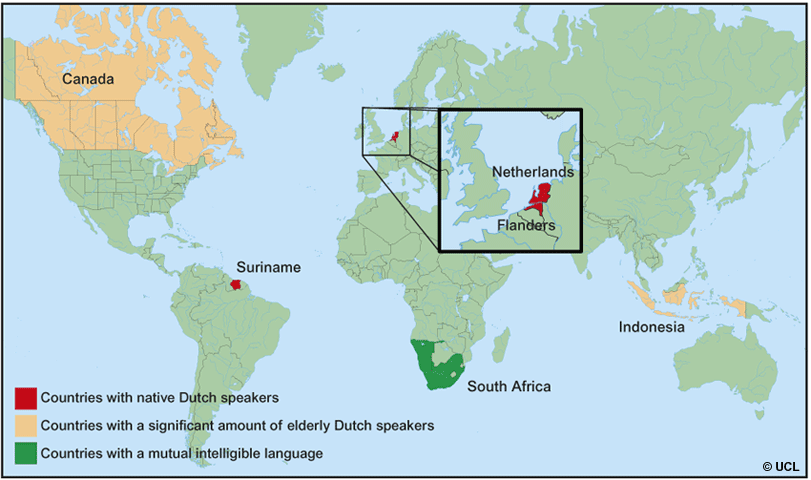
Source: https://www.ucl.ac.uk/atlas/dutch/who.html
Besides the Netherlands, where Dutch is the official language, you will also hear people speaking it in many other parts of the world. For example, the Flemish region in Northern Belgium. While this can be expected because of the geographical proximity of the two countries, there are places far away from the Netherlands where Dutch is also spoken. Those include Suriname and a group of Caribbean islands known as Dutch Antilles. Afrikaans, one of the 11 official languages in South Africa, is based on Dutch as well.
3) It will be much easier to find a job in the Netherlands

Finding a job in the Netherlands doesn’t require speaking Dutch. Many expats arrive with just a few Dutch words in their vocabulary and quickly find English-speaking jobs. Yet, even if the job doesn’t formally require you speaking the official language of the country, it’s an advantage. At the very least, it will bring you a step closer to connecting to your Dutch colleagues and feeling part of the team.
4) You will have a better understanding of the culture

If you already speak another language different than your mother tongue, you know that it is more than just a system of words and grammar rules. The way people speak mirrors the way they think. Therefore, language and culture have a tight bond. This means that once you get the hang of the Dutch language, you will also learn to understand its people better. You will be more than just a visitor.
5) It’s fun

‘Het zit wel snor’ (“It sits like a moustache”) is how your Dutch friend will reassure you everything will be alright
For many expats, learning Dutch is challenging. But who says challenges can’t be fun? Besides, chances are some words are already familiar. For example, the words cookie, booze and cruise, which all derive from Dutch. But beware of the so-called “false friends”, words with the same spelling but different meaning. Besides, Dutch is full of words that allow for funny situations like the ones in the video to happen.
So, Ready to Learn Dutch?
If you are now convinced that Dutch is the next language you want to learn, what are the best ways to do that? Here are some suggestions for a start:
Online lessons
There are multiple free resources for learning Dutch online by yourself. You can bring language learning to the tip of your fingers with mobile phone apps like Duolingo or Babbel. They are great to learn the basics through great graphics, fun games and useful exercises. Of course, there is always Youtube.
Dutch shows with subtitles
If you want to enhance your listening and comprehension skills, you can go to websites like NPO Start for news, documentary series and movies with Dutch subtitles. You can also listen to Dutch radio stations in your free time.
News in Dutch
Finally, to increase your understanding of written text and learn some modern-day vocabulary, read the news in Dutch. While you are reading, pay attention to new phrases and words. It will quickly broaden your vocabulary.
Veel geluk (good luck) with your learning! We hope it goes well and you will soon be reaping the benefits of speaking Dutch.
Read More