Posts by admin
Exit Interviews: The Good, The Bad, and The Ugly

Here’s a situation: one beautiful morning, an employee hands over their resignation letter. Maybe you saw it coming, and maybe you didn’t.
It’s perfectly normal to start questioning why – we always want to know what’s wrong, what we did or didn’t do. As for the employee who decided to quit – maybe it wasn’t the easiest thing to do. Sometimes these are indeed the hardest decisions we have to make – whether to leave or stay and try to make a change.
But no matter the reasons for leaving, one thing’s for sure – gathering information will benefit companies the most. And here’s when exit interviews come in handy. Or do they?
Let’s find out!
What is the essence of exit interviews?
Many businesses lose out on a valuable strategic opportunity by failing to investigate the reasons behind staff turnover.
Exit interviews can get valuable insight into an organisation’s performance and dissatisfaction among its workforce, as those leaving can speak freely about their experiences and impressions. They may also provide critical input into how the organisation compares to others if another company has already interviewed them.
So it’s safe to say the primary purpose of an exit interview is to provide feedback on the company’s performance goals and to ensure that departing workers are satisfied with the time they have spent in the organisation.
Now that we know why this is important, let’s see what other benefits or setbacks exit interviews have to offer.
The Good
Some of the most significant gains from doing exit interviews are:
Valuable insights
Exit interviews, as we mentioned above, might reveal hidden issues inside an organisation. They may draw attention to problematic supervisors, procedures, or ways of doing things. Alternatively, they might provide HR with a chance to learn more about the causes of employee turnover, which could lead to future reductions if this knowledge is used adequately.
Chance of getting an honest feedback
People leaving their current employment may feel more comfortable discussing avoided issues. Since the employee is less likely to be afraid of retaliation, this might be an excellent opportunity to hear from them on matters that have been bothering them. This might even help discover serious issues that need further investigation, such as discrimination or harassment if there is such.
Improvement opportunity
The former workplace could learn more about the employee’s new position and the perks that ultimately persuaded them to quit. Employers can get further information about what other companies offer that might help them determine what they need to do to improve their offerings and retain their top workers, preventing them from leaving.
Leaves no bad feelings
In some instances, an exit interview may be a time to honestly discuss what the company can do to keep the person on board or perhaps entice them to return later. Even if it’s only a chance to talk it through and let go of any negative feelings, it might brighten up the departing worker’s last days at the company.
The Bad & The Ugly
Of course, everything has pros and cons. Now let’s explore the drawbacks:
It could be awkward or uncomfortable
Exit interviews may be awkward and uncomfortable for everyone involved if a departing employee leaves under tense or emotional circumstances. As a result, he may be hesitant to speak openly for fear of alienating co-workers and may instead choose to provide a more positive picture. Therefore, they may be reluctant to provide constructive criticism and honest evaluations.
Respectively, it’s possible that nothing useful will be learned from the exercise. The exit interview might be stressful if there is tension around the employee’s leaving. It may make things worse instead of better and provide no clear benefit.
Employees think their opinions will be disregarded after they leave
There can be personal or professional issues that can make an employee want to leave. Whatever the reasons, they may feel that providing arguments or feedback in this situation is futile if they previously thought their opinions weren’t valued or ignored.
Leaders might have prejudgments toward any feedback
Sometimes employees prefer to keep their opinions and thoughts to themselves as they feel managers aren’t listening or are resistant to feedback. Therefore, they strongly believe nothing will change with or without their advice, so they choose not to raise their voice. Which, again, makes the exit interview biassed or even just a formality.
Employees might think it’s too little, too late
If they were made to feel unappreciated or ignored at work, they have no reason to expect things to improve after they leave. For a departing worker, it may seem like “too little, too late” to be asked for feedback in the form of an exit interview. This whole thing may even lead to or exacerbate frustration and leave a bad aftertaste.
Exit interviews might be more of a formality than they are worth at times
Finding helpful information is worthless if there is no system in place to act on it. A systematic structure and procedure must be followed for changes to be made as a result of exit interviews. Furthermore, if any disclosures need to be followed up on, like harassment claims, then resources will need to be assigned swiftly to do so.

Takeaway
Keeping current employees is a major concern for every business. People are switching jobs at a rate that has never been seen before. Given the current global circumstances, it’s essential to maintain communication with your staff while they’re still a part of your organisation.
An excellent method for increasing engagement, building trust, and improving work conditions to retain workers is to ask for their opinions and make them count while they’re still working within the company.
And even though employee departures are sometimes unavoidable, exit interviews and surveys may help you better understand why people are leaving. Also, it’s crucial to solicit both positive and negative responses from workers to gain insight into how to retain employees and make their perspectives and opinions count.
Read More5 Productivity Tips: How to Make the Most of Your Workday
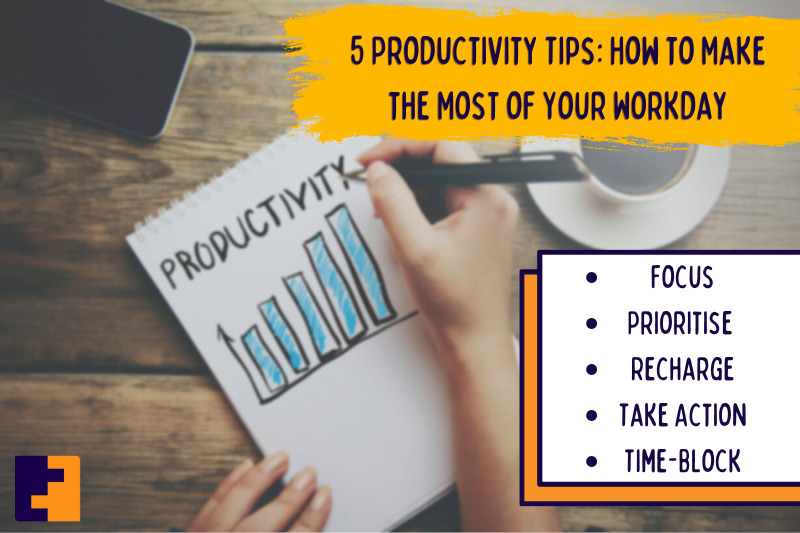
“If there are nine rabbits on the ground, if you want to catch one, just focus on one.” – Jack Ma. It’s probably one of the most concise statements about productivity. Jack Ma, the founder of Alibaba and AliExpress, is one of the wealthiest people in the world, so it’s no coincidence that he said that. He didn’t get to where he is today by being a slacker. Don’t you think?
Given this, we can assume that your presence here indicates a lack of productivity-improving abilities.
You probably begin each day intending to accomplish a great deal, but you soon find yourself getting sidetracked, wasting time on unimportant tasks, or simply procrastinating? Lunch time, switching meetings, following never-ending to-do lists, and the workday still feels too short.
But we’re not here to pass judgement! Everyone’s been there. The key is not to complain about it but to find a way to deal with it.
So, if you want to learn how to become the most productive version of yourself, we’ve got you covered! Buckle up because we’re about to embark on a productivity trip!
How to Become More Productive at Work
It’s no secret that people adept in time management and organisation are often more productive. So if you too want to increase your work efficiency, there are a few tricks and organisational methods we’ll teach you today, starting with:
Tip #1: Focus only on one task at a time
If you dedicate all your attention to more than one task simultaneously, you will most likely achieve the opposite effect. Instead of working faster and completing tasks one after one, you will struggle to manage your time to switch between them. Which will only harm the quality of your work or leave it incomplete.
Let’s go back to the meaning of Ma’s catching rabbits quote: The more rabbits you try to catch at once, the less you actually will. It’s the same with everyday work tasks – the more you try to juggle, the more likely you will fail at executing them. Instead, focus on one task at a time. And when you finish it, you can begin with the next one.
Tip #2: Prioritise tasks by order of importance
To get everything done on time and qualitatively, it’s important to set priorities and stick to them. Prioritisation is critical because it lets you concentrate first on the most essential and time-sensitive issues, allowing you to return to the less urgent ones later.
If you’re a multitasker, you probably often take over more tasks than you can accomplish. We advise prioritising projects in order of importance to make things easier for you – start with the most difficult assignments and end the workday with lighter ones.
Additionally, completing assignments in a well-defined order can significantly improve your results and work efficiency. That way, if you fail to finish all your tasks by the end of the day, you won’t have to worry about the urgent ones, as they’ll be out of your to-do list.
Tip #3: Take frequent breaks to recharge
Depending on the type of person you are – it could be really tempting to take a break every 10 minutes, or it could be the other way around – avoid taking a break so you can finish your tasks faster.
Well, we hate to break it to you, but neither of these two methods works or helps your productivity. Here’s something to consider instead:
The 50/10 Rule. Give yourself a 10-minute break for every 50 minutes of concentrated work. It’s a good idea to take a break every hour to minimise burnout, reduce distractions, and allow you to absorb new information more effectively.
Time management is integral to becoming more effective at work, and this strategy may help you do so. It allows for more uninterrupted work and then a short break to recharge before returning to the task to finish it.
Tip #4: Follow the two-minute action rule
David Allen, an American productivity consultant, introduced the two-minute rule in Getting Things Done: “If an action will take less than two minutes, it should be done at the moment it’s defined.”
So, this principle means embarking on “two-minute or fewer” tasks, which you’ve been meaning to do but “didn’t have the time.” Doing them quickly (each for 2 minutes) will check them one by one off your to-do list.
For example, sometimes you need just two minutes to keep track of the tasks you have for the day, send or reply to an email, talk to a colleague about something important, or write down a note. Still, those two minutes may add to improved productivity and a completed list of assignments at the end of the workday.
Tip #5: Employ the time-blocking method
While limiting oneself to certain hours or minutes may seem restricting and uncreative, you’re more likely to get a lot done and increase productivity. This is called time-blocking and it looks like this:
- 9AM – 11 AM – Answering emails
- 11 AM – 12 PM – Working on reports
- 12 PM – 1 PM – Lunch break
- 1 PM – 2 PM – Read ****
- 2 PM – 3 PM – Write ****
Of course, this is just an example. You can organise time slots and tasks any way you see fit that best works for you. You’ll also have less time for indecision or procrastination and more time to focus on the task at hand if you establish routines and habits.
The time-blocking strategy allocates each time to a specific task or tasks. It can also keep you focused and let you know if you’re being unrealistic about your time or daily objectives.

Takeaway
To maximise each workday, you must make a deliberate effort and improving your productivity is a great place to start. Set clear objectives, be realistic about your time, write down important notes, take regular breaks, and ensure everything you do is a worthwhile use of your time.
Finally and most importantly – don’t set unclear expectations or an immense workload for yourself, as that’s the fastest way to a burnout. It takes effort and fine-tuning, but if you persist, you will soon be able to do more in less time and become the most productive version of yourself.
And remember – don’t be busy, be productive!
Read MoreBlue Lynx is Growing

We won’t hide it – the last few months have been quite busy. But the energy and resources invested have definitely paid off. Here’s an update on what’s been happening at Blue Lynx.
Hola, Bogota!
After 33 years of rocking the European market, our growing expertise prompted us to expand our horizons. One day, a simple thought occurred to us: “We have 24 hours in a day and we can’t change that, but what about the other half of the world?”.
This casual idea developed into a real plan for the future. We researched and analysed different countries and soon the opportunity arose – let’s open an office in Colombia.
We are pleased to announce that on 31 January 2022, our brand new Talent Sourcing Centre in Bogota became a reality. In the first few months, the office will focus mainly on talent acquisition, but our plans for the future remain open. Stay tuned!
You can now visit our freshly designed Colombian website – Bluelynx.co.
Blue Lynx Bulgaria
We’ve always known that the Bulgarian market is rich in motivated professionals and thriving businesses, and we have focused our efforts on proving it.
As of 20 January 2022, Blue Lynx is not only a fully operational recruitment agency in Bulgaria but also a registered contracting company.
We look forward to meeting our new Bulgarian contractors and providing them with the same service, commitment, and expertise that our current clients have come to and know and love.
Sofia Office
After the great success of our first Bulgarian office in Varna, opening an office in the capital Sofia was a natural step for us. On 1 October 2021, our Sofia office opened its doors.
Located in the beautiful Manastirski Livadi district, our spot welcomed its brand new team of local professionals, who quickly became part of the Blue Lynx family. The full address of the office is ul. “Pirin” 44, 1680 Manastirski Livadi, Sofia, Bulgaria.
Plovdiv Office
After establishing two successful offices in Varna and Sofia, it was only a matter of time to open an office in Bulgaria’s cultural jewel, Plovdiv.
From 15 February 2022, the Plovdiv office there is officially up and running with a local team of passionate experts. Our address in Plovdiv is Royal City Complex, 5 Dunav Blvd, office 3, Plovdiv, Bulgaria.
We have an office and a team, and Plovdiv has an abundance of talent. The perfect combination!
Our new CCO
On 1 September 2021, Toine Diters joined Blue Lynx as our interim CCO.
Toine is a successful executive with many years of experience in business development, at the C-Level, including recruitment and advertising. Building on what we have already achieved, he refines our strategic direction, helps us find new business opportunities and ensures we continue our growth.
We are glad to have you on the team, Toine!
The Bright Future
As you can already tell, It’s been an exciting few months. We have opened new offices, expanded our client base, grown our candidate network and welcomed new team members. As Blue Lynx develops and evolves, the constant that remains is our greatest asset – the people.
So, after this period of rapid growth, we are full of beans and ready to tackle the future.
Go go, Blue Lynx!
Read MoreHow To Ace an Online Interview: Guide & Tips

As a result of the global pandemic, more and more employers prefer to interview their candidates via Skype or Zoom – and that’s perfectly understandable. The tricky part? Digital interviews are very different from meeting in person, but at the same time, they still offer face-to-face interaction.
We have put together some tips to guide you through the entire process – from setting up the environment to looking good on camera.
If you want to learn how to prepare for your next online interview, keep reading.
First things first – how to request an online interview?
The coronavirus pandemic has significantly changed the way we live and communicate with each other. So even in better times, it’s normal to have concerns about meeting someone in person. If you have already scheduled an in-person interview but prefer to avoid close contact with other people, you can simply ask for a digital meeting.
The best way to request an online interview is by contacting the recruiter or hiring manager. Send them a polite email with the reasons why you prefer to meet digitally. Mention the practical implications of the epidemic and assure them that this is not an attempt to rush the final decision. You can show proactivity by suggesting an online service to use for the interview.
Here is an email template that you can customise to your needs:
Dear (Name of the Hiring Manager/Recruiter),
I am writing you this email regarding my interview scheduled on (Date and time).
First of all, I would like to mention how grateful I am to be moving forward in the interview process – thank you for giving me the opportunity to discuss the role of (Job position).
I am reaching out to ask for an adjustment due to the recent COVID-19 situation. Since I have concerns about in-person interaction, I would like to request that my interview be conducted remotely.
I suggest using Google Hangouts for our potential digital meeting, as it provides high quality and user-friendly video communications. Of course, we can use any other platform of your choice.
I hope we can set up a plan that works for both parties.
Looking forward to hearing from you,
(Your name)
What to do before the video meeting?
#1: Choose the right location
Your environment is one of the most important things to take care of before a video interview. Start by finding a place where you can control the surroundings – a quiet room with no visual distractions would be ideal. Choose a spot with a neutral, plain background and remove any unprofessional-looking pictures. Remember – the person you are talking to should be focusing their attention on you, not on what is around you.
Bonus tip: If you can’t change anything about your physical background, use a virtual one. There are many free options and most video call platforms support them.
#2: Provide good lighting
During a video interview, your face should be well lit and easy to see. Put yourself in a positive light (literally!) by sitting in front of a natural light source. Avoid casting shadows on your face and don’t sit next to a window with only half of your face lit. Front-facing light will evenly accentuate your skin and features, giving them a flattering look. If you can’t provide a natural source, place a lamp behind your laptop and make sure that the light is soft and hits your face straight-on.
Bonus tip: Experiment with different lighting and check how it looks on camera. When you are satisfied with the results, you are good to start shooting.
#3: Prepare your technology
Typically, online interviews are conducted through user-friendly platforms such as Zoom, Skype, or Google Hangouts. Open the interview details and check which video service you will be using. You may need to set up an account or download additional software. Schedule a test call with a friend or family member to test your audio and video quality. Make sure your internet connection is stable and everything is working smoothly.
Bonus tip: Just in case, have a backup plan – be ready to switch to another device if you experience technology or connection issues.
#4: Do your research
The most important tip of all – research the company you are applying to. Visit the corporate website and learn more about their product or service. Check out their mission see how it corresponds to your personal values. Prepare responses to the most common interview questions, including points that best match the job description. Think about questions you want to ask the interviewer and write them down. Remember that your online interview is still a job interview.
Bonus tip: If you need further help with your application documents, learn How To Create a Winning CV.
What to do on the day of the interview?
#1: Dress for success
Your attire for an online interview says the same thing as it would for an in-person interview. Dress in a way that makes you feel professional and enhances your appearance. Even if the interviewer can’t see your lower half, get fully dressed to avoid awkward situations. Stay away from busy patterns and bright colours – they could be distracting to your interviewer. When it comes to colours, It’s best to choose neutral tones like blues, greys, or soft pastels.
Bonus tip: Open the corporate website and look for photos of the team. They will give you an indication of how to dress in a way that best fits the company’s style.
#2: Test, test, test
Right before your interview is scheduled to begin, run some last-minute tests on all the things that could potentially go wrong. Test your headset, video quality, and network connection. Make sure the lighting is as flattering as possible and that your outfit looks good and professional.
Bonus tip: Most video call platforms show you a preview of your feed right before you join the meeting. Make use of this feature to fix any issues with your appearance or background before you go live.
#3: Act professionally
During the interview, act as naturally as possible and treat the conversation as an in-person meeting. Always look directly into the camera, “making eye contact” with the interviewer. No matter how tempting it is, avoid staring at the window with your own image. Try to forget there is a camera recording you and focus on the conversation.
Bonus tip: Listen attentively and engage with your interviewer. Don’t forget to smile and nod – your friendly attitude will not go unnoticed.
#4: Send a thank you email
If you want to leave a lasting impression, send a thank you note after the online interview. Address the interviewer appropriately and express your gratitude for their time. Being grateful and acknowledging one’s efforts is a sign of courtesy and good manners. Additionally, following up with an email is another chance to demonstrate your soft skills.
Bonus tip: Read our Thank You Email Guide and get inspired by the template we have prepared for you.
You are now all set for your next online interview. Get in the mood to talk, follow our tips and go nail it!
Read MorePodcast: Job Application & Interviews, Tips & Tricks
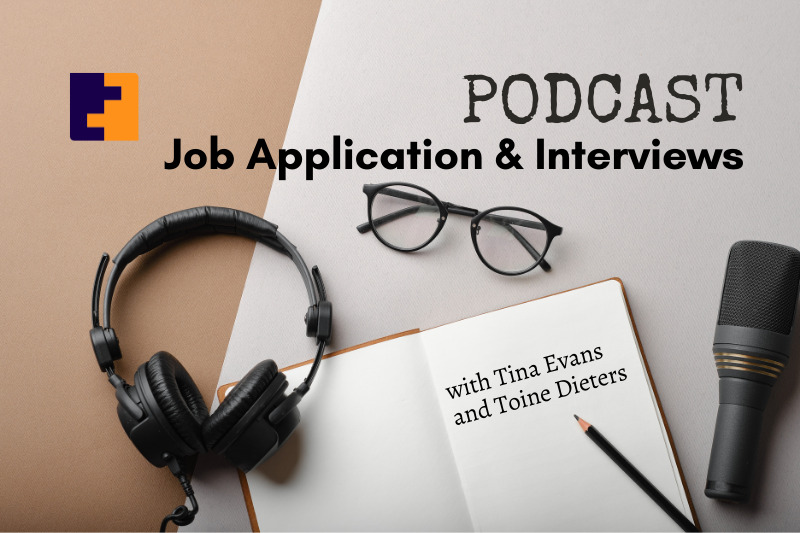
Our CEO Tina Evans and CCO Toine Diters have been honourable guests of the University of Economics Varna’s Career Academy podcast. They shared insightful advice on topics like job applications, in-person interviews and LinkedIn presence to help students improve their career options.
Listen to the podcast and get useful tips and tricks straight from the experts. Find answers to curious questions like “How do recruitment companies find you?”, “Does the number of LinkedIn connections matter?” and “What to wear on your first job interview”.
Read the full interview
Hello and welcome to our podcast Career Academy in the Univerisity of Economics Varna. Today we are here with our guests Tina Evans and Toine Diters – the CEO and CCO of Blue Lynx – a recruitment company that has an office here in Varna. Can you introduce yourselves?
Tina: I’m Tina Evans, the founder and owner of Blue Lynx. I’ve had the company for 33 years. I’m originally from London and I moved to The Hague in the Netherlands 35 years ago where I started my career working for Shell. Shell helped me start my own company which is now located in Western Europe and Eastern Europe with offices in Varna and Sofia. We specialise in international multilingual recruitment.
Toine: Knowing Tina for 5 years and working as an external consultant I joined Blue Lynx a few months ago as the new CCO of the company. Currently, we’re starting to grow our first sales team in Bulgaria so I am mainly working from Sofia.
Tina: We not only work for the Fortune 500 companies but also for the level below that – SMEs (small and mid-size enterprises), small non-profit organizations, startups and young dynamic companies that have fantastic ideas but cannot find the right staff. They all use our services and we find them great talent.
That is very impressive. And how do you actually find talent? How do you source?
Tina: There are several ways. One primarily is our LinkedIn network because we have been in the business for 33 years and we have an absolutely enormous network. We also advertise on our own website and use external parties for ex-pats who we know are looking for employment in international organizations. We have a digital marketing team in Varna that runs campaigns on social media. We advertise positions mainly on Facebook and LinkedIn. In fact, our biggest sourcing tool is LinkedIn. We have experienced talent sourcers that spend their day researching the market and looking for candidates.
Toine: We are a very data-driven company.
Tina: Yes, we even use artificial intelligence but the traditional old-fashioned recruitment which is actually getting to know your candidates, talking to them, finding out what a candidate really wants to do is very important.
We are not only client-driven but also candidate-driven so we treat our candidates as clients as well. Our company’s slogan is “People make it work” and when we are presenting ourselves to audiences we always say that we put “Human” back into Human Resources.
That’s a cool saying. What can you tell us about LinkedIn? For example, how can students improve their Linkedin profiles to be discovered more easily?
Toine: We have a very large and fast-growing LinkedIn community which goes over 31 000 followers. On the other hand, I think LinkedIn is less used by candidates here in Bulgaria but in the Netherlands, everybody has e LinkedIn profile. The better your LinkedIn profile is arranged and filled in, the easier it is to find a job.
Tina: What’s also very important is not only your work experience but also your academic experience and your languages. Many people don’t list their languages – for example, we have a lot of Dutch people in the Netherlands who don’t mention the fact that they speak English. And when companies are looking for a bilingual person, they won’t be found because they don’t mention the fact that they speak English.
I would always recommend using keywords that recruiters can find very quickly. Don’t overwrite anything on LinkedIn because people in recruitment are very busy so they want to extract the most important information as quickly as possible.
Find more LinkedIn tips in our article: LinkedIn Tips: 10 Ways to Make Your Profile Stand Out
And one of the biggest tips I can give anybody is: focus on charity work, on helping out in the community, gain some experience from that, always mention your internships so employers can see your work experience during your study period.
Do not have any gaps. That’s basically the biggest mistake you can do. Don’t write something like “I’ve been unemployed for 8 months because I was tired” or “I’ve done a really great job, I’ve got my degree and I’m gonna just hang for the summer”. Employers want to see people that are focused, determined and don’t waste their time.
Toine: If you want to travel abroad, take a gap year, do something for good causes and fill it in with something nice that is beneficial to your career. Do something useful with that time.
Tina: Some people are unfortunate – they fall ill or a family member falls ill. List that, say “Due to family circumstances, I had to take a gap year because I had to take care of a family member or have been unwell myself”. I would say honesty is the best policy but don’t write silly things like “I was having a rest because I was tired”. You’re out there competing with everyone on LinkedIn. The pool of candidates is enormous – you have to promote yourself and sell yourself in a very good way.
If you are looking for a job and you want to work for a specific company – read the LinkedIn profiles of people that work there and try and adapt your own profile and writing style to match the requirements of that company.
A lot of people on LinkedIn send connection requests without actually knowing the people just to expand their network. What do you think about that?
Tina: Well, I have a recruitment company so I would accept every request that comes to me – after all, every person can be a candidate.
So it’s not about knowing people in LinkedIn, it’s more about expanding your network?
Tina: If you read the small print it would be about knowing the people but trust me, that’s not what happens.
Toine: It’s more like a status – having more than 500 connections. Every person who fills in a LinkedIn profile for the first time wants to be a 500+ member. I was less picky until I had 500 plus connections and then I started being pickier to build specific connections.
Tina (laughing): I was really upset when Obama didn’t connect with me on LinkedIn when I sent him an invitation.
What can you tell our students about their university – does it matter what university they went to?
Tina: That’s a very good question. Yes, absolutely – recruiters and employers do like to employ people from better universities.
Interviewer: And what about their certificates and spoken languages?
Toine: I think language is key to success because you can open up to many other countries and companies from abroad.
When you look for employees, what language level do you look for?
Tina: It would be a fluency level – C1. If you want to work for international companies where the business language is English, definitely C1. And also another tip: if you have the opportunity to do an internship at a company where English is the business language, do it.
Can you give us some tips on in-person interviews?
Tina: Always go smartly dressed.
Toine: Dress well.
Should you for example wear a colourful outfit for your interview?
Tina: No, unless you’re going to an interview at a design studio or some really hip and happening startup. Check the company’s website for photographs of the staff and see how they dress. It’s that first impression that matters. Men, wear a tie, women – make sure that your hair looks good and your nails are done. Come prepared, have a notebook. Have some notes, have some good questions, and keep eye contact.
Toine: Read the website, know something about the company. Don’t be too stressed – relax.
I’ve heard that recruiters prefer extroverted people. Is this true?
Tina: Not always. If I’m hiring for a bank, I don’t want to have people that come in and go “blah-blah-blah”.
Toine: It’s also important to listen. Sometimes we choose exactly the person who is not the loudest in the room.
Tina: Something that you will probably experience when you’re being interviewed for a job is – very often the person giving the interview doesn’t know how to do it. They haven’t been properly trained for it. It could be a very awkward experience.
Another important tip: after the interview, always send a “thank you” email. I’ve been in the business for a long time and I find this very courteous and charming and I know a lot of employers do as well. Don’t hassle recruiters or HR departments too much – be patient. Have a positive vibe, be polite and friendly and learn people’s names.
Don’t be fake. A highly trained interviewer would have the right questions to prick through the fakeness and then you really fall on your face.
Don’t forget – if you’ve got to the interview stage, they are interested in you, they are investing time and money in interviewing you. So you know not that you become overconfident and smug but you’ve done well to get to the interview. And then after the interview – write some notes: what you did right, what you did wrong. Sometimes it’s good to go to interviews for practice.
Toine: Always write down all the feedback they give you.
Tina: Yes, practice makes it perfect.
I think that have been all my questions. Thank you for your time and your useful advice. It is very important to us and to our students.
Toine: Thank you for inviting us.
Tina: It was wonderful to be here.
Read MoreHow Recent Graduates Can Stand Out to Employers

Graduating from college is a big achievement, especially when getting a job is next on your list. Millions of students move on from the classroom and into the workforce. It can be hard to separate yourself from other applicants. If you want to learn how to shine in front of employers, keep reading! The advice in this article is also suitable for job candidates looking to expand their skills and gain experience in new fields.
Improve Your Resume
Your resume is the first thing that employers notice about you. So, it should leave the best impression. When on a job hunt, it may be very tempting to send the same resume out to multiple jobs to save time. But you should think about editing it to fit every job that you apply to. When editing your resume, also make sure to keep everything on one page – when possible. Hiring managers go through hundreds of resumes every week. And the chances of them spending more than a few minutes on yours are slim. Strive to keep it short and sweet.
Having a great cover letter can also up your chances of a hiring manager/employer. Author, motivational speaker, and business coach Marcus Buckingham says, “Emphasize your strengths on your resume, in your cover letters and in your interviews. It may sound obvious, but you’d be surprised how many people simply list everything they’ve ever done. Convey your passion and link your strengths to measurable results. Employers and interviewers love concrete data.”
This may seem like an extra step for some. However, cover letters allow employers to get a better understanding of who you are as a person and how you fit in with the company and the position.
Nail the Interview
Arrive early and dress appropriately! Your attire is the first thing that people will notice about you when coming in for an interview, whether online or in person. Utilising bright colours that mesh well with each other can make you stand out from the crowd (literally).
“You need to know that nothing replaces actually doing the work, take a thoughtful risk, always be intentional about the words you choose,” says noted philanthropist Robert F. Smith. Let the interviewer know who you are by laying out your experiences and how they make you a perfect fit for the job.
Come prepared with great questions to ask the interviewer at the end of your meeting. Remember that you are also interviewing the company to see if they are a good fit for you. Take some time before the interview to think about what things are important to you in your next job/employer.
Make Sure to Follow Up
The process of waiting to hear back from an interview can leave you feeling both nervous and excited. You may be wondering if you should follow up. Regardless if the interviewer provided an expected date or not, be sure to give them at least five days to reach back. After that, consider following up with them. You can do so by sending in a thank you letter to your interviewer and reiterate your interest in the position.
If you don’t get a job offer, you want to know why. Follow up by asking the interviewer for some feedback. This can help you create a list of things that you need to improve on for future interviews. The interviewer may not give you a full answer, but it’s always good to ask.
Help the Employer See Potential in You
Job hunting can be considered a job in itself. However, taking these extra steps to make sure that employers can easily differentiate you from other candidates can make it much more effortless. Remember to tidy up your resume and cover letter, dress appropriately and practice for your interview. You’ll be a top candidate in no time!
And dear employers, if you wonder whether the candidate is a good match, here is our guide on how to hire for culture fit.
Read MoreThe Elephant in the Room: The Do’s and Dont’s of Salary Negotiation

Salary negotiation. Raise your hand if you agree that it’s one of the most dreaded parts of any hiring process.
You’ve made it to the final round of interviews and now it’s time to agree upon a salary. Or maybe you were asked during the pre-screening phone call. No matter at what stage it comes up, salary is often the elephant in the room.
Most people find it hard to talk about money in a professional setting. They come across all types of mental barriers. What if the amount they ask for is too high and they don’t get offered the role? What if they seem greedy? What if you set the bar too low? What if, what if…
Feeling the same way?
We’ll give you some tips based on our experience as a recruitment agency and we hope they help you find the best approach to salary negotiations. We have also prepared a ready-to-go answer for when they ask the question during the interview.
First of all, why are they asking?
The salary expectations question is a tricky subject for job seekers. But most of the time, it’s not there to trick you in any way. When interviewers and employers ask you what your preferred salary is, they are trying to answer two questions:
- Do they have the budget to hire you?
- How do you value your own skills?
Should you mention a word of salary and if so, at what point?
As a rule of thumb, only mention your salary expectations during an interview or application process if you are asked about them. It might leave a bad impression if you are the one to initiate the salary talk. Of course, if you go through the final round of interviews and the employer/agency hasn’t touched on the topic, do open it for discussion.
Remember: if you are applying through a recruitment agency in the Netherlands, it’s part of your recruiter’s job to confirm your salary expectations prior to the interview. Recruiters know the budget range of their clients and can manage your expectations early on in the process.
Here are Some Salary Negotiation Tactics
When it comes to salaries in the Netherlands, you need to know a few essential things. First of all, you have gross and net pay. The difference? Your gross pay is your salary before any tax and cost deductions. The net salary is what you actually get paid at the end of the month.
In the Netherlands, there is also the Vakantiegeld, or 8%/8.33% holiday allowance on top of your gross annual salary. Always make certain that the amount you are offered is the base salary excluding all allowances and bonuses.
Here are some actions you can take in order to prepare yourself for salary negotiations.
1. Do some benchmarking
Use all available online resources you can find to compare your salary preferences to the current market.
We advise you to do average salary benchmarking based on the specific industry of the job and not across all sectors. Also, salaries are largely defined by your location. So a simple Google search containing the name of the role (or a similar one in the industry) and the city/country should do. For example, type into Google something like: “executive assistant Amsterdam salary”. You can also use the Salaries search function on Glassdoor.
In addition to making your online research, connect to people on LI with a similar position to the one you are interviewing for and ask them what salary they believe adequately corresponds with the role. This way you are not directly asking them how much they earn and you are more likely to get an answer.
2. Be sure what the position entails
It’s not easy to put a price on your skills and time, especially when you don’t know enough about the position. You have to be fully aware of what the role will involve and what will be expected of you. Don’t forget to take into account how many years of experience you are bringing to the table. That’s a good leveraging point when discussing your desired salary.
3. Don’t be arrogant
First of all, we advise you to never bring up the salary in the first interview. Rather, try to do it at the final stages of the process. By then, you’ve already built a more substantial rapport with the company and the interviewers.
Being arrogant or demanding at any point in the hiring cycle won’t help. Some candidates are led by the belief that if they aim higher, this will guarantee a great starting base salary. The truth is some job seekers have better negotiation power than others. Try to stay realistic and do your homework. Otherwise, you risk making a bad impression and cutting in half your chances of being hired.
Can a Recruiter Help You Negotiate a Better Salary?
When you apply for a job through a recruitment agency like Blue Lynx, you get support through the whole recruitment cycle. To save yours and your recruitment consultant’s time, discuss the salary with them as early as possible in the process.
Why? Because recruiters usually know how much their client budget is for each position. Disclosing your desired pay to your recruiter will give them the chance to manage your expectations and negotiate with the company on your behalf. Also, your recruiters will prep you well with topics you should and shouldn’t touch upon during the interview.
If you are not a good negotiator, having someone to do it for you is the best thing ever. Recruiters are responsible for building that bridge between what’s best for you and their client.
What if the Salary Is Published but It’s Not Satisfactory?
Most companies won’t include the salary in the job ad. But once in a while, you get ones where you know the exact salary or a range from the get-go. Usually, this means there is little room for discussion.
If it’s lower than your desired amount you have two options: compromise or try to negotiate further down the line.
Sometimes candidates compromise on salary because of other benefits and perks that may come with the role in a non-monetary shape.
But maybe you still want to try and persuade the employer to a higher number. In this case, your negotiation power depends on how flexible the company’s budget is and the demand for professionals like you. Most times, you won’t know the former. However, you should know where your skills & experience stand in the market.
Again, in this scenario, go back to doing your research. Many factors play a part too. Are you applying for a junior or mid-level position? What’s the competition like? How long has the company been trying to fill in this position? How well do you fit the profile requirements? All or any of these may tip the scales to your (dis)advantage.
How to Actually Respond to Salary Questions?
We’ve prepared a sample answer to a question such as “What are your salary expectations for this role?” and it goes like this:
“I am open to discussing your offer as you probably have a set budget for this position already. However, I can provide a salary indication based on the average pay for similar roles in this industry in *country* and the unique skills and experience that I will be bringing to the team. I would feel comfortable accepting an offer between *provide a salary range*.”
Did you find this article helpful? Perhaps you know someone who will too. Share it with your friends today!
Read MoreBetween Slacking and Burnout: How to Master Working from Home

Pijamas on weekdays. No commute. Home office. The pandemic stripped normality from our daily lives, catching us by surprise. But, we’ve adapted. We embraced the work from home life as quickly as we (and our employers) could.
Statistics show that some people occasionally worked from home even before the pandemic. But most of them rarely took advantage of the option. With COVID-19 transforming every aspect of our lives, work from home became part of the so-called ‘new normal’.
This transition hasn’t been that easy on all of us. Many of you probably find it hard to concentrate in the comfort of your home. Or maybe you end up working way too many extra hours each day.
The question is: Are you ready to go back to some kind of a work-life balance?
If so, you will find some proven tactics and techniques that will help you do your best while working from home in this article, so keep reading.
For the times when you need a bit more motivation
Hey, we won’t point any fingers here. Anyone could fall down the slippery slope of procrastination. When you find yourself easily distracted in your home office, it’s time to change something. Here are a few twists you can try:
Find a rhythm that works
Is your current routine not working? Do you feel like no matter how long your workday is, you can’t get much done. It might be due to having your day torn from meetings or your to-do list has suddenly got too heavy and diverse. You, my friend, need to redefine your work rhythm.
How do you do that? Start with examining when you feel most productive. Is it early morning? Mid-day? Late at night? If you have a flexible schedule, you have more power. The bottom line is, select 5 priority tasks each day and focus on them in your most productive time. If you don’t get much further than that, at least you would have prioritised the right things.
Have a work switch
By now you are probably aware of what distracts you most. You may have even tried to eliminate distractions from your workspace entirely. But still, you can’t get in a productive mood. Maybe your mind wonders and your focus is off. In this piece debunking 7 remote work myths, the author makes a great example of having one thing that triggers your work mode. She made a great example with Clark Kent’s glasses. Removing them was the one thing that marked his transformation into Superman.
So, what should you take from that? Find what switches your brain into work mode. Maybe it’s a certain song that gets you in the mood or just putting on a tie. Whatever it is, it has the chance to trick your brain into being productive. So use it.
Take a nap
“Wait, what? I thought this was a list of productivity tips”…is probably what you are thinking right now. As absurd as it sounds, a nap might not be such a bad idea. If your body is naturally telling you to take a nap, learn to read the signs. The sleepiness that befalls in the middle of the afternoon, the grogginess and the mood swings. Honestly, try a 15-minute nap (longer than that would have the opposite effect) and see what happens. A light snooze will make you much more productive and give you the needed boost to finish the workday on a high.
For the times when you are on the verge of a burnout

Maybe you are from the second type of people. The ones who overwork themselves no matter where they are. The ones who linger in their emails inbox way past the close of business hours. You are at home and not doing much anyway, why not see what this client needs? You are soon if not already feeling the burn. There is a reason why the working day lasts for 8 hours at most companies.
Are you struggling to find a way to slow down? Work never ends. But your wellbeing might as well be compromised if you keep overworking yourself. Here are three antidotes to try today:
Schedule something to do right after work
It could be a call with your grandma or an online workout session with your favourite instructor. Just find something else to do. In order for this to work, you need to be self-initiative.
You sure have hobbies and things you like to commit to outside of work. Pick one each day and just add some urgency to it. Mark it in your schedule as a ‘to-do’ and assign it a clearly defined timeslot. If that’s your thing, of course. The idea is that you engage in an activity that kicks your brain out of work mode and lets you relax.
Have a separate space just for work
Perhaps the most popular work from home advice you’ll read. After all, the problem with using your home as your office lies in the fact that our brains are not wired to mix both. As James Clear argues in his book Atomic Habits, both success and failure can be attributed to our environment.
So, if it’s hard for your brain to draw the line between work and life, you need to do it using your space. It doesn’t have to be a whole different room. Your ‘home office’ could be just a corner of a room. Leaving that space, however, must tell your brain “Work is over, now we relax”. If you couple it with the work ‘switch’ object from the tips above, it works even better.
Your working space should be used only for work. Have your lunch elsewhere and try to separate your living space as much as possible. Also, stay connected with colleagues. This will make working from home experience as close to a real-office experience as it can be.
Reach out to friends or a professional
The last year has brought upon all of us constant waves of stress, uncertainty and bad news. We’re more isolated than ever and it’s easy to get caught up in work to try to escape or avoid all of this.
You need to remember that you are not the only one who might be dealing with a work overload or burnout. But you might have to be the one starting the discussion. We might be physically separated from each other but we can still pick up the phone and video chat with our friends. You can even have a session with a therapist online these days.
If you are close to having your batteries drained from all the work and stress, reach out to a professional and talk about it. You owe it to your mental health.
Additional work-from-home resources:
Compensation for employees in the Netherlands working from home – some Dutch employers have been compensating their employees’ work-from-home additional costs
The best online tools to use when working from home – Must-have tools that will enhance your work-from-home experience
Read MoreWhat Is Holiday Allowance (Vakantiegeld)? [2025]

Understanding Holiday Allowance in the Netherlands
In the Netherlands, the concept of holiday allowance, or ‘Vakantiegeld’, plays a significant role in the financial landscape for both employees and employers. This unique aspect of Dutch employment law is essential for ensuring that workers have additional funds for vacation periods.
What is Holiday Allowance?
Holiday allowance is a mandatory financial benefit in the Netherlands. Introduced to encourage workers to take vacations, it constitutes an additional payment on top of the employee’s salary. This allowance typically amounts to 8% of the employee’s gross annual salary.
Blue Lynx steps to the rescue to help you understand the Dutch holiday allowance and your vacation days. We’ve covered the most important bits below.
(This article has been updated in 2024 to reflect the latest information in the ABU CLA.)
What Will Be Covered in This Article:
- What is holiday allowance?
- When is it paid?
- How is it calculated?
- Can my employer refuse to pay holiday allowance due to COVID-19?
- Is it taxed?
- Does everybody get it?
- How can you spend it?
- How many vacation days you get?
- Your EU working rights
It is mandatory for every employer in the Netherlands to pay their staff an extra sum of money on top of their gross salary. This sum is called ‘Vakantiegeld’ in Dutch, roughly translated as ‘Holiday/Vacation Money’. It’s also sometimes called the 13th wage, as it is almost the equivalent to an extra month salary. Most people are either directly employed by an organisation or a member of the Collective Labour Agreement (CLA) as a temporary worker.
What’s new?
As of January 1st 2020, the ABU CLA (Collective Labour Agreement for Temporary Workers in the Netherlands) has amended their vacation allowance legislation. All temporary workers have an increase in their vacation allowance from 8% to 8.33%.
Blue Lynx’s contracting staff have been notified of this change as their employment terms and conditions obey the ABU CLA. We have also flagged this change in legislation to our clients.
Important: If your employer is not a member of the ABU CLA, you are entitled to a minimum payment of 8% of your gross annual salary (per Burgerlijk Wetboek, Dutch Civil Law).
When is it paid?
The holiday allowance should appear on your payslip in May. Why? When it was first introduced in the Netherlands, holiday pay was an incentive for employees to go on vacation. Getting the extra money in May meant they could plan their summer leave for the months between June and September.
The majority of companies pay the Vakantiegeld in May, except when:
- Your employment naturally ends with a company before May, the accumulated vacation money will be paid within your last salary payment or the following month.
- The employee’s contract is terminated before May
- The employee has an agreement for vacation money to be paid early
- The employee receives their vacation money every month
How Is the Holiday Allowance Calculated?

Your vacation allowance is 8% of your gross salary.
The gross amount of holiday pay is calculated on a pro-rata basis. This means it depends on how long you have been employed.
It is calculated by taking into account how many days you worked, holiday leave, public holidays, sick leave, and more.
Here are some example calculations
If your Holiday Allowance is 8%
Gross monthly salary € 3,000.00
Gross annual salary excluding 8% € 36,000.00
8% vacation allowance: € 2,880.00
And if it’s 8.33%
Gross monthly salary € 3,000.00
Gross annual salary excluding 8.33% € 36,000.00
8.33% vacation allowance: € 2,998.80
And this will be paid on top of your monthly salary, so you can start planning the long-awaited trip to your favourite destination, yay!
If the vacation money is paid to you monthly instead, the calculations will look like this:
Gross monthly salary € 3,000.00
8% vacation allowance, accrued per month € 240.00
Gross monthly salary € 3,000.00
8.33% vacation allowance, accrued per month € 249.90
Can My Employer Refuse to Pay My Holiday Allowance Because of COVID-19?
Your employer is obliged to pay the 8%/8.33% holiday pay on top of your gross annual salary even during COVID-19. An exception to this rule might be if you have previously signed an agreement with your employer to have your holiday bonus postponed in order to save the business. However, you must receive your holiday allowance at a later stage. Important: your holiday allowance can be delayed only if you agree to this in writing.
Is the Holiday Allowance Taxed?
Sadly, the holiday allowance pay, just like your salary, is subject to tax. How much? It depends. A special tax rate applies to your holiday pay, as well as to other parts of your salary that are paid only once per year. This means the amount of holiday allowance you get after taxes depends on that rate and on the size of your salary.
To learn the exact amount, speak directly to your employer or HR.
Does Everybody Get Paid Holiday Allowance in the Netherlands?
In certain cases, it could get reduced or eliminated if your wage is three or more times bigger than the minimum salary in the Netherlands. Either way, it will be stated in your contract.
What You Don’t Get Holiday Allowance for:
The employee is not entitled to any holiday allowance from the end of year bonuses, dividends from profit-sharing schemes, other bonuses, etc.
How Can You Spend the Vakantiegeld?

Enjoy spending your holiday allowance on a trip or something else.
How Many Vacation Days (Vakantiedagen) Do You Get?
If you work full-time (i.e. 5 full days a week), then the legal minimum number of days paid leave that you are entitled to, is 20, equivalent to 4 weeks of paid annual leave.
However, it is common practice for employers in the Netherlands to offer 25 days of paid leave, on top of 10 public holidays in the Netherlands.
Please note that by law, you can’t swap these days for monetary compensation. Most importantly, your vacation days have an expiration date. This means your paid days off accrue over time and you have to take them within 6 months. This measure is introduced to keep the work-life balance but there are some exceptions. You might be unable to use your paid days in that period because of illness or work overload. In this case, you may negotiate with your employer to extend the 6-month rule.
Dutch Employees’ Paid Leave Is Protected by EU Law

EU working laws apply for Dutch employees.
The Netherlands is a state member of the European Union so employees EU rules and regulations apply in regards to how much you can work and rest. These laws are in the EU Working Time Directive of 2003 (2).
A summary of the key rights employees in EU countries (including the Netherlands) have:
- a minimum daily rest period of 11 consecutive hours in every 24
- a rest break on any working day longer than 6 hours
- an uninterrupted 24-hour rest period every 7 days, in addition to the daily 11 hours
- at least 4 weeks paid annual leave
- a maximum average working week of 48 hours, including overtime, over 7 days
- normal night work should be no more than 8 hours on average in any 24 hours
Having said this, it is more relevant to pay attention to Dutch law, because Dutch employment law typically goes above and beyond the minimums stipulated by the EU directives. Furthermore, collective labour agreements (CAOs) are industry standards, so it is also important to know which CAO (if any) applies to your situation. Some CAOs can even stipulate terms that may appear to overrule Dutch Law or the EU directive. This is often due to the unique nature of some jobs (for example, the amount of rest a pilot is entitled to).
Always Read Your Contract
Always check your contract/employment agreement for any details regarding your holiday allowance and annual leave days. Although the most common practice is to get the holiday allowance as a one-time payment. Yet, some employers spread it throughout the year.
Are you working or looking for a job?
Blue Lynx offers help and advice to international job seekers and contractors (temporary workers) in the Netherlands. All you need to do is register your CV on our website. It’s free.
Are you looking for employees?
Blue Lynx is a leading recruitment agency in the Netherlands. Apart from talent acquisition, we assist our business partners with HR services such as contracting and employee leasing.
Have a Question?
As Dutch Employment Laws are our forte, feel free to contact us for a consultation.
We will also be covering the topic of sick days, wages, and more. So, stay tuned for more relevant and up-to-date information on employment in the Netherlands.
Sources
1. Dutch Government website on Holiday Allowance (Vakantiegeld) (in Dutch)
2. Summary of EU Working Time Directive 2003 laws on working time
3. Origins of the Holiday Allowance (in Dutch)
LinkedIn Tips: 10 Ways to Make Your Profile Stand Out

With 740 million users in over 200 countries around the world, LinkedIn is the largest melting pot for those who are looking for work and those who are hiring. As a recruitment agency that has been recognised for its advanced use of LinkedIn, we decided to make a series of 10 tips on how to make the most out of the platform. We called this collection of posts LinkedIn Tip of the Week and for 10 weeks straight we helped you hack your growth and success on the professional social network. We though bundling up these tips into a blog post will give people quick access to them when in need. If you don’t want to miss out on any useful tips and career advice, follow us on LinkedIn.
Here’s a shortcut to each of our 10 LinkedIn tips:
- #1: Set up the #OpenToWork feature
- #2: Add your native language to your Languages or Skills section
- #3: Choose and include the right keywords in your profile
- #4: Write an eye-catching headline
- #5: Join professional LinkedIn Groups
- #6: Write meaningful comments and posts
- #7: Make the Experience section stand out
- #8: Ask your connections for a recommendation
- #9: Grow your professional network of connections
- #10: Access and improve your LinkedIn Social Selling Index
LinkedIn Tip #1: Set up the #OpenToWork feature
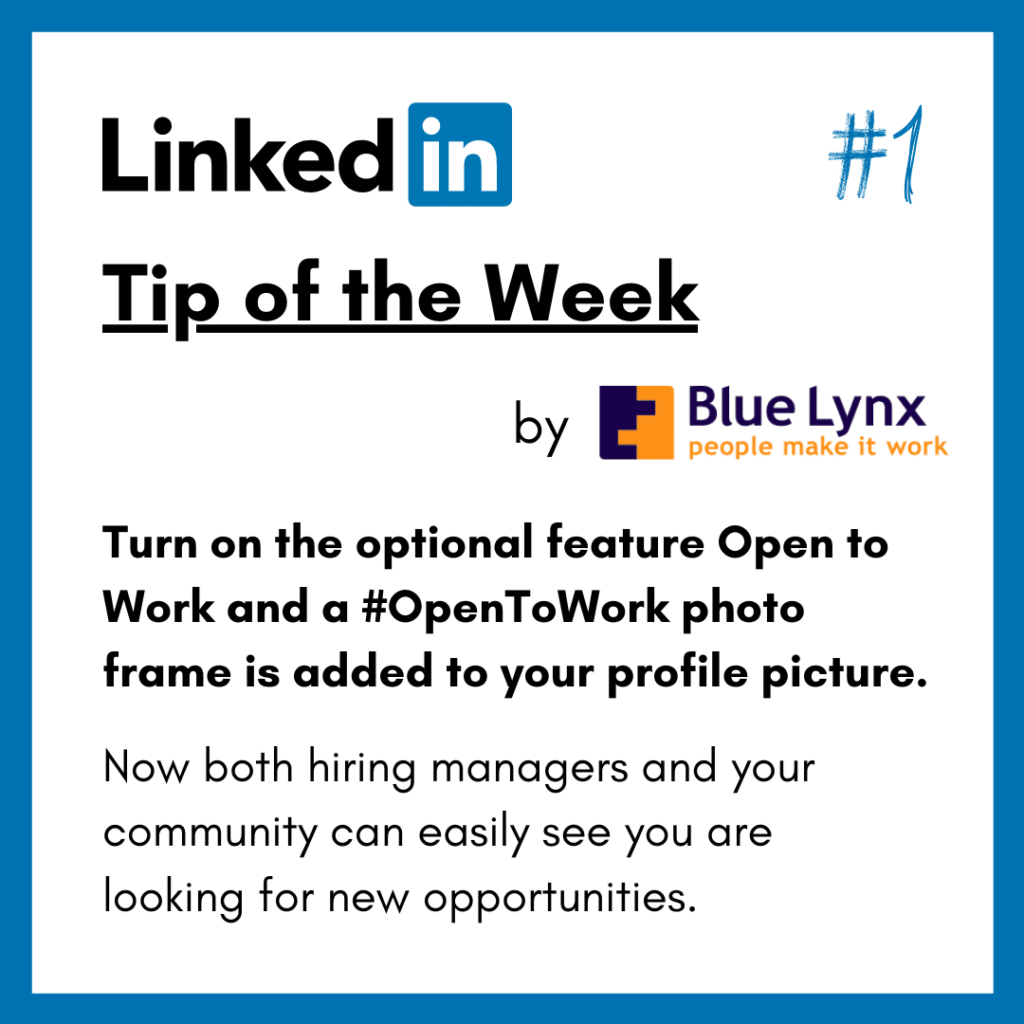
Many of us are on LinkedIn with the single hope of finding a (new) job. The platform made it easier for those looking by introducing the hashtag #OpenToWork. If you’ve been active on LinkedIn lately, you’ve probably caught sight of profiles with a green semi-outline in the bottom left of the person’s picture. When you activate this feature, it tells recruiters and hiring managers that you are actively looking for work.
Want to show your network that you are #OpenToWork? Follow these steps to activate the feature:
- Go to your profile
- Find the “Open to” button under your profile picture and above the About section
- Click it and see two options drop down below
- Chose “Finding a new job”
- Pick your preferred job title, location, start date and job types
- Select for this to be seen by All LinkedIn Members to get the green sign on your profile pic
- Click “Add to profile”
Et voilà! Now the LinkedIn community knows that you are looking for work and can directly approach you or recommend you to someone who is hiring.
LinkedIn Tip #2: Add your native language to your Languages or Skills section
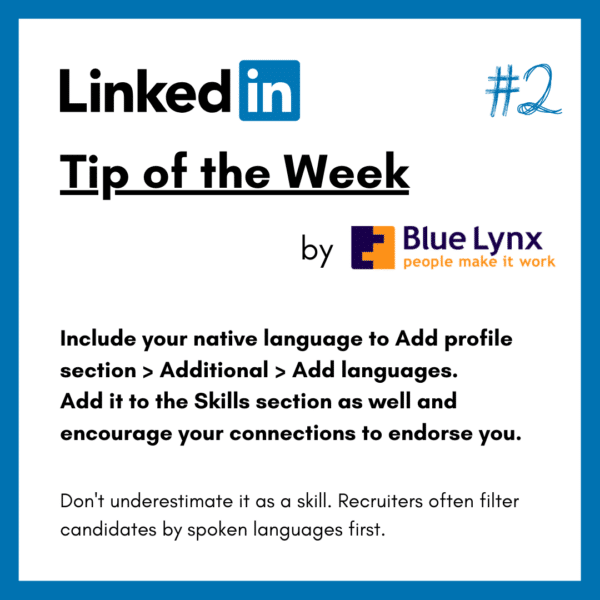
It’s an obvious one but you will be surprised how many people forget to add their native language to their LinkedIn profile and their CV. We always like to remind our multilingual candidates that they shouldn’t take their native tongue for granted. You can add your language skills on LinkedIn in 2 different ways. Go to your profile and click on “Add profile section”, then find “Add Skills” in the dropdown “Core” section and type the language you want to add. The second way of doing it is again clicking on “Add profile section”, then go to “Additional” section and choose “Add languages”.
LinkedIn Tip #3: Choose the right keywords
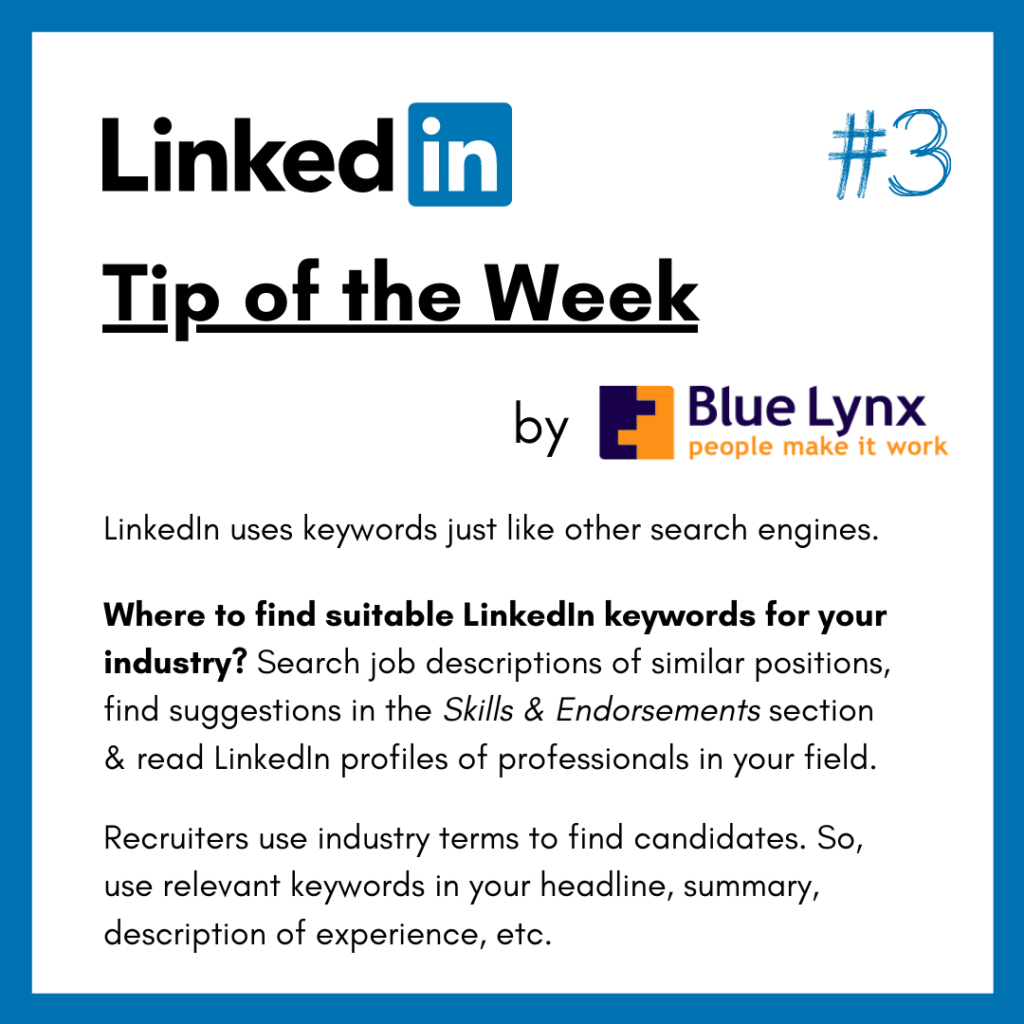
Just like you use the search bar to look for open positions in your area, recruiters on LinkedIn use theirs to find professionals. They put in the keywords and candidate profiles that have those keywords inside start popping up. If you want to be found and noticed by recruiters, your profile must contain the right keywords. Every bit of text on your LinkedIn profile gets scanned and if your profile matches the keywords entered by recruiters, it will appear in their search.
Which keywords do you need to include?
This depends on the job you would like to land and your experience. Keywords are industry-specific terms that can help you get noticed. If you can’t think of any, read a few job descriptions of the positions that interest you. You can also look for inspiration in the profiles of other industry professionals or leaders in your discipline. Once you identify the important keywords in your industry, make sure to include some in every relevant section of your LinkedIn profile. From your Headline to About and Experience sections.
LinkedIn Tip #4: Write an eye-catching headline
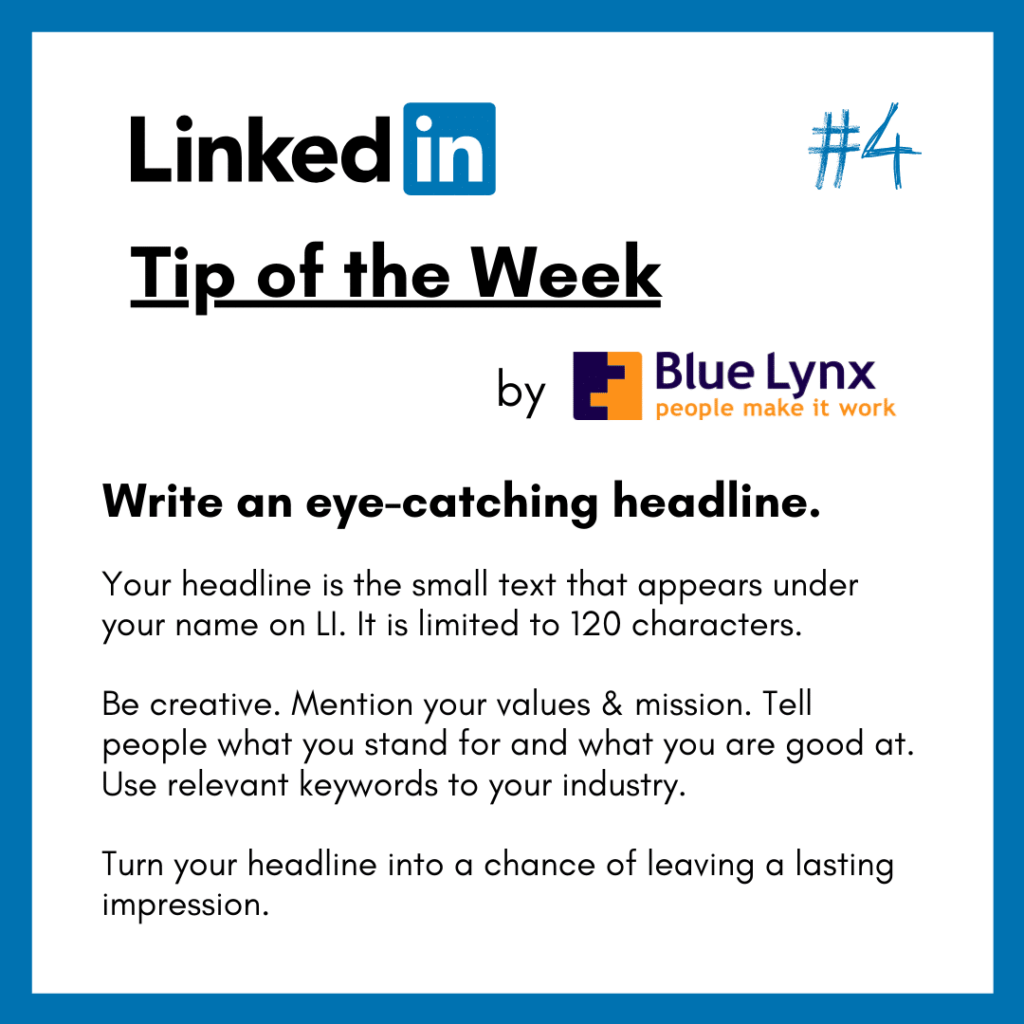
The headline is one of the most important and at the same time overlooked elements of a LinkedIn profile. It’s that bit of text that sits right below your name. It’s your introduction to everyone on the platform. It should answer the question “What do you do?” in a maximum of 120 characters. If you find it hard to write a catchy headline and essentially present who you are and what you do in just one sentence, see these ideas and practical tips for a LinkedIn headline.
LinkedIn Tip #5: Join professional LinkedIn Groups
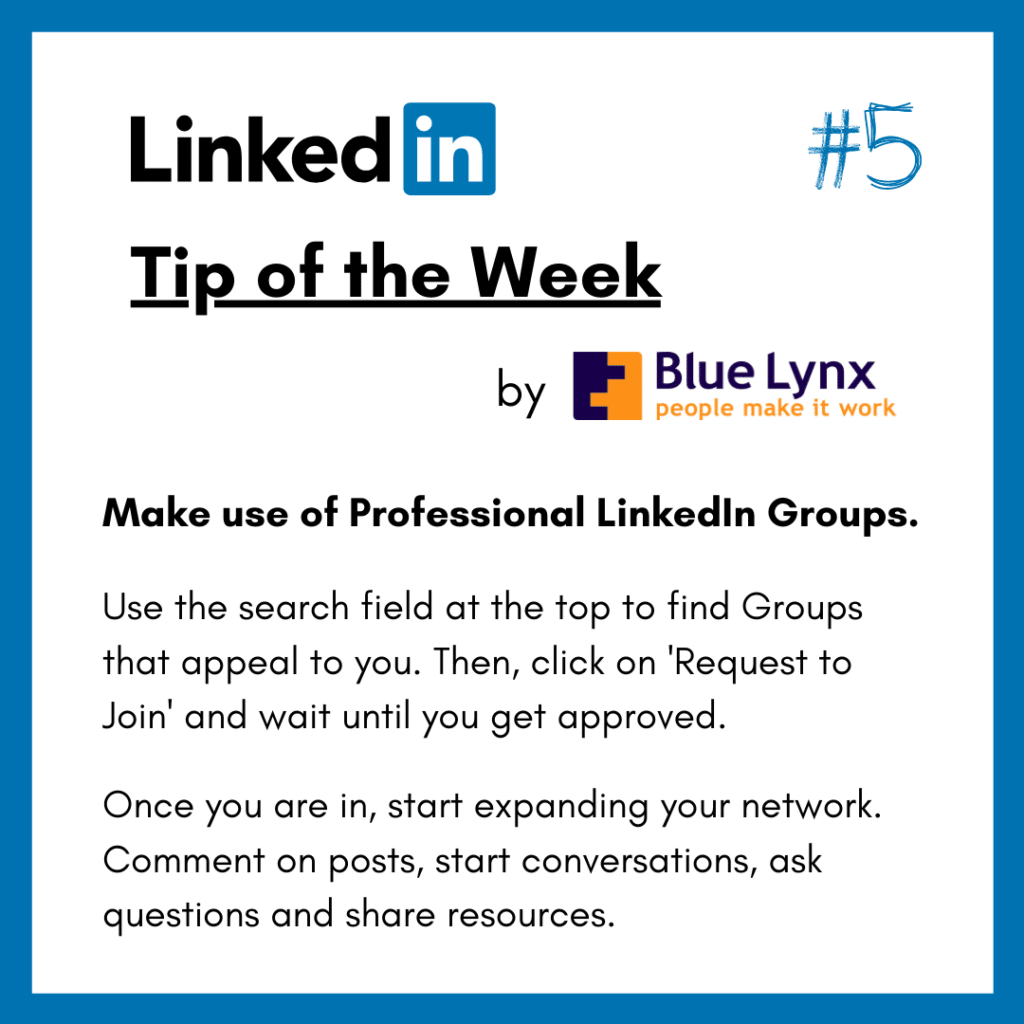
Are you a part of any LinkedIn Groups already? If that’s yes, great. If not, now’s the best time to change that. Being a member of a group makes you part of a closed community of people with shared interests. You can start discussions, exchange ideas and find valuable connections.
Where do you find relevant LinkedIn Groups to join?
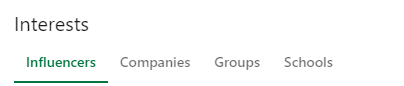
You can either use the search bar at the top or check out your existing connections for some ideas. At the bottom of a LinkedIn profile is where you will find the section called Interests. It shows you the people, pages and companies the person is following. In this section, you will also see the Groups tab. Go to a connection’s profile and see which groups they are a member of. You might find something that suits your own interests.
LinkedIn Tip #6: Post meaningful content and comment often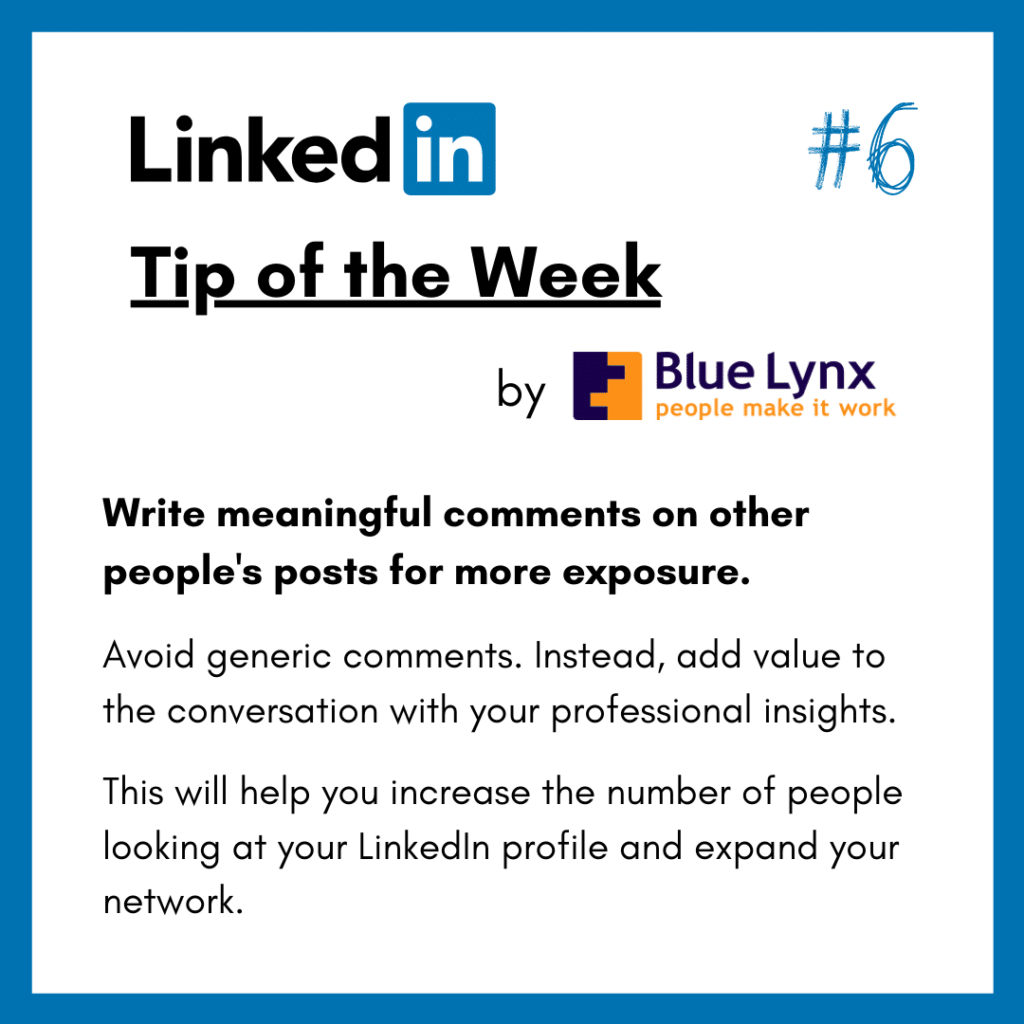
If you are new to the platform, taking part in open LinkedIn discussion by writing comments might seems scary. You want to say something relevant, witty and shine with knowledge. The LinkedIn platform favours posts with more engagement. Over time, a new group of users has distinguished itself, the LinkedIn influencers. The good news is, you don’t have to add a buzzword like “influencer” to your title to write successful posts or engage in the comments section.
The truth is, commenting on LinkedIn gets you noticed. Find topics and posts to which you can add value with a comment and simply share your opinion. Start posts and get people to share their own point of view. Your profile has a better chance of popping out in your other LinkedIn users’ newsfeed. Thus, you get better chances of being noticed by the community.
LinkedIn Tip #7: Make your Experience section stand out
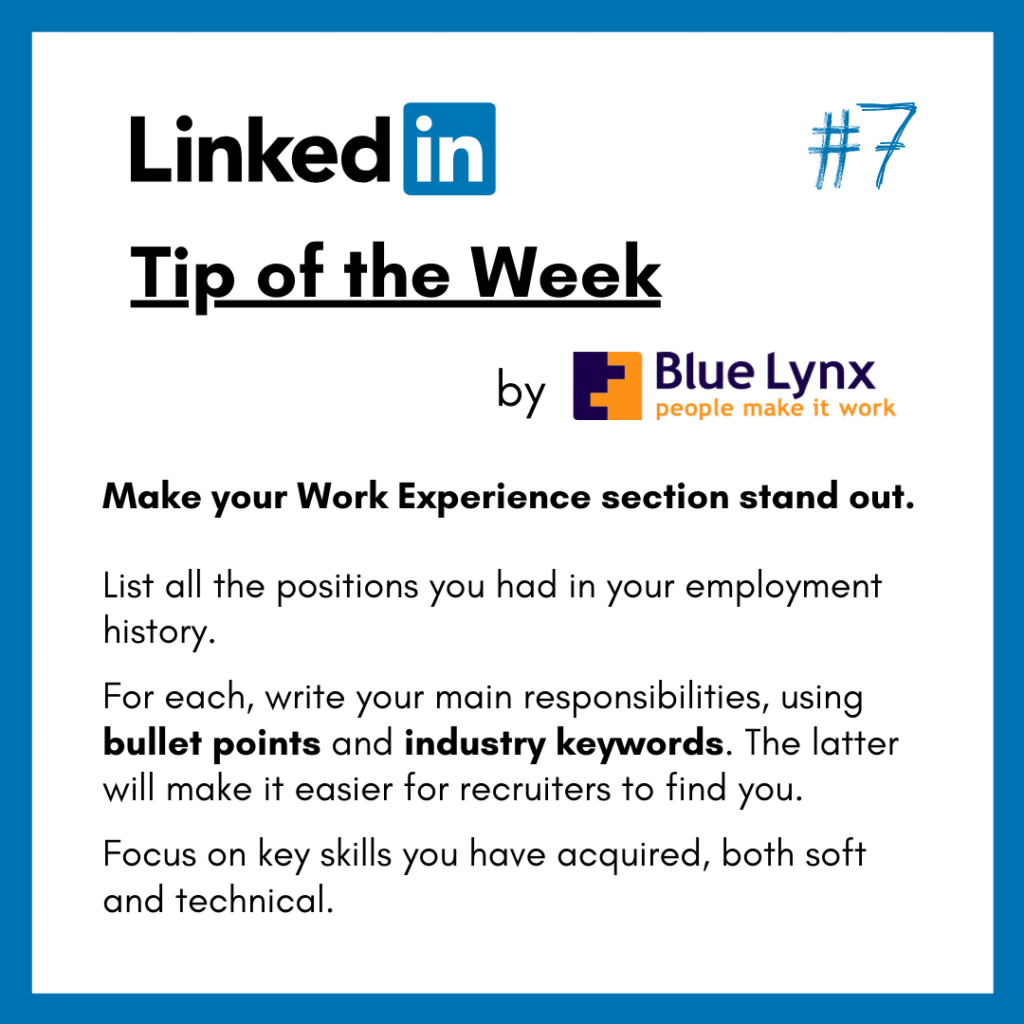
Perhaps one of the most important professional LinkedIn profile tips we have for you. It’s where employers and hiring managers will probably spend the most time. It has to be well-structured and written. If you already have a good CV, you can use it as a starting point. The space on your CV is limited but here’s where your LinkedIn profile comes in. It gives you the opportunity to go into more detail. Remember those keywords? This is the place to get them all in so the LinkedIn search engine picks up your profile.
How to write a good Experience section for your LinkedIn Profile:
👉 Include a short summary for each position
👉 Break down your responsibilities into bullets
👉 Include measurable results and achievements (e.g. increased sales revenue by 2%)
👉 Focus on the skills you have acquired
👉 Use industry-specific terms and phrases where possible
LinkedIn Tip #8: Ask your connections for recommendations
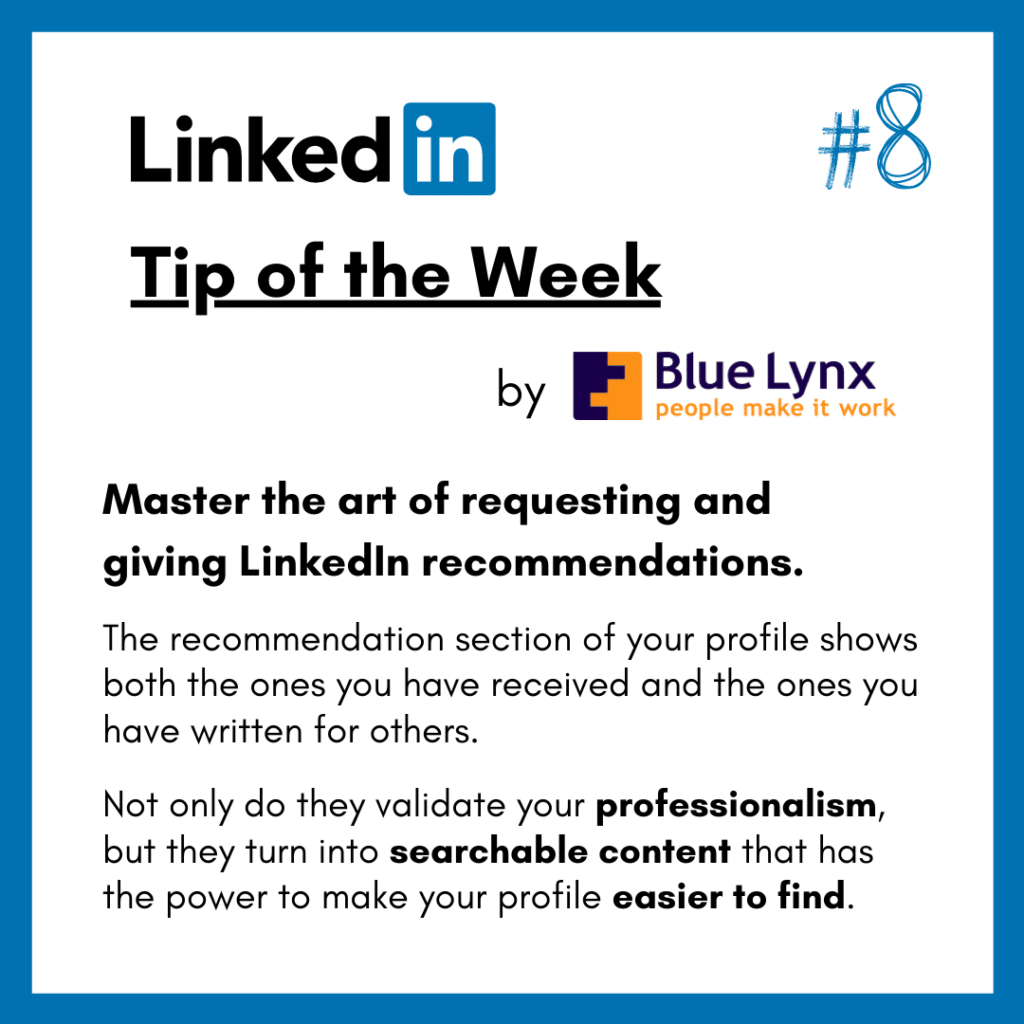
One form of getting help from your LinkedIn connections is asking for a recommendation. Having someone write about working with you is one of the most powerful ways to stand out on LinkedIn.
How to ask for a recommendation on LinkedIn?
Go to a connection’s profile and click on the More… button right of their picture. You will see a dropdown menu containing “Recommend” and “Request a recommendation”. Go to a connection’s profile and scroll down to see if they already have a recommendation section. If there is one, you can use the section to request or give a recommendation to that person. Alternatively, you can go to a connection’s profile and scroll down to see if they already have a recommendation section. If there is one, you can use it to request or give a recommendation to that person.
Or, you can also ask them nicely with a message. A rule of thumb with this tip is to always be polite and never pushy.
Once somebody writes you a recommendation, you can review it before it is published to your profile.
Tips for getting high-quality LinkedIn recommendations:
1. Make a list of the people who have best witnessed your professional growth and achievements. Avoid sending out recommendation requests to just anyone.
2. Approach them with a personalised message and be authentic. In your request, you can talk about your work together and how it has helped your career.
3. Don’t forget to say a sincere Thank You once you receive the recommendation
LinkedIn Post #9: Grow your professional network of connections
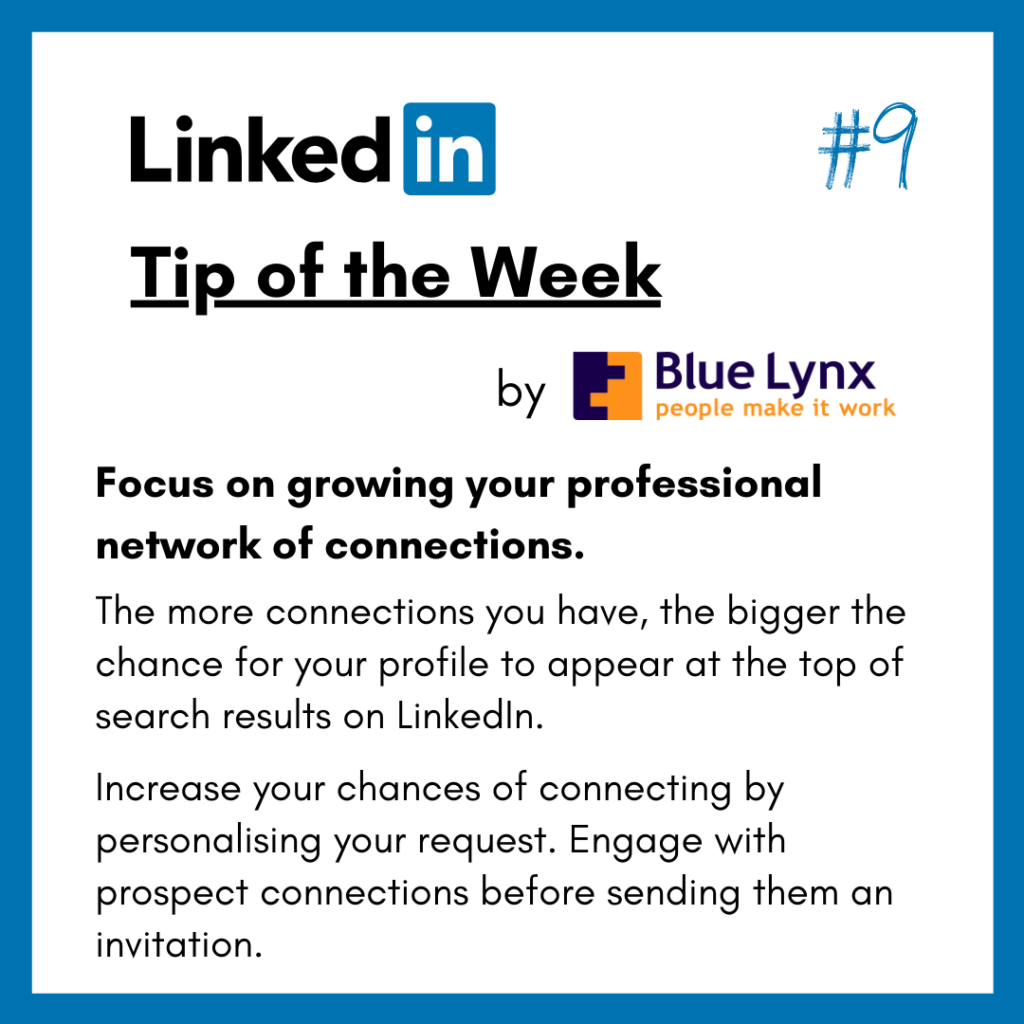
In this case, LinkedIn can only count to 500. Once you reach this number, it will just say 500+ connections on your profile page. But does it really matter how many connections you have? Yes. Not as much as having a well-written Experience section for example but it still gives you an upper hand. Having more connections essentially gives your posts and profile a better reach. It also adds credibility to your profile so when people go about exploring it, a high number of connections will put you in a trustworthy light.
However, we don’t recommend you start adding just anybody to your network. Pick and choose wisely. Be careful with people wanting to connect for the wrong reasons. Start with adding your friends and people you know. Then, search for other professionals in your field. There are great chances that you will have a lot in common and you might also end up making a new friend.
LinkedIn Post #10: Access and improve your LinkedIn Social Selling Index
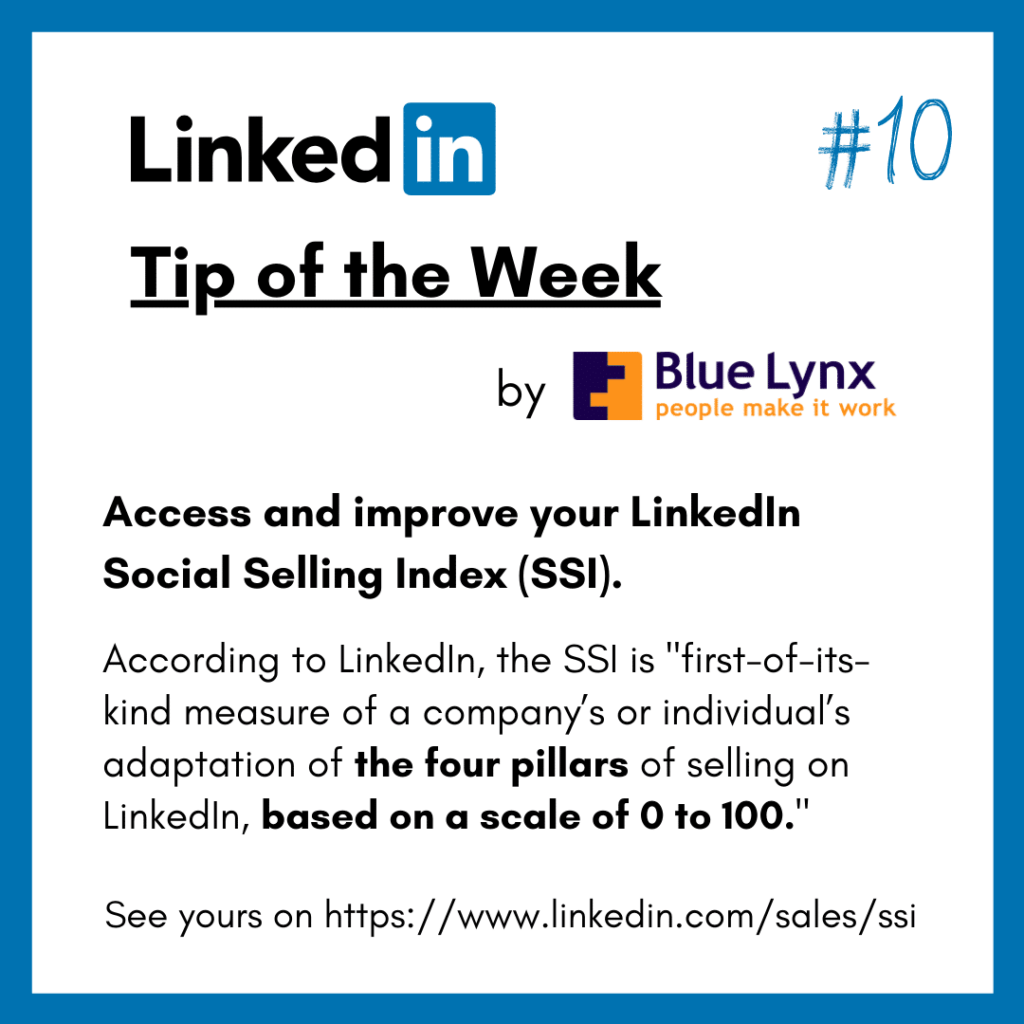
LinkedIn is not just a social network. It’s also a great platform to sell your products or services (and your brand). As such, it gives you the chance to build a strong presence and a name that creates trust. To measure how well each of us is selling ourselves and our businesses, LinkedIn has developed its own Social Selling Index (SSI).
It gives you a score between 0 and 100 against 4 selling criteria:
🔸 Establishing a strong professional brand
🔸 Finding the right people
🔸 Engaging with insight
🔸 Building trust and lasting relationships
👉 Check your LinkedIn Social Selling Index score here 👈
What’s good about this free LinkedIn feature is that it gives you an idea of how you compare to other professionals in your industry. It also highlights which areas of the four elements are up for improvement.
Read More