
Posts by admin
Why Skills Are Replacing Qualifications in Modern Recruitment

As of 2025, Gen-Z makes up nearly a third of the global workforce, steadily reshaping the way recruitment is done across many organisations. Employers are noticing that this generation values flexibility and practical experience more than formal education, with priorities that differ significantly from their earlier cohorts.
 Having grown up with digital learning tools and immediate access to a wealth of information, Gen-Z candidates often acquire the skills they need for a specific position through remote courses, certifications and independent training.
In contrast to many millennials who followed the traditional university route, the younger generations are choosing to skip formal degrees altogether. They are often reluctant to take on student loans and the high costs associated with higher education, favouring alternative paths to career readiness.
This shift towards skills-based hiring isn’t isolated to the internet generation alone. It’s gaining traction across multiple industries, helping companies fill roles faster with candidates who can already perform well from day one, even if they lack traditional diplomas.
This approach is spreading globally, but today we’ll be taking a closer look at its effect on the Netherlands.
Hiring for Skills in the Netherlands
This skills-first mindset is quickly transforming how employers identify and select talent, putting proven capabilities ahead of traditional credentials.
The trend aligns with a national initiative supported by the Netherlands Organisation for Applied Scientific Research (TNO), which is developing a skills standard called CompetentNL to facilitate this transition.
Their goal is for 80% of Dutch workers to have jobs that match their skills by 2030.
Moreover, many technical and high-demand roles in the Netherlands now require practical skills and experience rather than formal diplomas, and skills-based organisations are increasing in numbers each year. Some of the biggest companies headquartered in the country have been advertising skill-based jobs, and given the abundance of online tools and courses, all job seekers have access to training that would otherwise be reserved for university students.
Roles Which No Longer Require Degrees in the Netherlands
 As revealed by Blue Lynx research for 2025, many employers are now prioritising candidates with proven abilities over formal academic backgrounds. Companies are increasingly hiring white-collar professionals for roles in Marketing, Design and Engineering based on their competencies.
Take a look at the most popular positions to accept skill-based talent:
| Industry | Notable Skill-Based Jobs |
|---|---|
| Technology & IT | Software Engineering, DevOps, Cloud Computing, Cybersecurity, Data Science, AI/ML (strongest demand in Amsterdam/Rotterdam) |
| Engineering (incl. Semiconductors) | Mechanical, Electrical, Systems, Project Management |
| FinTech | Risk Management, Compliance, Product Management, Data Analysis, Software Development |
| Customer Service, Sales & Marketing | Digital Marketing, CRM, Customer Success, International Sales (especially in multinationals and tech startups) |
| Gaming & Digital Art | Game Design, Programming, Animation, Production, Digital Art |
| Logistics, Supply Chain | Process Management, Digital Logistics Systems Experts, Data-Driven Operations |
| Travel & Tourism | Customer Experience, Digital Marketing, Operations |
| Business Services & Compliance | Business Analysis, Regulatory Compliance, Project Management, ERP Specialists |
| Renewable Energy & Utilities | Renewable Systems Engineering, Digital Project Managers |
| Banking Sector | Risk Analysis, Technology, Data Analysis, Investment Advisory |
What Are the Perks of Skills-Focused Recruitment?
It is no secret that candidates benefit hugely from this shift. But the preference for hands-on experience also offers a host of advantages for employers:
Reduced Time to Employ: 91% of businesses reported a decrease in their overall time to employ, with 40% stating a decrease of more than a quarter.*
Improved Workforce Experience and Productivity: Skills-based organisations deliver 79% better workforce experience and 63% higher results than companies that don’t employ based on proven capability.
Greater Organisational Agility: Businesses using skills-based workforce management are 57% more agile, enabling quick assignment of workers based on skills, regardless of job title or department.
Addressing Talent Shortage: Skill-based hiring broadens talent pools and reduces gaps. Companies are 107% more likely to place talent accurately and 98% more likely to retain top performers, boosting their reputation as great career hubs.
Reducing Bias: 80% of executives say skill-based hiring reduces bias and improves fairness, creating more equal opportunities and workplace diversity.
*All research in this section is provided by Deloitte.
How Can Your Company Embrace Skill-Based Talent?
By now, you are probably curious about how you can begin interviewing and spotting the best candidates from this specific pool. The following tips are ones that our recruitment consultants use on a day-to-day basis to sift through numerous applications by skills-based candidates.
Check for Career-Focused Skills Training
Has the candidate included any workshops, bootcamps, online courses or other types of non-formal education? This shows they are being proactive about learning and can manage their time well.
Use Skill Assessments to Gauge Fit
To analyse the jobseekers’ motivation levels, communication skills and culture fit, you may conduct some employee skill assessments as part of the interview process. Considering the industry and day-to-day tasks that your future members will complete to come up with these, or work with a recruitment agency to prepare and conduct them for you.
Look for Micro Credentials
A skill-focused resume will often include various informal achievements and certifications. Make sure to research industry-recognised providers to find the most notable accomplishments. Their presence will signal practical expertise and competencies in specific technologies.
Prepare for a Competency-Based Interview
We develop a list of practical competencies and tailor the interview questions to answer and reveal all existing experience. A career test based on skills and interests may include the following questions:
- Give an example of a situation where you had to explain a complex idea or project. How did you ensure your message was clear?
- Tell me about an occasion when unexpected changes forced you to adjust your work plan. How did you manage to stay on track?
- Describe a situation when you had to collaborate with someone difficult. How did you handle the interaction, and what was the result?
Blue Lynx’s Insights on Skills-First Recruitment
Our recent LinkedIn poll explored how organisations approach skills-based hiring in 2025. Out of all 80 respondents, 60% shared that their company primarily focuses on skills when recruiting new talent. Another 25% noted that skills are taken into account but not the main priority, while 14% said formal education still leads their selection process. A small 1% selected ‘Other’, sharing additional perspectives in the comments.
Overall, jobseekers who want to retrain and move into a new field may find the transition much smoother today. Companies are now more open to career changes than they were a decade ago.
What Does the Future Hold?
 By focusing on competence rather than credentials, organisations can unlock untapped talent, expanding their pool by over 30% for roles that do not require a higher education.
In the Netherlands, the share of highly qualified workers is projected to rise from 42% to 55% by 2035, while the medium-qualified labour force will shrink. This shift will make skills-based recruitment essential to bridging the gap between growing demand and available talent.
At the same time, job titles themselves are losing meaning. 71% of employees say that they already perform tasks beyond their job descriptions, and only 24% say they do the same work as colleagues with identical titles.
Are you struggling to fill a vacancy in your company? Reaching out to a recruitment agency like ours can significantly increase your chances of finding a relevant candidate. We employ the best hiring practices on the market and know how to create that perfect match – choosing applicants who don’t just have the ideal attitude but also the right culture-fit.
Read MoreStruggling with Less Than 3 Clients? Discover Why That’s a Problem as a Freelancer in the Netherlands

If you are a freelancer in the Netherlands, you have probably heard a few things about the “new” DBA Act – or maybe you’re just now coming across it. Either way, it’s essential to understand what it means for your work, how it relates to false self-employment, and why the Dutch government is paying more attention to it lately.
The DBA Act

The DBA Act (short for Deregulering Beoordeling Arbeidsrelaties) is a law designed to prevent false self-employment in the Netherlands. Despite what most people will tell you, this is not a brand-new rule – it’s just that enforcement of it in 2025 has been getting stricter.
What Is False Self-Employment?
For years, companies have hired freelancers who were, in practice, working like employees, just without the protection or benefits that regular team members receive. This allowed some businesses to save money and avoid responsibilities like paying sick leave or employer contributions. Meanwhile, freelancers were left with fewer rights and less social security.
“Hiring someone as an independent contractor does not automatically make the working relationship freelance. If it looks and functions like employment, it is employment.”
— Belastingdienst, 2023
Over 1.2 million people in the Netherlands are registered as self-employed. However, the number of workers misclassified as freelancers may be as high as 10–15%, especially in sectors like construction, healthcare and IT, according to the Economic Policy Institute.
The Dutch government aims to create a fairer system, where legitimate freelancers can still operate with the flexibility they currently have, but where workers who are effectively employees are given proper protection.
Why The Number of Clients Matters
One of the key ways the tax authorities determine whether you are a real freelancer is by looking at the number of clients you have. If you only work with one company, or even just one main client, you could be at risk of being misclassified as an employee.
As a general rule of thumb:
- If you have three or more clients = you’re seen as a genuine freelancer.
- If you have fewer than three = you are at a higher risk of being classified as an employee in disguise.
If a company controls your hours, tasks and how you do your work, you can fall under the false self-employment classification in the eyes of the law.
How Employers Can Unknowingly Fall into the Trap
Businesses, especially those based abroad, that browse freelance platforms looking for professionals or those that regularly work with the self-employed (such as building companies, online platforms, and IT startups) need to pay extra special attention to the freelancers they enter a contract with.
Consider this example:
You have contacted our recruitment agency, Blue Lynx, to find you a freelance copywriter for your new website. We place a freelancer into a long-term, full-time role with your organisation. If they don’t have multiple clients or the freedom to control the way they work, the tax authorities may view it as disguised employment. This is why both agencies and ZZP’ers need to be aware of the rules under the DBA Act.
While in the above case the mistake is unintentional, plenty of businesses try to avoid paying taxes and social contributions by intentionally misclassifying workers. From 2026 onwards, companies will be audited and may receive a post-assessment.
The good news is that businesses and freelancers still have time to react to this stricter enforcement of the rules. 2025 is considered a transition year, giving them plenty of time to set their bookkeeping in order and decide how to proceed. However, once 2026 rolls around, companies could be fined for this false employment.
What About Freelancers?
If you’re working full-time for just one client, consider this your wake-up call. Not just because the company hiring you could get in trouble, but because you could be left without proper support if something goes wrong. But this is not the only problem. You could also run into issues like:
- Unexpected tax bills and fines.
- Unexpected notice and lack of security.
- Fewer freelance jobs in the Netherlands.
Some people think they can stop working independently for a while and “reset the clock” – but unfortunately, that’s not true. If you return to the same client doing the same kind of work, the tax office will see it as a continuation of the same relationship.
Employer of Record as a Solution
 A lot of independent workers in this position are in a pretty tight spot. One answer to the problem they’re facing is getting hired through an EoR – an administrative employer that can second them to the client company.
A freelancer would be working for an Employer of Record only on paper. Otherwise, they would continue doing business with their client as usual. The EoR model handles all the admin and compliance on their behalf, making their professional relationship perfectly legal.
On top of this, the freelancer also receives some great benefits:
- Legal clarity and zero risk of misclassification.
- Access to benefits like sick pay and pension.
- Less stress and paperwork for both parties.
- Freedom to focus on the tasks at hand.
Instead of being a one-man army handling all your admin, taxes and compliance, you can leave it to a company like ours. Blue Lynx EoR is an affordable option and a great opportunity for companies and independent workers to find peace of mind and great working conditions.
[CTA Button – Discover Blue Lynx EoR]
Other Ways to Prevent False Self-Employment
If you don’t want to use an EoR, you can make an assessment of your client relationship to discover if it qualifies as bogus self-employment.
The following official websites and references might help:
- An employment evaluation tool on the government website (in Dutch).
- The Dutch tax authorities’ platform (in Dutch).
- False self-employment and businesses in detail here.
Final Thoughts

If you’re working for a single client as a self-employed professional or have fewer than three, now is a great time to reassess:
- Are you truly independent?
- Could you benefit from a different structure like Blue Lynx EoR?
- Do you want to be protected if you fall ill or lose your main client?
Don’t wait for an audit to find out. By staying informed and adjusting your setup, you can keep working legally, safely and confidently.
Read More
Is a Private Retirement Scheme Right for You?

The New Pension Act will change how pensions work for everyone in the Netherlands by 2027. When you consider this upcoming shift, alongside a dynamic job market and the rapidly growing number of self-employed professionals, whose numbers total 1,770,864 (according to data from 31 March 2025), it’s easy to see why so many are thinking about their future financial security.
With these changes unfolding, it’s no surprise that more and more individuals are exploring their pension options, including the third pillar of the Dutch pension system – a private retirement scheme.

We also go into detail about the other two pillars – state pension (AOW) and workplace (employer’s) pension. While most residents and workers may benefit from the first two pillars, a private pension offers an excellent way to broaden your retirement savings.
What Is a Private Retirement Scheme?
It’s a type of supplementary scheme also called a self-investment personal pension. It is largely recommended for independent workers who are not covered by an employer’s pension or their CLA (Collective Labour Agreement). An individual pension plan is also available to everyone who wants to build up additional savings and achieve long-term financial independence. Private retirement schemes are generally more flexible and offer a range of benefits that the other two pillars of the retirement system lack.
Private pensions enable the self-employed (ZZP’ers), contractors following the WAADI, who are only covered by AOW, and those not part of a CLA to top up on their retirement savings. But really anyone can choose to take advantage of these alternative forms of retirement savings.
A private retirement scheme enables independent workers to:
- Build supplemental retirement capital
- Optimise tax advantages
- Ensure pension continuity
- Maintain a standard of living post-retirement
Types of Private Retirement Schemes in the Netherlands
Aside from property investments and company shares, which we won’t get into in this article, you can also make use of an individual pension plan to ensure your financial health when you get older. Private retirement schemes are distributed by either banks or investment companies that offer different packages so you can create a personalised pension plan. You can explore the most popular options for a private retirement plan below.
Retirement Annuity Contracts (Lijfrenteverzekering, or just lijfrente)
Annuity contracts are, at their core, a form of insurance and are widely viewed as a traditional pension product. They allow you to make regular contributions, which are transformed into a guaranteed stream of income upon retirement.
A great perk of annuities is the flexibility they offer. You can choose to either pay a fixed amount each month and leave it as it is or have your money invested so your payments could increase or decrease, depending on how well the investment performs.
With annuity insurance, your private pension administrator distributes your savings for as long as you live. This means you’ll keep receiving benefits even if you end up getting more than you originally paid, due to the great performance of your investment.
When you pass away, the collected money goes to the insurance company, unless you have selected a specific pension package (at extra cost) allowing its transfer to your surviving family members.
Key features of retirement annuity contracts:
- Lifetime income is guaranteed
- Choice of fixed or investment-based returns
- Premiums are tax-deductible
- Retirement savings are taxable upon payout
Limitations:
- Funds revert to the insurer upon death unless your coverage is extended
- Not protected in case of insurer insolvency
Bank Savings Accounts (Banksparen / Pensioensparen)
Introduced in 2008, banksparen is a banking alternative to insurance-based annuities. It usually offers greater flexibility and transparency at a lower cost.
With banksparen, you open a pension savings account with a bank and set aside an amount of money annually. You then have the option to leave your collected funds as they are, earn interest on this capital or use a portion of your money to buy other financial products like stocks, property or shares.
Once you retire, you will get back the money you saved up in regular payments. You decide on the amount, and whether to receive the pensioensparen over a period of 5 to 30 years – this allows you to tailor your pension scheme to suit your personal financial goals and lifestyle. However, note that you will not receive this money for the rest of your life.
A major perk of this retirement option is that once you pass away, any remaining funds in your account are automatically transferred to your next of kin. Additionally, with banks serving as your private pension administrator, your savings are protected up to €100,000.
Key features of bank savings accounts:
- Capital is held in deposit or investment accounts
- Capital growth is tax-free
- Savings are distributed between 5 – 30 years after retirement
- Capital is transferable to heirs
- Pension savings are protected up to €100,000 per bank
Limitations:
- Does not guarantee lifetime income
- Fixed payout terms
Adding to Your Pension Savings
The Dutch tax authorities set an annual limit on how much each person can pay into their pots, including the money from both pension funds and private pension schemes. If your yearly contributions are less than the preset maximum, you’re considered to have a pension shortfall (pensioentekort) and may top up your retirement savings.
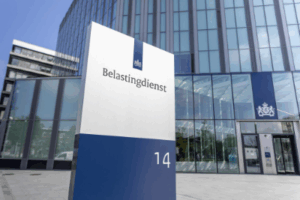 What’s interesting is that any unused yearly allowance from previous years doesn’t disappear – you can add it to your current year’s allowance if you stay within the overall maximum. This combined limit is known as your “reservation allowance” (reserveringsruimte), and you can check it on the Tax and Customs Administration website.
You can deduct the amount you top up into your reservation allowance from your taxable income, as long as this doesn’t exceed your annual margin.
Here is a basic breakdown of how reserveringsruimte is calculated:
Let’s say your annual income last year was €50,000.
You’ve worked for several years and you now have reserveringsruimte available.
Suppose your reserveringsruimte for 2025 is €10,000 (based on unused annual allowance from previous years).
You decide to deposit €400 per month into your private pension account.
Across the year, you add:
€400 × 12 = €4,800
If your marginal tax rate is 40% (it can vary anywhere between 37% and 49,5%), you can claim back 40% of your contributions as tax credit.
Your yearly tax deduction would be:
€4,800 × 40% = €1,920
So, by using your reserveringsruimte and making regular pension contributions, you not only build your retirement savings but also reduce your tax bill by €1,920 for the year.
Tax Advantages for Private Retirement Schemes
Another benefit is that retirement savings are tax-deductible. However, once you begin receiving these payments, they are subject to tax, just like your regular income. In essence, premiums are tax-deductible, but benefits are taxed upon receipt. However, keep in mind that there is a limit to tax relief even when you add to your pension savings.
If you are a freelancer, you may want to consider our EoR (Employer of Record) service. We can provide you with assistance by simplifying work permits, visas, and tax matters. As a NEN-certified business, Blue Lynx can help you get the right paperwork and ensure you are compliant with the Dutch Labour Law.
How to Withdraw Your Private Pension
At retirement, your pension savings can be converted into regular income. Depending on your chosen private retirement scheme, you can receive it as monthly, quarterly, or annual payments. If you pick bank savings, you can receive your private pension savings between 5 and 30 years. Those who have chosen insurance annuities instead will receive their pension for the remainder of their lifetime.
Is It Possible to Withdraw Your Private Pension Early?
Most pension savings accounts will only become available when you reach the date you decide to open them. In most scenarios, this matches the AOW retirement age (67 as of 2025). Some exceptions, such as suffering from a severe illness or disability, may allow you to withdraw your savings up to five years before this date; however, they are accompanied by heavy taxation. Early withdrawals may incur a penalty tax, called a “revision interest”. It amounts to 1/5th of your total savings, plus income tax.
What Happens to My Money if I Move Abroad?
Moving abroad affects your private pension strategy. If you are relocating within the EU/EEA, you can typically maintain your pension plans. However, for non-EU destinations:
- Some treaties may allow continuation, but you need to check by country.
- Many providers require account closure upon emigration.
- Early closure leads to penalties and tax liabilities.
Always confirm your pension portability with your private pension administrator before you sign, and consider international pension options if you believe you will be moving abroad in the future. It’s also a good idea to investigate alternative ways of saving up for retirement and speak to a financial consultant.
What Happens to My Private Retirement Scheme When I Change Jobs?
If you have a private pension, such as an annuity contract or bank savings account, these are not paid by your employer. In this case, a job change won’t affect your retirement savings – your private pension remains yours regardless of your employment status. You will be able to manage, proceed and contribute to your private pension just like before.
You don’t need to get in touch with your private pension administrator to ensure your plan continues without interruptions. One of the greatest perks is that your individual pension plan is portable and remains yours regardless of your employment status.
Key Takeaways
- Private pensions offer the best flexibility and tax perks.
- Bank savings accounts and annuity contracts are the main types of private retirement schemes in the Netherlands.
- Private pensions are not affected if you change jobs or employment status.
- Expats should carefully consider private retirement schemes due to potential tax and portability issues when moving abroad.
Your Guide To Workplace Pension Funds in the Netherlands

In the Netherlands, employer’s pension (also called workplace pension or occupational pension) forms a crucial part of retirement income for most employees. Alongside private and AOW (state pension), workplace pensions ensure financial stability after retirement and are distributed to all workers in the country.
What Is a Workplace Pension?
People who work in the Netherlands can be covered by a workplace pension, an additional pillar of the retirement system. Depending on the industry you are employed in, you could already be participating in such a scheme. The different sectors have individual pension funds and agreements that outline the amount of pension you can get.
For example, temporary workers who work via the ABU/NBBU Collective Labour Agreement follow their own type of workplace fund – they receive a StiPP pension.
People who want to top up their retirement savings can contribute to separate funds called private pension schemes. The self-employed are not legally obliged to pay into a pension scheme; however, ZZP’ers (zelfstandigen zonder personeel) need to arrange their own pension if they want security after retirement.
While this may sound complicated, you can see that the Dutch pension system stands out internationally for its strong support of workers and their future financial security. Fewer than 10% of employees won’t be enrolled in an employer’s pension, and that is usually because they are independent workers who fill this gap with an alternative pillar in the Dutch pension system.
What Amount Does Your Workplace Pension Cover?
The employer and the employee (the latter is optional) pay into the occupational pension. Sometimes companies may pay the full amount, other times this could be split between the organisation and the employee. The contribution depends on your pension scheme and your earnings.
For example, some industries use ABP pension (if they are public personnel or educators), PFZW pension (if they work in healthcare), others may use StiPP Pensioenfonds (if they are temporary agency workers under ABU CLA), and so on.
Pension income is typically built up over years of contributions, and the final amount can vary based on several things:
- Years of service
- Average or final salary
- Contribution rate and investment returns
In most cases, employers provide 2/3 of your retirement savings, while you, the employee, will provide 1/3.
On top of all the contributions you add to your pension pot, you may also receive a holiday allowance. As you can see, the money you set aside as retirement savings can vary greatly depending on your specific employment situation. Let’s take a more detailed look at the various pension schemes you can come across throughout your career.
Types of Pension Funds for Employers
There are various schemes and funds in the Netherlands, and the one you will receive depends on your profession.
Industry-Wide Pension Funds (Bedrijfstakpensioenfondsen or BPFs)
These funds are mandatory, and participation in them is required by law in specific sectors, for example in healthcare, construction, education, the metal industry, cleaning, hospitality and others. As these are some of the most widespread professions in the Netherlands, roughly 70% of the Dutch workforce is covered by sectoral pension funds.
Collective Labour Agreements (Collectieve Arbeids Overeenkomst, or CAOs)
Collective Labour Agreements cover the employment conditions for all workers within a specific company or sector. We already mentioned ABU as an example of a CLA. The agreements outline information such as wages and salary scales, working hours, overtime policies, holiday pay, bonuses and of course, pension arrangements. Depending on the industry, these arrangements can be mandatory. However, even if not strictly required by law, CAOs can oblige employers to participate in pension schemes.
If you’re searching for a job in the Netherlands, it’s good to be aware that a CAO takes precedence over any individual employment contract – organisations must follow its terms. Although many CAOs apply to entire sectors, you may also encounter company-specific agreements that set out unique conditions for employees within the company.
Other Sector-Specific Mandatory Schemes
Professions such as medical specialists, architects, and psychotherapists, among others, require the use of specific mandatory funds. Overall, you can come across general ABP pension funds, sectoral pension funds (BPF, which we covered above), company OPF pension funds, and more. You can browse them via specific professional groups, industry and syndicates (in Dutch) here. Some freelancers are also covered by independent pension funds. For instance, if you are a dentist with a private practice, then you would follow your profession-specific fund.
Types of Contributions
By January 1, 2027, due to the Future Pensions Act, the way that your pension will be calculated is about to change. Some employers may have to adjust to the new ruling, transitioning from a benefit scheme to a contributions scheme (with the exception of employers who offer an average pay pension). Let’s take a look at the differences:
- Defined Benefit Scheme (DB): Your retirement income is based on the average salary in a particular year. These schemes often feature conditional indexation. In practice, this means that both your accrued benefits (the money you collected while you’re still working) and your pension payments (the money you have collected once you retire) are supposed to be adjusted annually to keep up with inflation or wage increases in your sector. However, these adjustments are not guaranteed – they only happen if the pension fund is financially healthy and able to afford them.
- Defined Contribution (DC): The amount of pension you eventually receive depends on how much you and your employer contribute over your working life, as well as the investment returns earned on those contributions. At retirement, the total accumulated sum is converted into regular pension payments.
Simply put, a DB scheme is income-based, and a DC scheme is capital-based. The switch will not only make retirement savings less volatile but will prove fairer for younger workers.
Taxation
One of the biggest perks of workplace pension funds is tax relief: contributions to your occupational pension are tax-exempt, even if the amount increases throughout the years. However, it’s important to keep in mind that once you reach the Dutch pension age and begin receiving your retirement funds, they will be considered taxable income and will therefore be subject to monthly deductions. Many pensioners are surprised to discover this fact, so make sure you plan accordingly.
Who Is the Pensions Regulator?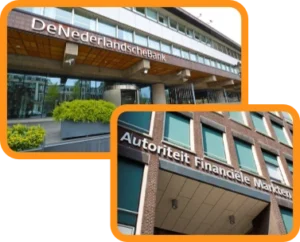
Just like most legal and financial sectors in the Netherlands, pension schemes are kept under a pretty watchful eye. Two main regulatory bodies oversee them:
| Regulatory Body | Role |
|---|---|
| DNB (De Nederlandsche Bank) | Monitors financial health and risk management of pension funds. |
| AFM (Authority for the Financial Markets) | Oversees transparency, communication, and participant protection. |
What Happens to My Pension Fund If I Change Jobs?
Changing jobs within the Netherlands doesn’t mean losing your accrued pension. You have several options when you find a new job:
- Leave your pension as it was in the previous fund (deferred pension).
- Transfer pension rights to your new pension fund (waardeoverdracht).
- Build up a new pension with the new employer while keeping the old one.
Some advice from our recruitment agency:
During the job-hunting stage, check the pension arrangements of the companies you are applying for if you don’t want gaps in your pension investment. You can ask your interviewer the following questions about your pension rights:
- Is pension participation mandatory?
- What type of scheme is offered (DB or DC)?
- Is there an employer contribution, and how much?
Of course, if you are being hired through Blue Lynx, we always make sure to inform you of all your rights, benefits, and we get you in touch with strictly compliant employers.
The Future Pensions Act
 By 1 January 2027, most pension funds will transfer to the laws outlined in the Future Pensions Act, the impact of which has been widely discussed. The last time Dutch Pension Law underwent such a massive change was in the 1950s. The financial burden for both parties is increasing, but companies will continue to shoulder the higher cost.
What Has Forced These Changes?
Why are the new changes getting everyone’s feathers ruffled these days? In recent decades, Dutch life expectancy has grown significantly, which means that the rising number of retirees is being supported by contributions from a relatively small group of working-age individuals. This situation is complicated further by the increasing number of freelancers, many of whom do not contribute to employer-based schemes, leading to a gradual decline in overall pension funding.
The Future Pensions Act aims to address these challenges. The government plans to reform the pension system, with January 1, 2027, set as the deadline for the switch. Those who do not make the necessary changes according to the new rulings can face fiscal consequences. While getting more pension may sound like an excellent perk, for many workers this adjustment is taken straight from their NET salary or bonuses, with little alternatives from the government. It remains to be seen what impact these adjustments will ultimately have on employers and employees.
Do ZZP’ers Have to Pay Employer’s Pension?
In the Netherlands, ZZP’ers, self-employed professionals, are not legally required to participate in a pension scheme, and since they do not have an employer, they don’t pay an employer’s pension. However, this is changing gradually under government pressure. Here is what’s changing for independent workers:
- The Future Pensions Act opens the door for more sector-specific obligations and easier access to pension funds for ZZP’ers.
- Political discussions continue about making pensions mandatory for some freelance sectors, especially in platform work, construction and media.
- From 2026, some new fiscal incentives and default enrolment schemes may be introduced to encourage or semi-automate pension savings for freelancers.
Key Takeaways
- Less than 10% of employees in the Netherlands don’t participate in workplace pension schemes.
- Depending on your sector or status (e.g., temporary worker, freelancer, permanent), you may fall under a general, sectoral or company pension fund.
- Workplace pension contributions are tax-exempt during your working life but taxable once you start receiving benefits.
- By January 1 2027, the Future Pensions Act will change how pensions are calculated and managed.
Example #6: Cost-Sensitive American Client Finds Value and Grows in the Netherlands
A recent scenario involved a client from America who at first considered our EoR service too expensive. However, once he hopped into a call with us ,we explained the direct employment costs in the Netherlands. He realised hiring staff himself would have been just as pricey – if not more so. In the end, he was delighted to place his employees with us and concentrate on running his business, with no legal uncertainties, HR admin or payroll hassles. Just straightforward, stress-free growth.
Following his successful beginning, we supported him as he expanded into the Dutch market. Our team organised everything: entity setup, local top talent recruitment and we also arranged the non-EU visas for some of his team members. He was able to scale up efficiently, knowing compliance, employment contracts and all the admin were taken care of.
Read MoreExample #7: Dutch Companies Hiring Without the HR Headache
Even for companies already based in the Netherlands, hiring new team members can be a challenge. Some lack internal HR support. Others want to keep things flexible, especially when growing fast or hiring for short-term projects.
We take care of employment contracts, payroll, tax and all the admin. Your new hires are legally employed in the Netherlands, and you can focus on running your business.
Read MoreExample #1: Freelancers and Companies Avoiding Misclassification
That’s right – EoR can be the answer to recent concerns following the much stricter enforcement of the DBA act in 2025. Freelancer misclassification is a huge topic in the Netherlands. The major issue that comes with this bogus self-employment is that an independent worker may be construed as a hidden employee by the Dutch tax office.
This goes vice-versa – companies hiring freelancers with fewer than three clients can be interpreted as their official legal employers, especially if the freelancer is not on the books properly. As expected, this can affect both parties, leading them to face steep fines. You can find out more on this topic in our dedicated article.
Luckily, there are two ways an Employer of Record can help:
- Option one: The freelancer comes to us directly. We employ them through Blue Lynx and second them to their client. They keep working on the same projects but with the legal protection of employment.
- Option two: The client company wants to keep working with the freelancer and avoid false employment. We hire the freelancer through our EoR model, and they become an official part of the team – without the risks that come with hiring them directly.
You can find out more on the topic of false employment in our dedicated article.
Read MoreExample #4: An Entrepreneur Moving to the Netherlands to Work for His Own Company
Here’s a fun one: A developer with a successful mobile app business in the UK wanted to live and work in the Netherlands. He had a business partner back home, and he wanted to continue working on their applications from abroad.
He got hired through our EoR structure on behalf of his UK business. We took care of the visa and employment setup – he now lives in the Netherlands legally, working full-time for his own organisation.
Read MoreExample #2: Hiring a Local Sales Rep to Test the Dutch Waters
Another common use case: An Australian organisation wanted to explore the Dutch market but wasn’t ready to set up shop just yet. They needed someone on the ground to research opportunities and build relationships.
They had two options: hire someone locally or send their own team member to do it. Either way, they needed that person employed in the Netherlands.
With Blue Lynx as their EoR, they were able to acquire a Dutch-based sales professional without opening an entity. Their market research started right away, and they avoided the admin headache of company formation, payroll and tax compliance. They made use of an additional Blue Lynx service – Direct Recruitment, to save time looking for the desired Sales Representative.
Read MoreExample #8: A Managing Director Arrives Before the Office
Before launching fully in the Netherlands, a company from outside the EU wanted to send a Managing Director to get things moving – she was tasked with finding an office, building a local strategy and potentially begin hiring.
The problem was, the MD couldn’t work legally in the Netherlands without being employed locally. Setting up a business first would have taken months.
We hired the MD through EoR, handled the visa and got her working in Amsterdam. From there, she had the freedom to establish the local branch at their desired pace.
Read More